
Fast, Reliable Attic Insulation Across Fort Lee
Attic insulation in Fort Lee rarely means a standard attic. Most homes here are 1960s-1980s concrete towers or pre-war brick multi-families, where heat escapes through slab edges, curtain wall joints, and perimeter cavities that were never insulated properly in the first place. That’s why our crews approach every Fort Lee job as a building-envelope problem, not just a “blow in some fiberglass” job. We’re already in your neighborhood most weeks. If your unit runs cold in January or your top-floor ceilings sweat in summer, call (855) 657-3403. A live person answers, day or night.
Why Warmline Insulation Co. Is Fort Lee’s Preferred Attic Insulation Company
We’ve spent over 15 years working buildings most insulation crews won’t touch. Fort Lee’s towers have specific failure patterns: wind-driven air moving through failed curtain wall joints, uninsulated concrete slab edges that act like radiators pointed at the sky, and original attic batts that were underspecified for Palisades-level wind exposure. Our technicians know the difference between a 1974 poured-concrete mid-rise on Palisade Avenue and a 1920s brick two-family on Anderson Avenue, because we’ve opened walls in both.
Fort Lee homeowners tell us the same thing: other contractors quote a generic attic job, show up, and then get confused by the building’s actual construction. We don’t. Owner Neil Ashford has made it company policy that every Fort Lee job starts with a visual inspection of the real thermal envelope, not a photo of an attic hatch. That’s why our reviews from Fort Lee mention the same things over and over: on time, explained the actual problem, fixed it in one visit.
And if the work isn’t right, our 90-Day Done Right Promise puts it in writing: we make it right. No argument. Most jobs are completed in a single visit.
Our Attic Insulation Services in Fort Lee
Not every Fort Lee building needs the same approach. A 1968 concrete tower on Whiteman Street and a 1930s brick two-family on the Bluff are different jobs entirely. Here’s what we actually do:
Blown-In Attic Insulation
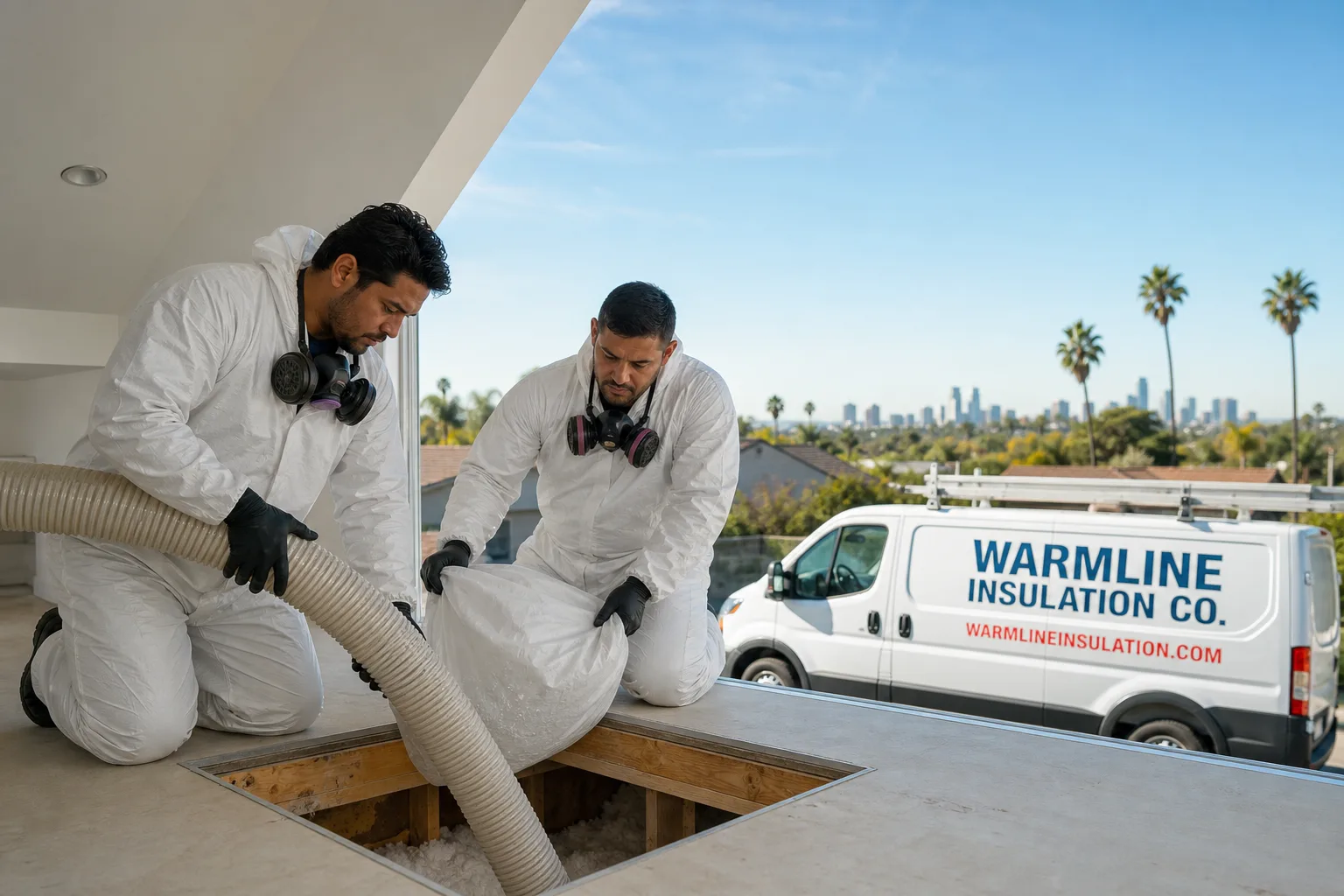
For Fort Lee properties with accessible attic cavities, blown-in insulation is usually the fastest, least disruptive option. We use GreenFiber and Owens Corning loose-fill products that conform around ceiling joists and existing ductwork. In many Fort Lee pre-war buildings, the original “insulation” is a mat of settled, rodent-damaged material that’s basically dust now. Blown-in lets us top up or completely re-fill without gutting the ceiling.
Attic Batt Insulation
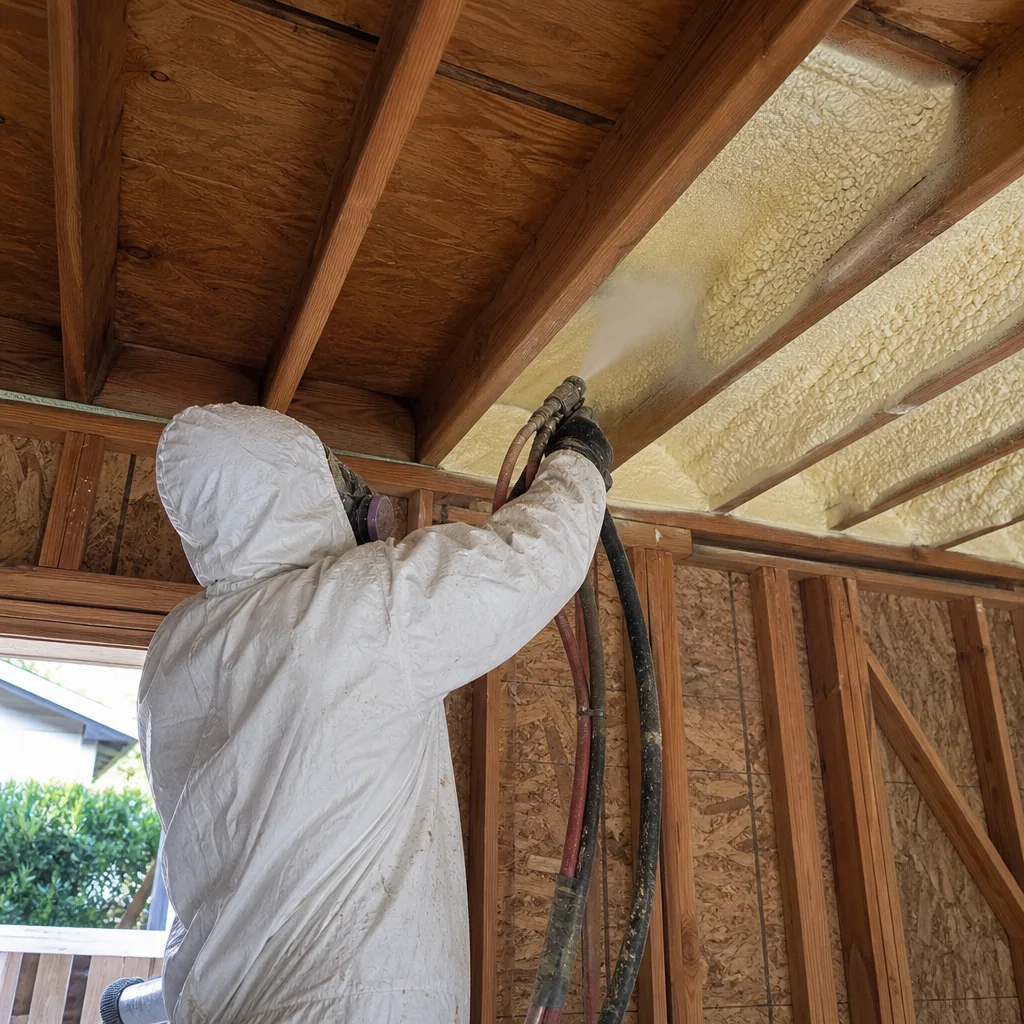
Where attic access is tight or knee walls are present, batt insulation from Owens Corning or Johns Manville gives us precise control. This matters in Fort Lee’s older multi-family buildings where floor plans are irregular and standard blown-in coverage would leave voids along perimeter walls. The Palisades wind will find every void. We cut and fit batts so it can’t.
Attic Insulation Top-Up
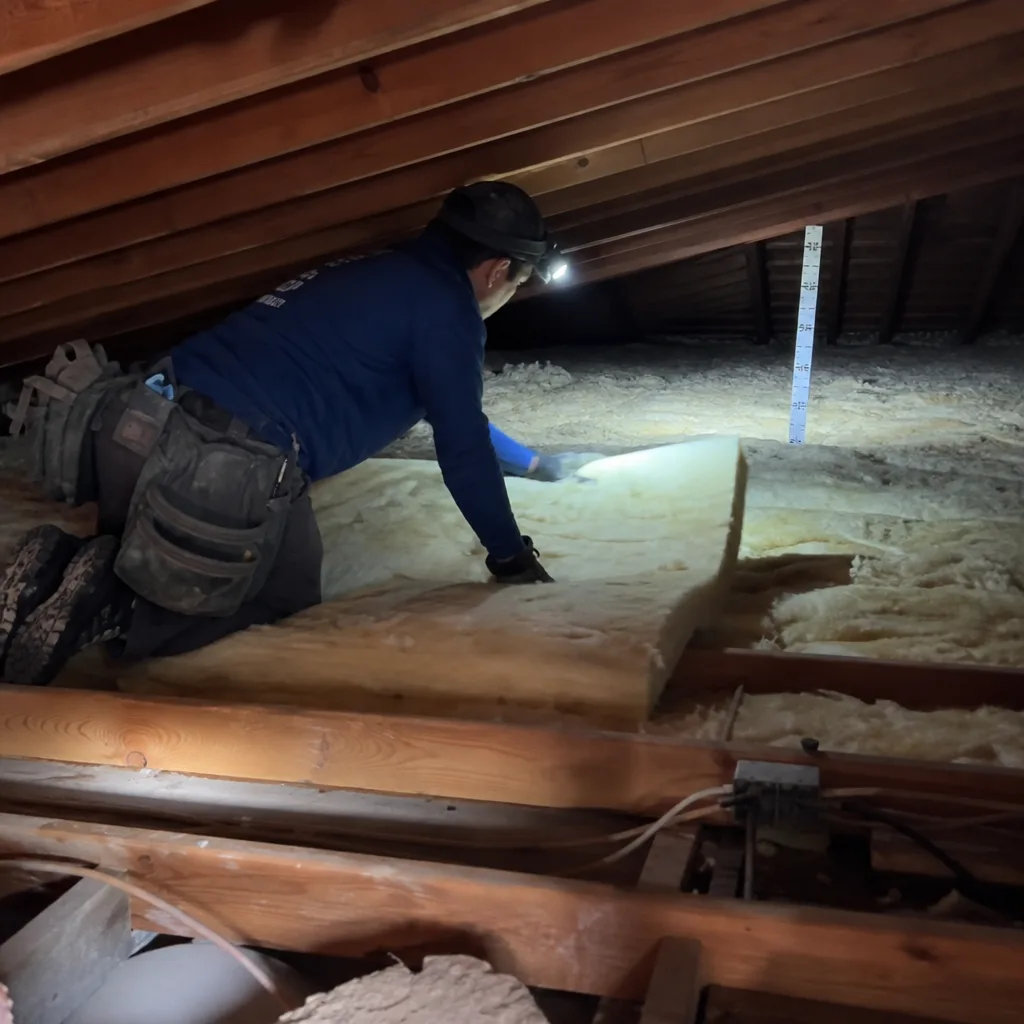
Most Fort Lee attics we see have some insulation, just not enough for this elevation. Top-up is the single most cost-effective move for a homeowner whose building dates to the 1970s or 1980s but whose attic only has R-11 or R-19 when it should have R-49 to R-60. We blow additional insulation directly over the existing layer after checking for moisture and air leaks. Jobs like this are usually done in a few hours.
Attic Insulation Replacement
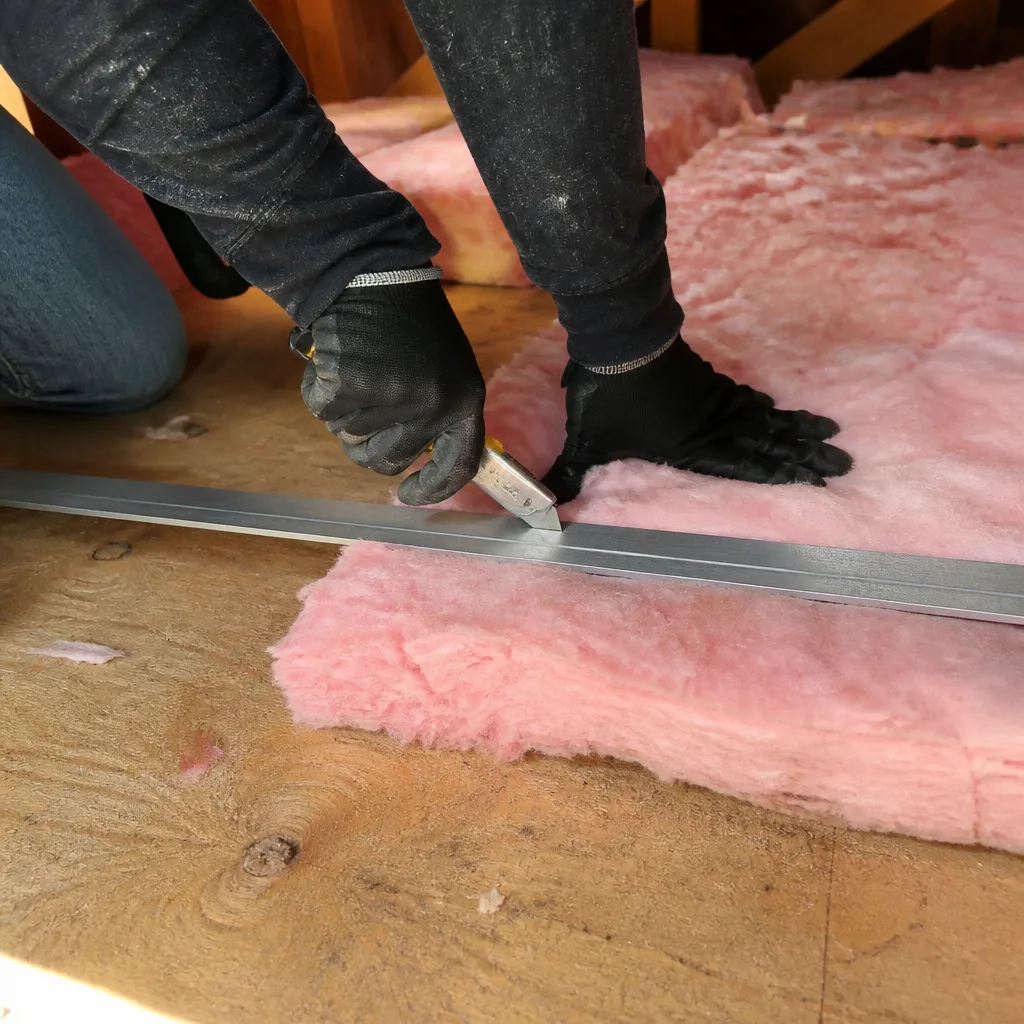
When insulation has been soaked by a roof leak, shredded by rodents, or caked with decades of dust and droppings, adding more on top just seals in the problem. We remove the old material, sanitize the cavity, seal penetrations, and install new insulation. Fort Lee’s older towers and brick multi-families often have original insulation from the Nixon administration. It’s past time to replace it.
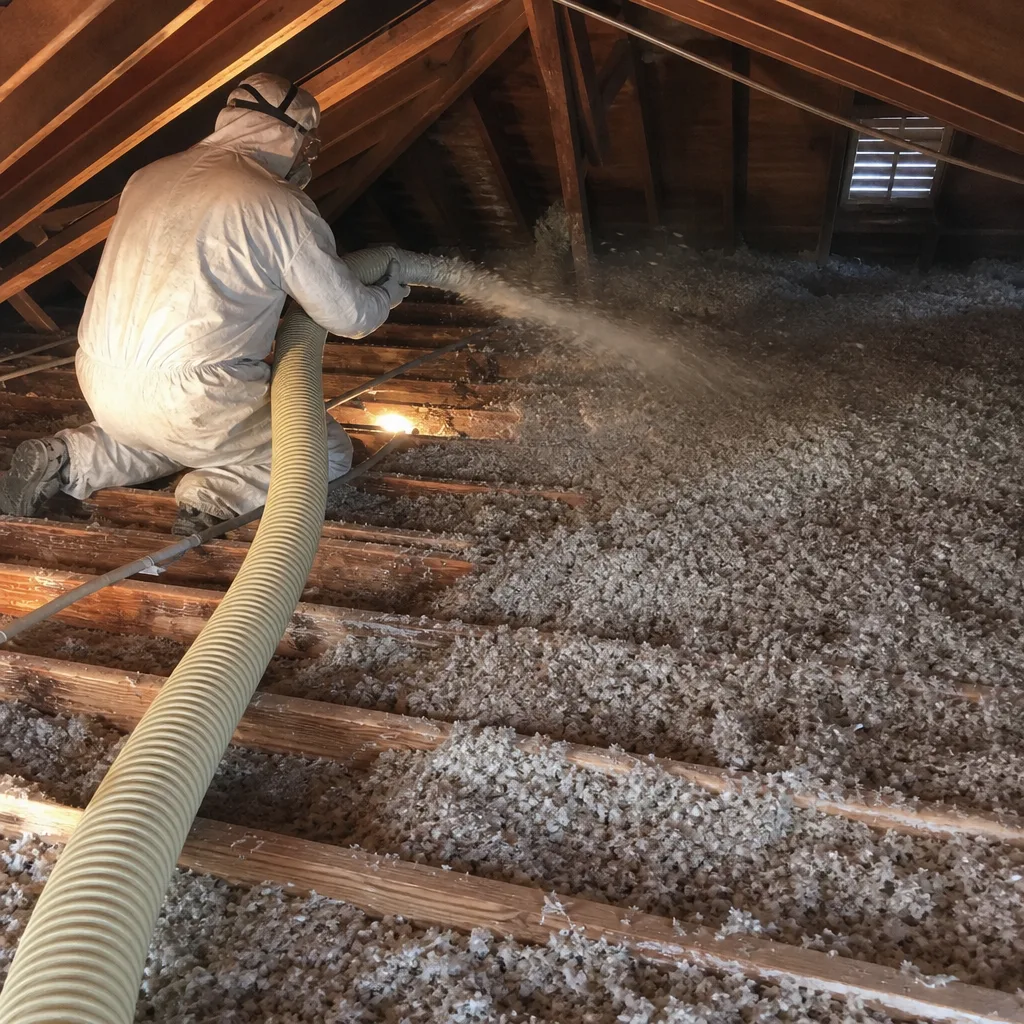
Attic Baffles & Ventilation Prep
Insulation that blocks soffit vents creates moisture problems and ice dams. In Fort Lee, where winter winds drive moisture into attic cavities, ventilation is not optional. We install baffles at every rafter bay before adding insulation, so air keeps moving and the new insulation stays dry. Most jobs are completed in a single visit.
Whatever the scope, our Attic Insulation team treats every Fort Lee building as its own puzzle. That’s the difference between a quote and a diagnosis.
What happens when you call
- 1
A real person answersNo phone trees - you reach a local pro.
- 2
You get an upfront price rangeHonest numbers before anyone is dispatched.
- 3
A background-checked tech heads outLicensed & insured, dispatched right away.
- 4
You approve before work beginsNothing starts until you say go.
Trusted Brands We Service in Fort Lee
We install and service insulation from the manufacturers building-science professionals actually trust: Owens Corning, GreenFiber, Johns Manville, and Knauf. Our Fort Lee customers don’t have to worry about cheap no-name products that sag, settle, or off-gas. We stock the common sizes and materials for Fort Lee’s specific building types, and we can have specialty product on site within days, not weeks. When a condo board has a spec, we meet it. When there’s no spec, we write one based on the building’s actual construction, not a guess.
Common Attic Insulation Problems We See in Fort Lee Homes
- Wind-driven air infiltration through failed curtain wall joints. In 1960s-1980s concrete towers, the exterior curtain wall was never designed for Palisades-level wind pressure. Joints fail over decades, and outside air pushes straight through the wall cavity and overwhelms whatever attic insulation exists. We seal the joints before we touch the attic.
- Thermal bridging at exposed concrete floor-slab edges. This is the Fort Lee signature problem, and it’s invisible from inside the unit. In a 1970s concrete tower on Palisade Avenue, our crew found uninsulated exposed slab edges bleeding heat from lower-floor units, causing chronic cold floors and condensation. We injected closed-cell foam along the perimeter cavities and sealed curtain wall joints, cutting wind-driven air infiltration that had overwhelmed the original fiberglass batts. This condition exists in tower after tower across the borough.
- Failed or absent perimeter cavity insulation in pre-war brick buildings. Many of Fort Lee’s two- and three-family brick homes were built when insulation meant a layer of newspaper between the joists. The walls bleed heat, and attic insulation alone can’t fix that. We evaluate the whole envelope, not just the attic floor.
- Settled, compressed, or rodent-damaged attic insulation. Thirty years of gravity and squirrels turns R-30 batts into R-9 matting. In Fort Lee, where winters are windier than surrounding towns, that settled layer means real money on the utility bill. Replacement or top-up fixes it.
Pricing for Attic Insulation in Fort Lee, NJ
What you’ll pay for attic insulation in Fort Lee depends on what kind of building you live in and what’s already up there. Honest ranges so you know what to expect:
- Attic insulation top-up in a pre-war brick two-family: typically $1,200-$2,400, depending on attic size and access.
- Blown-in attic insulation for a condo top-floor unit: typically $900-$2,800.
- Attic insulation replacement with removal and air sealing: typically $2,500-$4,800 for the average Fort Lee multi-family attic.
- Slab-edge cavity injection in a concrete tower: quoted per linear foot, typically $28-$45 per foot on Fort Lee tower work, depending on access and the number of stories.
What moves the number: attic accessibility (some Fort Lee towers have hatches that require scaffolding), how much old insulation has to come out, and whether the curtain wall joints need sealing. The $50 Off Any Repair Over $250 discount applies to insulation repair work over the threshold. Seniors and veterans always get 5% off. Call (855) 657-3403 for a free inspection and an exact quote. Most jobs are completed in a single visit.
We Also Serve Cities Near Fort Lee
Our crews work the whole Palisades corridor. We handle Attic Insulation in Fort Lee daily, and we also serve Union City, Hoboken, Clifton, and Jersey City. If you’re in one of those towns and your building has the same slab-edge or curtain wall issues, the same crew that fixes tower envelopes in Fort Lee can be at your door this week. Call (855) 657-3403.
Serving Fort Lee, NJ - Our Local Coverage Area
We’re based in the Fort Lee area and know this community well. Use the map below to see our service coverage - if you’re nearby, we can almost certainly help.
FAQs - Attic Insulation in Fort Lee
Because heat in a Fort Lee tower doesn’t escape through a pitched attic floor. It bleeds through exposed concrete slab edges, failed curtain wall joints, and uninsulated perimeter cavities at every story. “Attic insulation” in these buildings means sealing and insulating the actual thermal envelope: the slab edges at ceiling level, the mechanical room penetrations, and the perimeter wall cavities behind radiators and window lines. Skipping this work is why lower-floor units run cold even when the boiler works fine. Call (855) 657-3403 and we’ll explain what we’d actually do in your building, based on its construction, not a generic checklist.
Fort Lee sits roughly 300 feet above the Hudson on the Palisades escarpment, directly in the path of prevailing northwest winter winds. That wind pressure pushes outside air through every crack, joint, and cavity in the building envelope. If your attic insulation is loosely installed, wind literally blows the warm air out from inside the insulation layer, reducing its effective R-value by a significant margin. This is why insulation that works fine in Teaneck or Englewood fails in Fort Lee. The fix is air sealing first, insulation second. Always.
Yes. We can do a focused visual and thermal inspection of the slab edges and perimeter cavities without running a full home energy audit. Our technicians will access the mechanical room or unit perimeter and check for cold surfaces, condensation, and visible gaps along the slab-to-wall connection. In most Fort Lee towers, the problem is visible within 20 minutes. If a full Fort Lee energy audit would help, we’ll tell you, but we never require one just to look. Call (855) 657-3403 to schedule.
For most pre-war brick two-families in Fort Lee, the best approach is blown-in cellulose into the uninsulated perimeter wall cavities, combined with air sealing at the top and bottom plates. These buildings usually have zero or near-zero original cavity insulation, and dense-packed cellulose from GreenFiber fills the irregular cavities better than batts. If there’s a shallow attic or crawlspace above the top floor, we address that too. Every building is different, so we inspect first. Do not skip the seam
Call (855) 657-3403 and we’ll do a site visit, not a phone guess.
Yes. Fort Lee’s building department enforces the New Jersey Uniform Construction Code, which requires insulation work to meet current energy code when the scope exceeds a simple top-up. More importantly, most Fort Lee condo towers and co-ops have board rules about work in common areas, mechanical rooms, and shared attics, and many require a licensed contractor’s certificate of insurance before work starts. We’re fully licensed and insured, and we’ve worked with Fort Lee condo boards and property managers for over 15 years. We’ll handle the paperwork. You won’t have to chase signatures.
Fort Lee’s Insulation Problem Is Different. We Fix It Differently.
Most insulation companies treat Fort Lee like any other Bergen County town. They’re not wrong about the town; they’re wrong about the buildings. A 1972 concrete tower on Palisade Avenue and a 1965 split-level in Paramus share a zip code prefix and nothing else. The tower loses heat through exposed slab edges at every floor, wind-driven air moving through curtain wall joints, and thermal bridges that no amount of attic insulation ever touches. The split-level has an attic. Fort Lee doesn’t, mostly. If your insulation contractor starts by asking about your attic access, they may be in the wrong town.
Here’s what we know after 15 years of opening Fort Lee walls: many of these buildings were constructed during the 1960s and 1970s commuter boom, when energy was cheap and building science was an afterthought. The concrete towers along the Palisades were built with exposed floor-slab edges at every story, unpainted concrete bridging directly from heated unit interiors to the cold outside air. That’s why your ankles freeze in January even with the thermostat at 72. That’s why wall condensation collects behind bookshelves in lower-floor units. And that’s why “add more attic insulation” is frequently the wrong recommendation for this town.
Our approach is different, and it’s what makes Attic Insulation our specialty here: we inspect the actual building envelope. We check slab edges for bridging, curtain wall joints for wind penetration, and perimeter cavities for failed original insulation. Then we fix what’s actually wrong, not what a template says should be wrong. In one Fort Lee tower after another, we’ve injected closed-cell foam into slab-edge cavities, sealed curtain wall joints, and turned drafty, cold-floored units into rooms you actually want to sit in.
If you’re in Fort Lee and you’re tired of high Con Edison bills, cold floors, and condensation you can’t explain, call (855) 657-3403. A live person answers. We’ll schedule a real inspection of your actual building. That’s the information gain, and it’s the only kind that saves you money.
Written by Neil Ashford, Owner at Warmline Insulation Co., serving Fort Lee since 2011.