
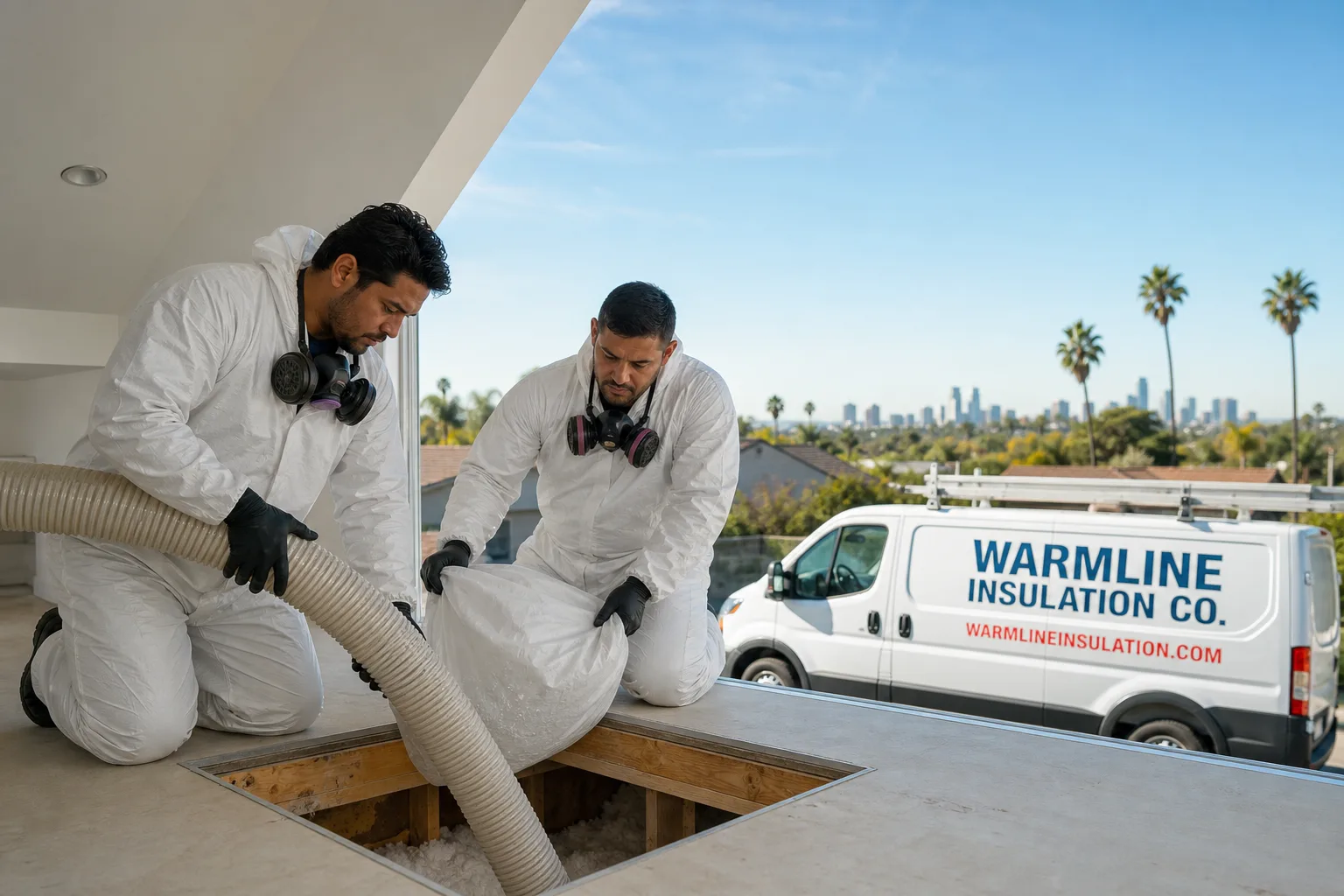
Trusted Blown-In Insulation for Los Angeles Homeowners
Blown-in insulation in Los Angeles typically costs $1.50 to $3.80 per square foot installed, with most 1,500-square-foot attic jobs landing between $2,300 and $5,700. We complete most blow-in jobs in a single visit, and our technicians can usually be at your door within 24 to 48 hours. Warmline Insulation Co. has been insulating LA homes since 2011, which means we’ve worked through enough heat waves and June Gloom seasons to know exactly what your ceilings and walls are up against. Call (855) 657-3403 for a free estimate from a live person, any hour of the day.
Los Angeles homes fight a specific battle. The attic can hit 140°F in August, cooking the insulation you already have and turning your upstairs bedrooms into ovens. Then January rolls around and 40-degree nights make your living room feel like a walk-in cooler. Blown-in insulation fixes both problems at once because it settles into every gap, corner, and irregular stud bay that batt insulation leaves exposed. Neil Ashford founded this company on a simple observation: most LA homes are under-insulated by 30 to 50 percent, and homeowners never know until the bill arrives. We’re here to change that.
Key Takeaways:
- Blown-in insulation costs $1.50-$3.80 per square foot installed in Los Angeles, depending on material and area
- Most jobs are completed in a single visit by licensed, insured, background-checked technicians
- We install GreenFiber cellulose, Owens Corning fiberglass, and other top-shelf materials
- Every project is backed by our 90-Day Done Right Promise
- A live person answers our phones 24/7, including weekends and holidays
What Our Blown-In Insulation Service Includes
Blown-in insulation is exactly what it sounds like: loose-fill material pneumatically blown into attics, walls, and floor cavities to create a continuous thermal blanket. What makes it different from rolled batting is coverage. Blown-in material flows around pipes, wires, recessed light housings, and awkward framing. No gaps, no seams, no cold spots. Here’s what we offer under the blown-in umbrella.
Blown-In Cellulose
Blown-in cellulose is made from recycled paper fiber treated with borate for fire resistance and pest deterrence. It’s the material we recommend most often for Los Angeles retrofits because it packs down to roughly 3.5 R per inch and performs better than fiberglass at stopping air movement, not just slowing heat transfer. Warmline Insulation Co. installs GreenFiber cellulose, blowing it to the R-38 to R-60 depth that makes sense for your attic’s existing setup and your home’s age. In neighborhoods like Eagle Rock and Highland Park, where homes run from 1920s bungalow to 1960s ranch, this is the most forgiving material for irregular framing, similar to how Blown-In Insulation in Pasadena handles diverse home styles.
Blown-In Fiberglass
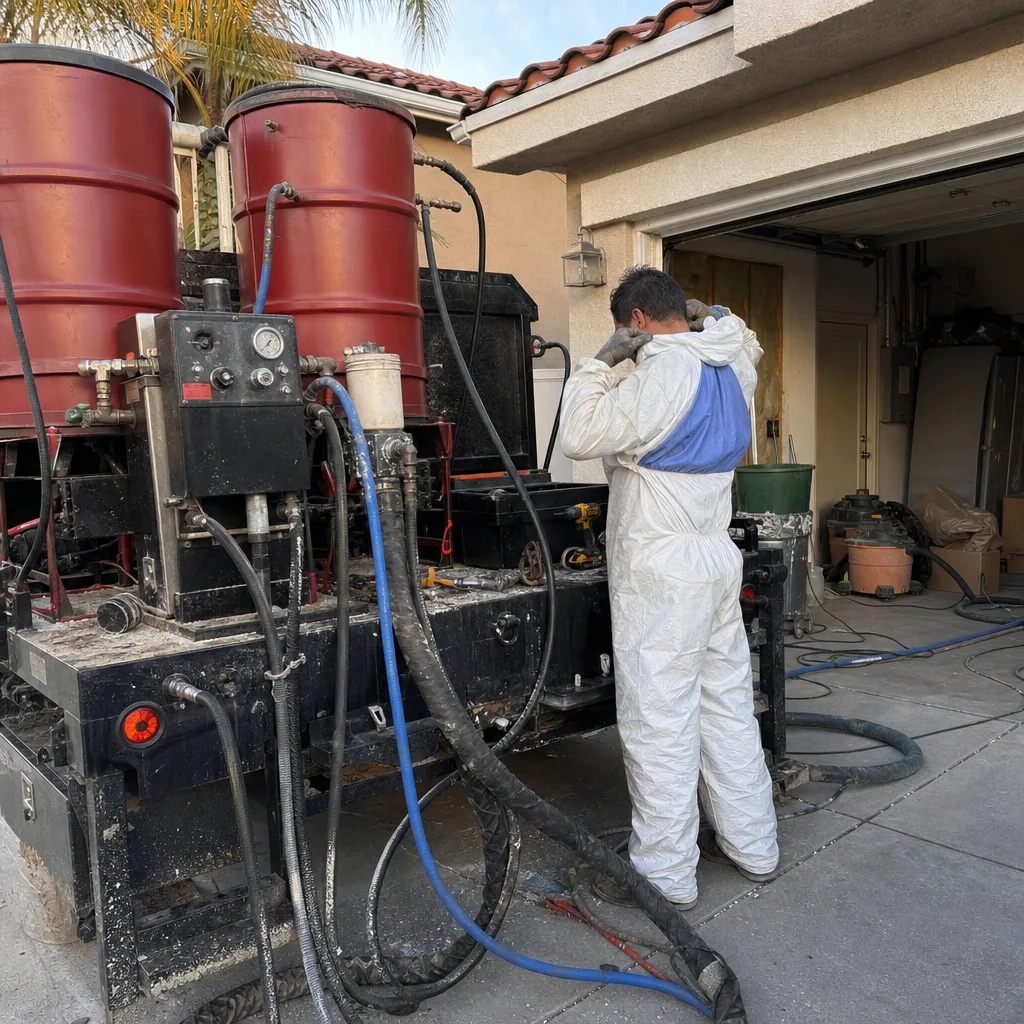
Blown-in fiberglass is loose glass fiber, non-combustible and naturally mold-resistant. It’s the better choice for homes where you want a lighter material or where electrical fixtures make you want the extra peace of mind of an inherently fireproof product. We install Owens Corning AttiCat and Johns Manville Climate Pro fiberglass, and our technicians calibrate the blow rate so you get even coverage without fluffy overfill that degrades R-value. This is a popular pick in Burbank and Glendale, where homes often have can light layouts that call for a little more care around the fixture boxes.
Dense-Pack Wall Insulation
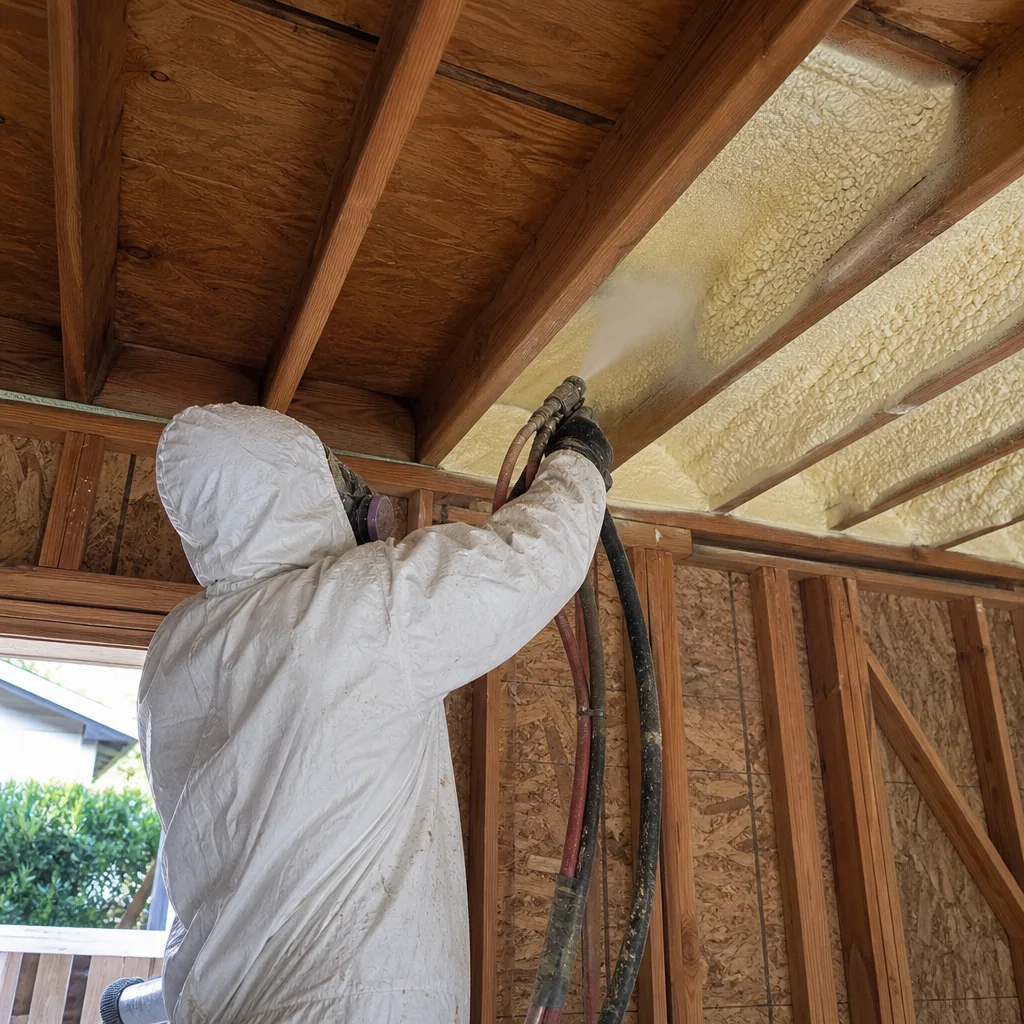
Dense-pack is blown-in insulation installed under pressure into enclosed wall cavities. If your walls are uninsulated, and a shocking number in Los Angeles still are, dense-pack cellulose fills them from top to bottom without tearing out drywall. Our crew drills small access holes, snakes the hose to the top of each cavity, and packs the material tight enough to stop airflow. We’ve done this for hundreds of older homes from Leimert Park to El Sereno, where walls were left empty when the house was built, just as we do for Blown-In Insulation - Humble properties.
Blown-In Top-Up
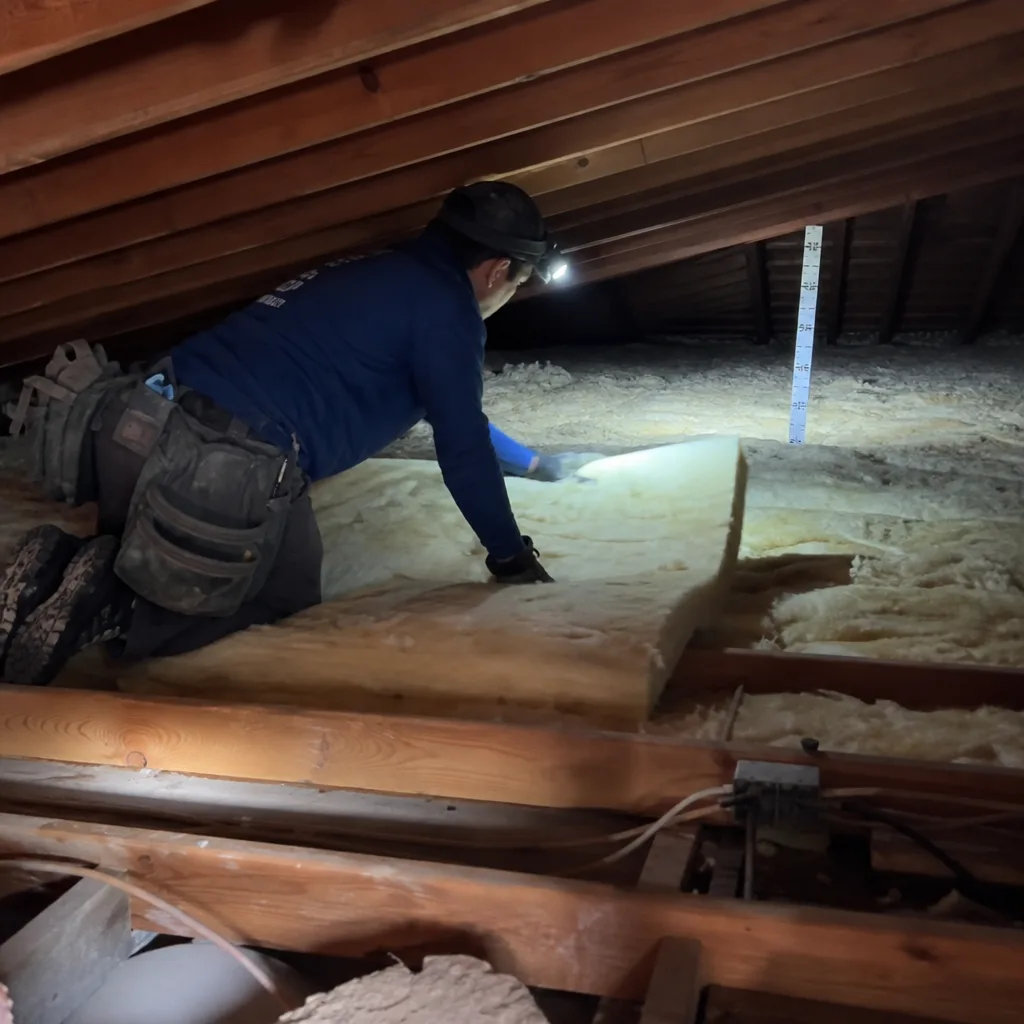
A top-up is when you already have some insulation but not enough. We inspect what’s up there, check for moisture damage or compressed areas, then blow fresh material over the existing layer to bring the total R-value up to current DOE recommendations for the LA climate zone. In Atwater Village and Silver Lake, we regularly find attics with 4 inches of old fiberglass from the 1970s, which is about R-11. Our top-up brings them to R-38 or better in under two hours. It’s the single cheapest comfort upgrade most Angelenos can make.
What happens when you call
- 1
A real person answersNo phone trees - you reach a local pro.
- 2
You get an upfront price rangeHonest numbers before anyone is dispatched.
- 3
A background-checked tech heads outLicensed & insured, dispatched right away.
- 4
You approve before work beginsNothing starts until you say go.
Brands We Service for Blown-In Insulation
We install and top up blown-in insulation across all major material brands. When it comes to fiberglass, we run Owens Corning AttiCat and Johns Manville Climate Pro regularly. Both are industry benchmarks for consistency, low dust, and long-term loft retention. We calibrate our blowing machines to each brand’s specific fluff-and-settle characteristics rather than running one setting for everything. That’s the difference between a top layer that stays at R-38 and one that quietly settles to R-30 over two summers.
We also install GreenFiber cellulose, which is manufactured from up to 85 percent recycled paper content and treated with borate. Knauf fiberglass rounds out the lineup for specific project needs. Whether the material already in your attic is one of these brands or something else entirely, we can top it up, remove it, or replace it. The goal is the system, not the logo on the bag.
Signs You Need Blown-In Insulation Right Now
- Your upstairs rooms run 10+ degrees warmer than downstairs in summer. That’s not just an HVAC problem. In Los Angeles, the attic functions like a heat radiator pressing down on your ceiling. Blown-in insulation absorbs that radiant load before it migrates into the living space. If you can feel heat radiating from the ceiling at 7pm, your attic is failing.
- Your energy bills spike every July through October. LADWP and SoCal Edison customers who call us typically see $80 to $150 monthly jumps during heat waves. An under-insulated attic accounts for a big share of that. Upgrading to R-38 or R-49 blown-in insulation usually knocks 15 to 25 percent off the cooling portion of the bill.
- You can see the tops of your ceiling joists in the attic. If the joists are visible, you have less than 6 inches of insulation up there. That’s somewhere around R-19, roughly half of what Los Angeles homes need. We see this constantly in San Fernando Valley homes built between 1950 and 1980.
- Rodents or pests have been up there. Rats and squirrels compress insulation, leave urine and droppings, and shred the material for nests. Once that happens, the insulation’s R-value is shot and the material is contaminated. We handle removal and replacement as part of our attic cleaning and rodent proofing service, then blow in fresh material.
- Rooms over the garage or above a crawl space are always cold. These are the forgotten cavities. Blown-in insulation works in floors and rim joists too, not just attics. If the room over your garage never holds heat in January, the floor cavity is probably empty.
Our Blown-In Insulation Process - Step by Step
- 1
Inspection and thermal checkpoint. We start with a walkthrough of the attic, the walls in question, and any accessible floor cavities. Using an infrared thermometer and visual inspection, we map out where insulation is missing, compressed, or moisture-damaged. We also check for air leaks around recessed lighting, plumbing stacks, and partition walls, because insulation without air sealing is like a sweater in a windstorm.
- 2
Air sealing and prep work. Before any material goes in, we seal the gaps that let air move between the house and the attic. That means foam around top plates, caulk around electrical penetrations, and proper fire-rated covers over any recessed lights that need them. We also verify your soffit vents are open and the attic ventilation is balanced, because blown-in insulation without airflow leads to moisture and mold.
- 3
Material blown to target depth. We bring the material depth up to the R-value we agreed on during the estimate. Our machines run a calibrated throttle setting per material type, so the density is even from edge to center. We install depth markers so you can see exactly where the material sits against the target line.
- 4
Settling check and cleanup. Blown-in insulation compacts over the first few weeks, especially cellulose. We factor that into the initial depth so the settled R-value matches the target. After the blow, we vacuum the access area, close up any wall holes with paintable plugs, and leave your home cleaner than we found it.
- 5
Final walkthrough and the 90-Day Done Right Promise. Before we leave, we walk the job with you. If anything’s off, we fix it on the spot. Then it’s covered by our written 90-Day Done Right Promise: if the work isn’t right, we make it right. No fine print, no runaround. Neil Ashford’s name goes on every job, and he backs it personally.
How Much Does Blown-In Insulation Cost in Los Angeles?
A typical Blown-In Insulation pricing project in Los Angeles runs $1.50 to $3.80 per square foot installed. That breaks down like this: a 1,500-square-foot attic top-up with R-38 fiberglass usually lands between $2,100 and $3,800. Dense-pack wall insulation for an average three-bedroom home runs higher, typically $3,500 to $7,500, because it’s cavity-by-cavity work. Blown-in cellulose falls in the middle of the fiberglass range, and the recycled content often qualifies for utility rebate programs.
What drives the price? First, access. A low-pitch attic in a 1940s bungalow in Mid-City takes longer than a wide-open attic in a newer Northridge build. Second, material choice. Cellulose costs slightly more than fiberglass but performs better in wind-wash situations. Third, prep work. If we find old wiring that needs to be addressed, moisture from a roof leak, or rodent contamination requiring removal, the scope changes. We give you the number before work starts. No surprise add-ons, no pressure. Your free estimate includes the full breakdown, and most jobs are completed in a single visit.
Blown-In Insulation Near Los Angeles - Our Service Area
We run trucks across Los Angeles County every day, from the Westside to the San Gabriel Valley and down through South Bay. The team regularly covers Pasadena, Burbank, Glendale, Inglewood, Torrance, Long Beach, and everywhere in between. Our average dispatch time is 24 to 48 hours, with same-day slots often open on weekdays. We’re headquartered close by, so if you’re in one of the neighborhoods mentioned anywhere on this page, we’re already servicing your street. If you’re looking at our Texas locations, check out what we do for Blown-In Insulation in Houston and Blown-In Insulation in The Woodlands. For the LA area, your neighbors already know us.
Serving Los Angeles, CA - Our Local Coverage Area
We’re based in the Los Angeles area and know this community well. Use the map below to see our service coverage - if you’re nearby, we can almost certainly help.
Frequently Asked Questions - Blown-In Insulation in Los Angeles
Blown-in insulation is loose-fill material (cellulose or fiberglass) installed with a pneumatic blowing machine that sprays it into attics, wall cavities, and floor bays. It creates a continuous layer without gaps or seams, unlike rolled batting. This makes it the preferred retrofit choice for Los Angeles homes with irregular framing or existing insulation that needs a top-up.
Most attic blow-in jobs in Los Angeles take 2 to 4 hours from setup to cleanup. Dense-pack wall insulation takes longer, typically a full day for a three-bedroom home, because the crew works cavity by cavity. We complete most projects in a single visit. Call (855) 657-3403 for a time estimate specific to your home.
Blown-in insulation costs $1.50 to $3.80 per square foot installed in Los Angeles. A typical attic job runs $2,100 to $5,700 depending on square footage, material, and prep requirements. Your estimate is free and the price we quote is the price you pay. Call us for a specific number for your home.
Yes, we install Owens Corning AttiCat blown-in fiberglass regularly, along with Johns Manville Climate Pro, Knauf, and GreenFiber cellulose. Our machines are calibrated to each brand’s density and loft characteristics so the installed R-value holds over time. If your attic already has Owens Corning material, we can top it up with the same product line for consistency.
We offer same-day and next-day appointments across Los Angeles for urgent cases, like exposed insulation after a leak or a pest infestation that’s torn the material apart. A live person answers our phone 24/7, so you’ll never leave a message and wait for a callback. Tell us what’s happening and we’ll get a truck out.
Every blown-in insulation project is covered by our written 90-Day Done Right Promise: if the work isn’t right, we make it right, no charge and no argument. Material manufacturers also carry their own warranties, which we’ll walk you through before the job starts. The point is this: you’re covered from day one.
You don’t need to do much. Clear a path to the attic access point, move any vehicles out of the driveway so we can park the blowing machine close, and let us know about any stored items in the attic that could get dusty. We bring drop cloths, vacuum equipment, and everything else. In most cases you can go about your day while we work.
Schedule Your Blown-In Insulation Service in Los Angeles Today
Stop losing money through your attic. Call (855) 657-3403 today for a free, no-obligation estimate on blown-in insulation in Los Angeles. A real person answers, 24/7. We’ll give you upfront pricing, a single-visit schedule, and the 90-Day Done Right Promise in writing before you commit to anything. Most homeowners tell us afterward that they waited too long to make the call.
Written by Neil Ashford, Owner at Warmline Insulation Co., serving Los Angeles since 2011.