
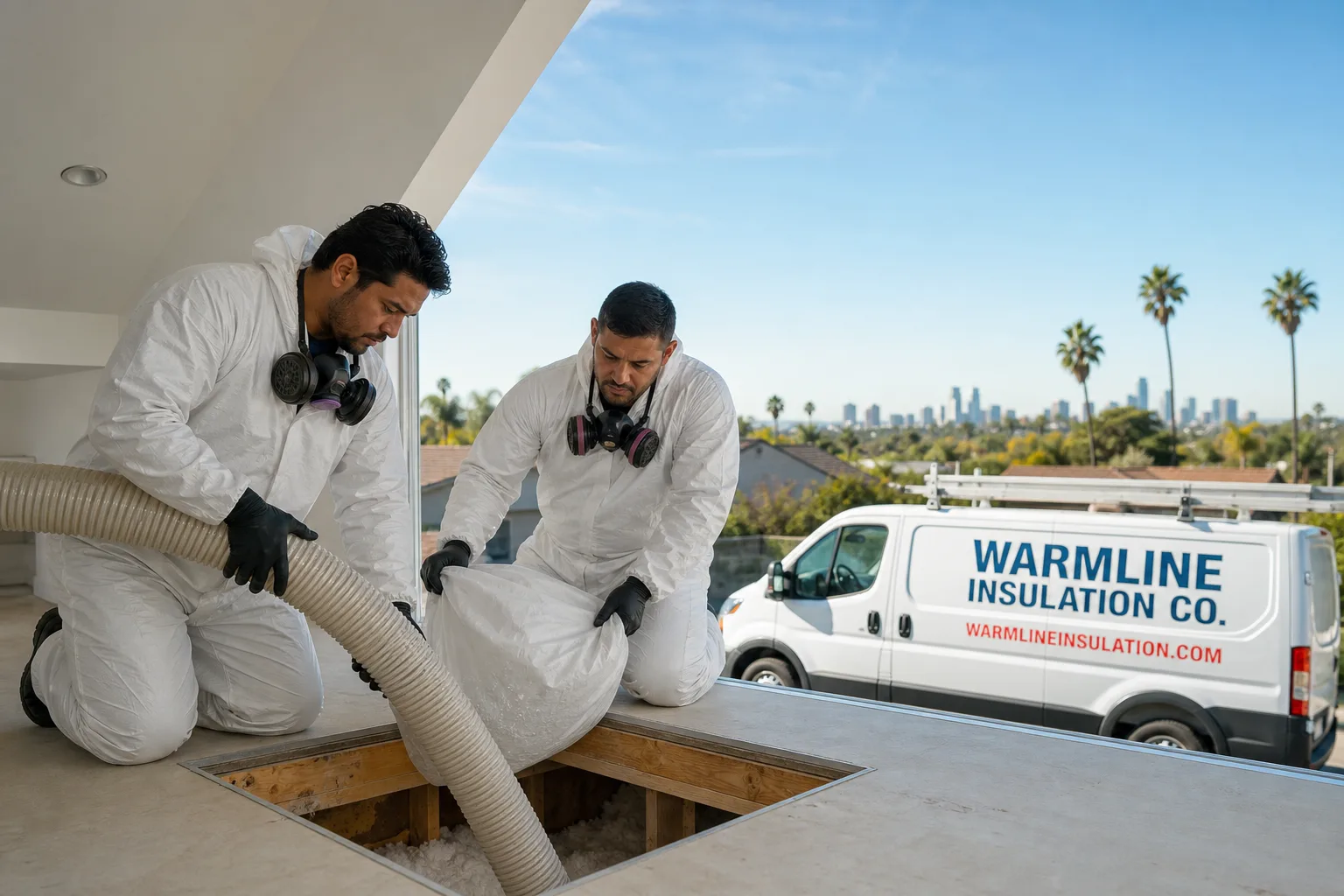
How Much Does Insulation Cost in Minneapolis, MN? (2026 Price Guide)
Insulation in Minneapolis typically costs between $1,200 and $6,500 for a whole-home project, with most homeowners spending around $2,800 to $3,900 depending on the type of insulation and the areas being treated. Attic insulation alone – the most common single job we do – runs $1,100 to $2,800 for an average 1,200-square-foot attic. Minneapolis winters consistently push energy loss through under-insulated attics and crawl spaces harder than most U.S. cities, so the payback here is faster than the national average.
How Much Does Insulation Cost in Minneapolis?
Here’s the direct answer: most Minneapolis homeowners pay $1,500 to $4,500 for insulation work, with the final number depending on insulation type, square footage, current conditions, and whether removal of old material is needed first. Spray foam on the higher end, blown-in fiberglass or cellulose on the lower end. A focused attic air-sealing job with blown-in insulation on top is frequently the smartest first dollar spent in this climate – and it’s usually done in a single day.
We’ve been insulating Minneapolis homes since 2011, and the price ranges below reflect what we’re actually quoting in this market in 2026 – not national averages copied from a trade publication.
Insulation Cost Breakdown (2026)
The table below covers the most common insulation projects we complete across Minneapolis and the surrounding metro. These are real installed-cost ranges – labor and materials combined – for typical Minneapolis homes.
| Service / Project Type | Typical Range (Installed) | Notes |
|---|---|---|
| Attic Blown-In Insulation (fiberglass or cellulose) | $1,100 – $2,800 | Per 1,000-1,500 sq ft attic; includes baffle installation |
| Attic Air Sealing (standalone) | $400 – $950 | Sealing penetrations, top plates, recessed lights; often paired with blown-in |
| Attic Insulation + Air Sealing (combined) | $1,500 – $3,500 | Best ROI in Minneapolis climate; most popular single project |
| Spray Foam Insulation (open-cell) | $1.50 – $2.50 per board foot installed | Common in rim joists, crawl spaces, tight cavities |
| Spray Foam Insulation (closed-cell) | $3.00 – $5.00 per board foot installed | Vapor barrier properties make it the standard for Minneapolis crawl spaces |
| Crawl Space Encapsulation and Vapor Barrier | $2,500 – $6,500 | Includes liner, sealing, and insulating perimeter walls |
| Wall Insulation (blown-in through exterior or interior) | $1,200 – $3,200 | Older Minneapolis homes (pre-1980) often have empty 2×4 cavities |
| Radiant Barrier Installation | $800 – $1,800 | Reduces summer heat gain; less common but effective in Minneapolis attics |
| Insulation Removal and Replacement | $1,800 – $4,500 | Old fiberglass batts, vermiculite abatement scope, rodent-damaged material |
| Attic Cleaning and Rodent Proofing | $900 – $2,500 | Common in older Minneapolis neighborhoods like Longfellow and Linden Hills |
| Home Energy Audit | $200 – $450 | Thermal imaging and blower-door test; identifies exactly where heat escapes |
A few things push these numbers up or down in real Minneapolis projects. Homes built before 1980 – and there are a lot of them in neighborhoods like South Minneapolis, Northeast, and Uptown – typically have compressed or degraded fiberglass batts that need to come out before new material goes in. That adds removal cost but also adds real R-value gain. On the lower end, a newer home that just needs a blown-in top-up to hit current Minnesota energy code (R-49 for attics) can be a straightforward half-day job. On the higher end, a full crawl space encapsulation in an older bungalow with a dirt floor and poor drainage adds labor hours and material quantity. The only way to get a firm number for your specific home is a free on-site estimate – which we’ll do at no charge when you call (855) 657-3403.
What Affects Insulation Pricing in Minneapolis
Six factors account for most of the price variation we see across Minneapolis jobs. Understanding them helps you know what questions to ask and what quotes to expect.
- Insulation type and R-value target: Blown-in cellulose (like GreenFiber) and fiberglass (Owens Corning or Johns Manville) cost less per square foot than closed-cell spray foam (Icynene or Demilec). Minnesota’s climate zone 6 designation means code requires R-49 in attics for new construction, and upgrading an older attic to that level takes more material than many homeowners expect – often 16 to 18 inches of blown-in depth.
- Current insulation condition and removal requirements: Homes in older Minneapolis areas like Powderhorn, Seward, and North Loop frequently have original fiberglass batts from the 1960s or 1970s that have settled, compressed, or been contaminated by moisture or pests. Removing that material adds $0.75 to $1.50 per square foot to the project but is necessary for the new insulation to perform correctly.
- Attic or crawl space accessibility: A standard walkable attic with a pull-down stair is straightforward. A Minneapolis craftsman bungalow with a kneewall attic, multiple dormers, or an unfinished basement transitioning to a tight crawl space takes longer to work in and to air seal properly. That extra labor shows up in the quote.
- Air sealing scope: This is the single most underpriced line item in most homeowner budgets. Air sealing before insulating is what makes the insulation actually work in a Minneapolis winter. Penetrations around plumbing stacks, electrical chases, recessed lights, and top plates need to be sealed with fire-rated foam or caulk. Skipping it means the insulation sits on top of a sieve. We don’t skip it.
- Moisture and structural conditions in crawl spaces: Minneapolis freeze-thaw cycles are hard on crawl space liners and rim joists. A crawl space that has had standing water, mold, or frost heave damage needs remediation before encapsulation – and that increases scope. We assess this during the free estimate so you’re not surprised later.
- Project size and combination discounts: Bundling attic insulation, air sealing, and rim joist spray foam into one visit is almost always more cost-effective than scheduling three separate jobs. Our upfront pricing reflects that – and our standing $50 Off Any Repair Over $250 offer applies to qualifying projects. Seniors and veterans also receive a permanent 5% discount on any Warmline job.
Minneapolis-Specific Pricing Factors (What Other Guides Skip)
Most national pricing guides don’t account for what makes Minneapolis different. Here’s what actually moves the needle in this market.
Minnesota Energy Code requirements: Minnesota adopted the 2020 IECC with state amendments. For attics in climate zone 6, that’s R-49 minimum – significantly higher than the R-30 or R-38 you’ll see quoted in guides written for warmer states. More depth means more material, which means higher installed cost than a national average suggests. If a quote you’re comparing against ours seems unusually low, ask what R-value they’re targeting.
The freeze-thaw effect on rim joists: Minneapolis homes – particularly older two-stories in areas like Fulton, Kenny, and the Nokomis neighborhood – regularly show frost on rim joists during energy audits in January and February. This is a building-science problem, not just a comfort problem. Closed-cell spray foam at the rim joist (typically a 2-inch application) solves it and is one of the fastest-payback upgrades available in this market. It runs $400 to $900 for most homes.
Ice dam history as a diagnostic signal: If your Minneapolis home has had ice dams, that’s not primarily a roofing problem – it’s an insulation and air sealing problem. Heat escaping through an under-insulated attic warms the roof deck, melts snow, and the melt refreezes at the cold eave. We see this regularly in older homes across Whittier, Longfellow, and the Como neighborhood. Properly insulating and air sealing the attic floor eliminates the heat source that causes ice dams. The fix typically runs $1,500 to $3,000 and eliminates a problem that costs much more in roofing repairs over time.
Older housing stock: Minneapolis has a higher percentage of pre-1940 housing than most Midwestern cities of comparable size. These homes were built before insulation standards existed. Many have no insulation in the wall cavities whatsoever, only 2 to 3 inches of compressed fiberglass in the attic, and crawl spaces that were never intended to be conditioned. Retrofitting them takes more work than a newer home, but the energy savings are proportionally higher too.
How to Save on Insulation in Minneapolis
There are real ways to reduce your insulation cost in Minneapolis without compromising on performance. Here’s what we tell homeowners honestly.
Start with a home energy audit. Before spending money on insulation, know exactly where your home is losing heat. A proper energy audit with thermal imaging and a blower-door test shows the actual problem areas – sometimes it’s the attic, sometimes it’s rim joists and wall cavities, sometimes it’s a combination. Spending $200 to $450 on an audit can prevent you from over-insulating a space that isn’t the real issue and under-treating the one that is. We offer home energy audits as a standalone service for exactly this reason. It’s the diagnostic starting point that makes every other project smarter and more targeted. You can learn more on our home page.
Combine projects into one visit. If you know you need attic insulation, air sealing, and rim joist work, scheduling it all at once saves on mobilization costs. Most of our jobs are completed in a single visit, which keeps the total lower than spreading work across multiple appointments with multiple contractors.
Check for utility rebates. Xcel Energy and CenterPoint Energy both offer rebates for insulation upgrades to qualifying Minneapolis homeowners. The rebate amounts change annually, but insulation improvements to attics and walls have historically been among the most rebate-eligible home improvements in the state. We can walk you through what’s currently available during your free estimate.
Act before heating season, not during it. Fall scheduling – September through early November – is typically our most efficient window. You’ll avoid the January emergency rush when a frozen crawl space pipe or a severe ice dam forces an immediate decision. Planned work is always priced better than emergency work.
Ask about standing discounts upfront. Our $50 Off Any Repair Over $250 applies to qualifying jobs. Our $89 Seasonal Tune-Up is a practical way to assess your insulation’s current condition before committing to a larger project. And if you’re a senior or veteran, the 5% Senior and Veteran discount comes off every job, every time – no coupon required, no expiration date.
Call us at (855) 657-3403 for a free, no-obligation estimate. A live person answers every call – not a voicemail, not an answering service.
Insulation ROI in Minneapolis: Is It Worth It?
We get this question constantly, and the honest answer is: yes, for most Minneapolis homes, proper insulation is one of the highest-ROI home improvements available. Here’s why the numbers work in this climate.
Minneapolis averages roughly 8,000 heating degree days per year – one of the highest figures for any major U.S. city. That means your furnace runs hard and long. An attic with R-11 (common in 1960s-era Minneapolis homes) compared to R-49 is losing roughly 30 to 40 percent more heat per degree of temperature difference. At current natural gas and electricity prices in the Twin Cities, that translates to $400 to $900 in annual energy cost difference for a typical 1,600-square-foot home.
At an average project cost of $2,500 for attic insulation and air sealing, the simple payback period is 3 to 6 years. After that, the savings are pure. And because insulation doesn’t have moving parts, there’s no maintenance cost – a properly installed blown-in attic insulation job using Owens Corning or Rockwool material will perform for 30 to 50 years without degradation under normal conditions.
Crawl space encapsulation carries a different kind of ROI – it protects the structure. In Minneapolis, an unencapsulated crawl space in the freeze-thaw months accumulates moisture condensation, which accelerates wood rot in joists and subfloor material. We regularly see Minneapolis homes in areas like Minnehaha and South Minneapolis where a $3,500 encapsulation job prevents a $15,000 to $30,000 structural repair down the line. That’s not a sales pitch; it’s what the building science shows when moisture gets into wood framing for 15 or 20 consecutive winters.
What Materials Does Warmline Use in Minneapolis?
We work with the insulation industry’s benchmark manufacturers because they perform consistently and because our 90-Day Done Right Promise means we’re accountable for how the material performs after we leave.
- Owens Corning – blown-in and batt fiberglass insulation, widely used in Minneapolis attic upgrades
- Rockwool – mineral wool batts, fire-resistant and moisture-resistant, excellent for rim joists and wall cavities in older Minneapolis homes
- CertainTeed – fiberglass batt products for wall and floor applications
- Icynene – open-cell and closed-cell spray foam, used in crawl spaces and rim joists throughout the metro
- Demilec – spray foam systems, particularly for tight-cavity and continuous insulation applications
- Johns Manville – blown-in and batt products, a reliable secondary option depending on project spec
- Knauf – blown-in insulation, high recycled content, used in attic top-up applications
- GreenFiber – recycled cellulose blown-in, a lower-carbon option that performs well in Minneapolis attics
We’ll tell you exactly which product we’re recommending for your project and why during the estimate. No mystery materials, no generic “insulation” line items on the invoice.
Key Takeaways
- Attic insulation in Minneapolis runs $1,100 to $2,800 installed for a typical home.
- Combining air sealing with blown-in insulation ($1,500 to $3,500) delivers the best energy performance per dollar in this climate.
- Crawl space encapsulation ranges from $2,500 to $6,500 depending on size and conditions – and it protects the structure, not just the comfort.
- Minnesota code requires R-49 in attics – significantly more than warmer-state averages – which affects material quantity and cost.
- Older Minneapolis neighborhoods (Longfellow, Northeast, Uptown, Como, Nokomis) often need removal of original insulation before new material can be installed.
- A home energy audit ($200 to $450) is the right first step if you’re not sure where to start.
- Senior and veteran homeowners receive a permanent 5% discount; $50 Off Any Repair Over $250 applies to qualifying jobs.
- Warmline has been serving Minneapolis since 2011 – all technicians are background-checked, uniformed, and covered under a 90-Day Done Right Promise.
FAQs – Insulation Cost in Minneapolis
How much does attic insulation cost in Minneapolis in 2026?
Attic insulation in Minneapolis costs $1,100 to $2,800 for a typical 1,000 to 1,500 square foot attic, installed – including blown-in material and baffle installation. Homes that need air sealing done first (which is most Minneapolis homes built before 1990) should budget $1,500 to $3,500 for the combined job. That combined scope is what actually stops heat loss, not the insulation alone. Call (855) 657-3403 for a free estimate specific to your home – a live person will answer.
How much does spray foam insulation cost in Minneapolis?
Open-cell spray foam runs $1.50 to $2.50 per board foot installed; closed-cell runs $3.00 to $5.00 per board foot. For a rim joist application in a typical Minneapolis home, that translates to roughly $400 to $900 total. For a full crawl space using closed-cell, the cost is usually $2,500 to $4,500 depending on dimensions. Closed-cell is the standard choice for crawl spaces in Minneapolis because it acts as a vapor barrier and resists the freeze-thaw moisture cycles common in this climate.
Is it cheaper to repair or replace insulation in Minneapolis?
Repair (adding blown-in material on top of existing insulation) runs $600 to $1,400 for a typical attic top-up. Replacement (removal plus new installation) runs $1,800 to $4,500. The right answer depends on what’s there now. If the existing insulation is moldy, rodent-contaminated, or has been wet, removal is necessary – patching over compromised material doesn’t solve the problem and can trap moisture. We’ll give you an honest assessment during the free estimate. If a top-up is all that’s needed, we’ll say so. Our $50 Off Any Repair Over $250 offer applies to qualifying repair scopes.
Can you insulate a Minneapolis home in one day?
Most single-scope insulation jobs – attic blown-in, attic air sealing, rim joist spray foam – are completed in a single visit. A full crawl space encapsulation or a whole-home project combining multiple services may require a second day. We schedule efficiently because we handle all ten insulation service categories under one contractor, so you’re not coordinating between trades. When you call (855) 657-3403, we’ll give you an accurate time estimate upfront.
Does Minneapolis have utility rebates for insulation?
Yes. Xcel Energy and CenterPoint Energy both offer rebates for insulation improvements to qualifying Minneapolis homes, and the amounts have historically been meaningful for attic and wall insulation upgrades. The specific rebate dollar amounts change annually and depend on the R-value improvement achieved, so we walk through current program availability during the estimate rather than quote a number that may have changed. Starting with a home energy audit also positions you well for rebate applications because it documents your pre-project conditions.
What R-value does Minneapolis require for attic insulation?
Minnesota’s energy code requires R-49 minimum for attics in climate zone 6, which covers Minneapolis. Most existing Minneapolis homes built before 1990 have R-20 or less – sometimes as low as R-11 in 1950s and 1960s construction. Bringing a home from R-11 to R-49 requires roughly 16 to 18 inches of blown-in fiberglass or cellulose. That’s significantly more material than a national average suggests, which is one reason Minneapolis attic insulation costs tend to run higher than national pricing guides show.
Written by Neil Ashford, Owner at Warmline Insulation Co., serving Minneapolis, MN since 2011.
Pricing reflects the Minneapolis market as of 2026. Warmline Insulation Co. offers free estimates – call (855) 657-3403.
What Our Customers Say
"Radiant barrier stapled to the rafters plus new baffles at the soffits. Attic temperature dropped enough that the AC runs noticeably less in the afternoon. Crew was in and out in a day and left the garage cleaner than they found it."
- Sam Kessler"Injection foam in the walls of our 1950s house - no drywall demolition, just small holes patched and painted the same day. The street noise in the front bedroom is half what it was."
- Yasmin Farah"Upstairs was ten degrees hotter than downstairs every summer. They pulled the attic to bare joists, air-sealed every can light and top plate first, then blew it to R-49. First August in this house where the bedrooms and the living room read the same on the thermostat."
- Marcus Hale