
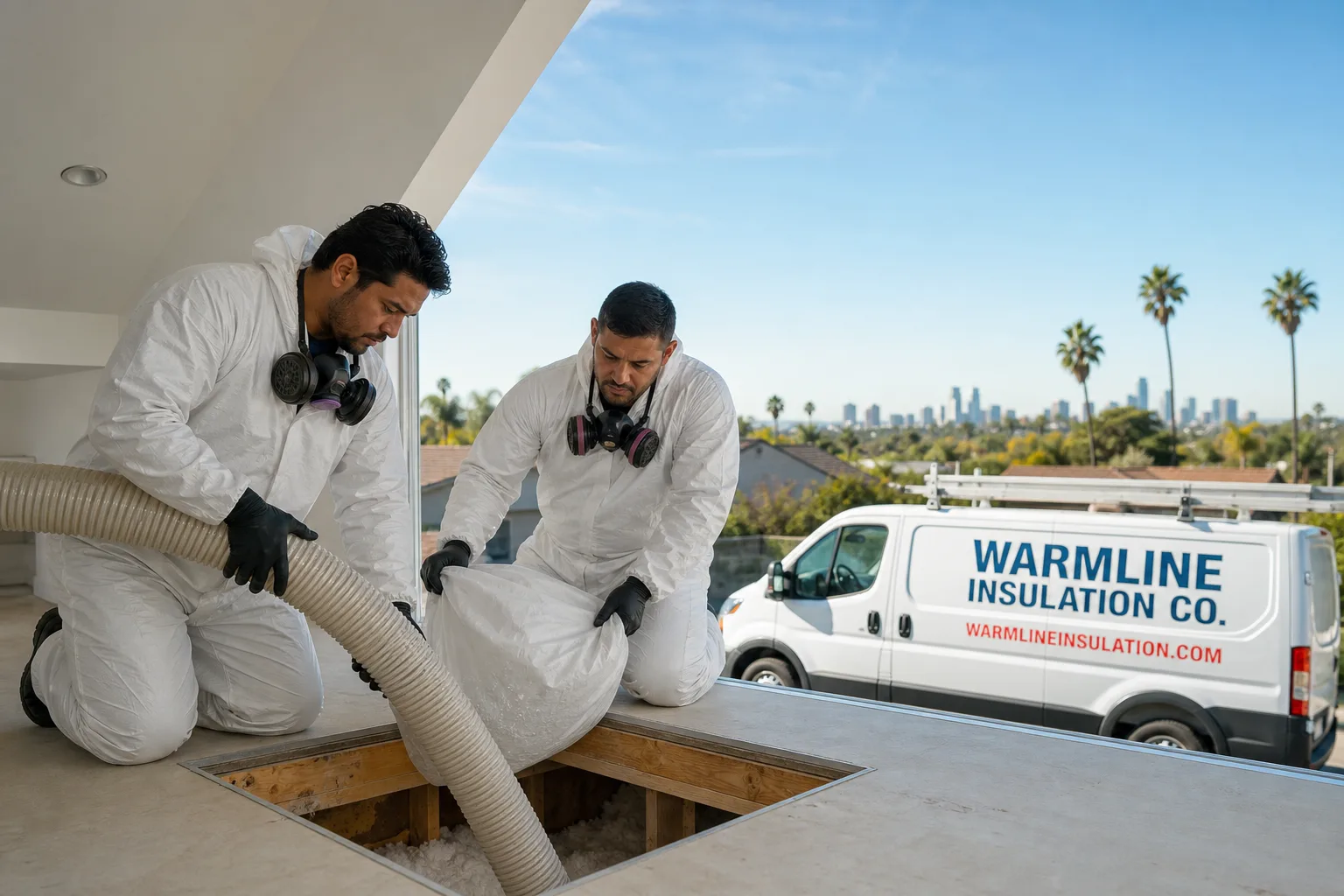
Fast, Reliable Attic Insulation Across Sandy Springs
Attic insulation in Sandy Springs typically costs $1,800 to $5,200 for a full replacement, with blow-in top-ups running $950 to $2,400 depending on square footage and access. Most jobs we schedule in the city are completed in a single visit. If your brick ranch or split-level is pushing 140°F in the attic come July, the fix starts with a proper assessment, not guesswork. Call (855) 657-3403 and a live person answers, 24/7. We know this city’s housing stock, its humidity corridor, and the specific failure points that show up in homes west of Roswell Road.
Why Warmline Insulation Co. Is Sandy Springs’s Preferred Attic Insulation Company
We’ve been in business since 2011, and in that time we’ve worked through a lot of attics in this city’s 1960s-through-1990s brick housing stock. Sandy Springs homeowners tend to be renovation-savvy. They ask sharper questions. They want to know why an attic that was “fine” for forty years is now causing $400 summer electric bills, and they expect a straight answer. We give them one. Our technicians are background-checked, uniformed, and trained in building science, not just product installation.
Every job we do in Sandy Springs is backed by the 90-Day Done Right Promise. If the work isn’t right, we make it right. Written, not implied. That matters when you’re spending thousands on an attic that’s supposed to perform for twenty-plus years. We also stock materials from Owens Corning, Knauf, and Johns Manville, so the insulation we spec is something you can actually verify, not whatever was cheapest at the supply house that morning.
Our Attic Insulation Services in Sandy Springs
Most Sandy Springs homes don’t need one generic “insulation job.” They need a sequence: remove what’s failed, seal what’s leaking, ventilate what’s suffocating, then insulate to a level that actually holds up through a Georgia summer. Here’s how we approach the common sub-services for this market.
Blown-In Attic Insulation
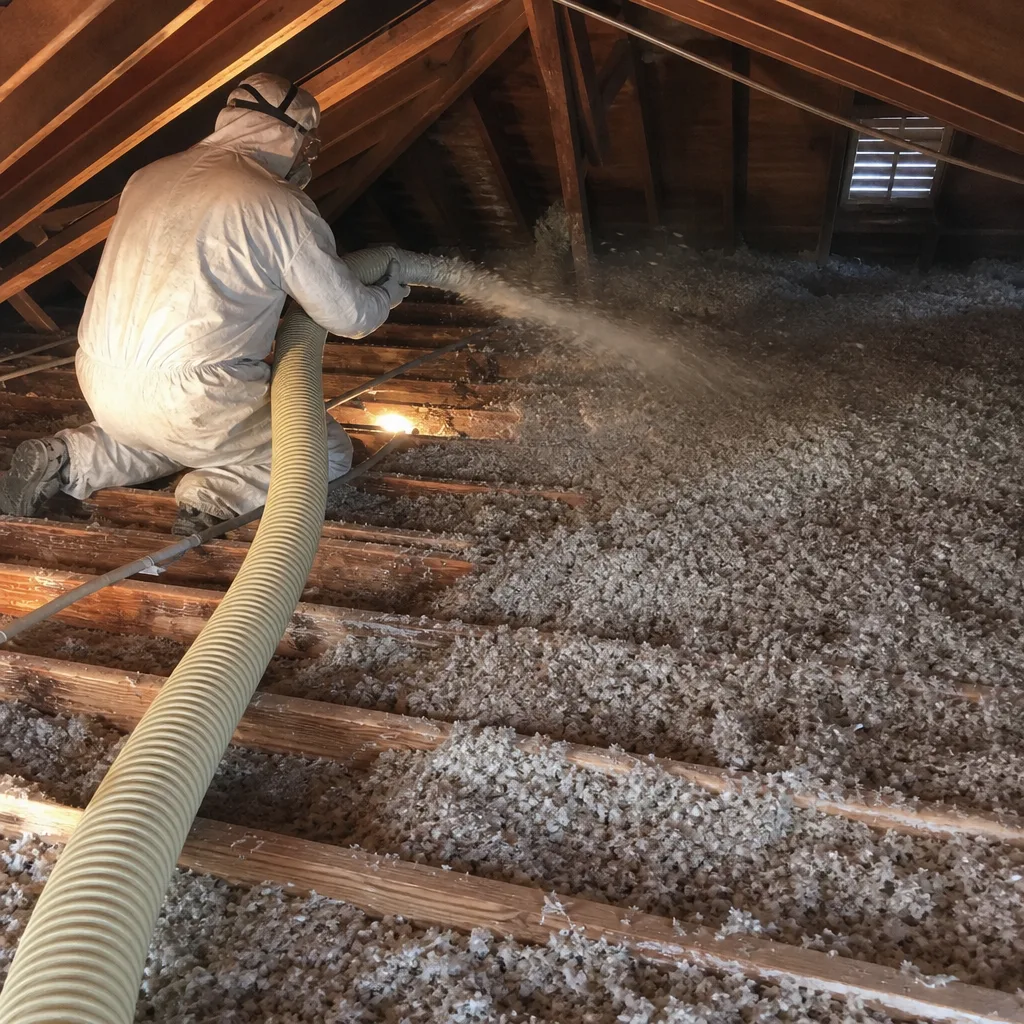
Blown-in fiberglass is the workhorse for Sandy Springs’s sprawling ranch and split-level floorplans. It fills irregular cavities, gets under the framing, and hits an even R-value across the whole attic plane. We typically blow Owens Corning AttiCat to R-49 or R-60, depending on your home’s orientation and current air-sealing condition. For homes with segmented attics created by 1980s additions, we map the thermal boundary first so we’re not just burying the obvious flat areas while missing knee-wall transitions entirely.
Attic Batt Insulation
Batt insulation still has a place in Sandy Springs, especially in attic spaces that double as light storage or mechanical access. We size and fit batts tightly between joists, no gaps at the edges, no compression under walkways. If your home sits close to the Chattahoochee corridor, we’ll also check for moisture in the existing batts before adding more. Wet fiberglass batts lose their R-value within five years, and covering them up just hides the problem.
Attic Insulation Top-Up
A top-up is the right call when your existing insulation is dry, intact, but simply not deep enough. In Sandy Springs, that’s incredibly common: many 1970s-era attics still carry R-19 or less, which was code at the time but is now a quarter of what this climate demands. We’ll inspect what’s there, verify no air-sealing issues are lurking underneath, then blow fresh material on top to bring the assembly to R-49 or better. Most top-ups are finished in one visit, same day.
Attic Insulation Replacement
When insulation is compressed, rodent-soiled, water-damaged, or packed against the roof sheathing by decades of roofers, it has to come out. We remove the old material with commercial-grade vacuums, expose the attic floor, then address the ventilation and air-sealing problems that caused the failure in the first place. Then we re-insulate. This is the full-removal route, and it’s the only path that actually fixes a chronically hot or humid attic in an older Sandy Springs home.
What happens when you call
- 1
A real person answersNo phone trees - you reach a local pro.
- 2
You get an upfront price rangeHonest numbers before anyone is dispatched.
- 3
A background-checked tech heads outLicensed & insured, dispatched right away.
- 4
You approve before work beginsNothing starts until you say go.
How Sandy Springs’s Climate Shapes Attic Insulation Work
Sandy Springs sits in IECC Climate Zone 3A, warm-humid. The primary energy load here is summer cooling, not winter heating. Attic temperatures routinely exceed 140°F in July and August, which means the dominant objective of attic insulation in this city is keeping heat out of your living space, not just trapping heat inside during a cold snap. That changes the calculus: R-49 to R-60 attic insulation and radiant-barrier strategies are high-ROI upgrades in Sandy Springs specifically. A homeowner in Buffalo needs a different conversation than a homeowner off Johnson Ferry Road.
Then there’s the river. The Chattahoochee River corridor along the city’s western boundary elevates ambient humidity in adjacent neighborhoods year-round. Homes near Riverside Drive, Heards Ferry, and the river bottomland absorb more moisture into their building envelope than homes just two miles east near Perimeter. That moisture finds its way into rim joists, crawl spaces, and underside roof decking. When we quote attic work in those neighborhoods, we look at the whole envelope, because a heat problem and a moisture problem often share the same root cause.
Trusted Brands We Service in Sandy Springs
We install and service insulation from Owens Corning, Johns Manville, and Knauf in Sandy Springs homes. These are the benchmark manufacturers in the industry, and we use them because they perform consistently, hold their R-value, and stand behind their products. For Sandy Springs customers, that means we’re not experimenting with off-brand material to shave a few dollars off a bid. We stock enough material locally that top-ups and replacements can usually start within days of your estimate, not weeks.
Common Attic Insulation Problems We See in Sandy Springs Homes
- Packed eave vents from repeated roofing work. In 1960s and 1970s brick homes, roofers have often buried the eave vents under new decking or shoved old insulation tight against them. That blocks airflow and traps 140°F+ summer heat. We clear and baffle these before adding any new insulation.
- Segmented attics from additions. Sandy Springs is full of homes expanded in the 1980s and 1990s. Those additions create knee-wall transitions and odd cavities where blown-in insulation misses the mark. Hot spots over the new master suite are a classic symptom.
- Humidity-driven batt failure near the river. In Riverside and Chattahoochee-adjacent neighborhoods, elevated humidity condenses on the underside of roof decking in under-ventilated attics. Fiberglass batts slump and lose R-value within five years. We see this constantly.
- Compressed and thin original insulation. Many Sandy Springs homes still carry their original R-19 or less from the 1970s. That’s not a maintenance issue; it’s a massive energy leak. A top-up to R-60 changes the entire thermal performance of the house.
The Chattahoochee Humidity Factor
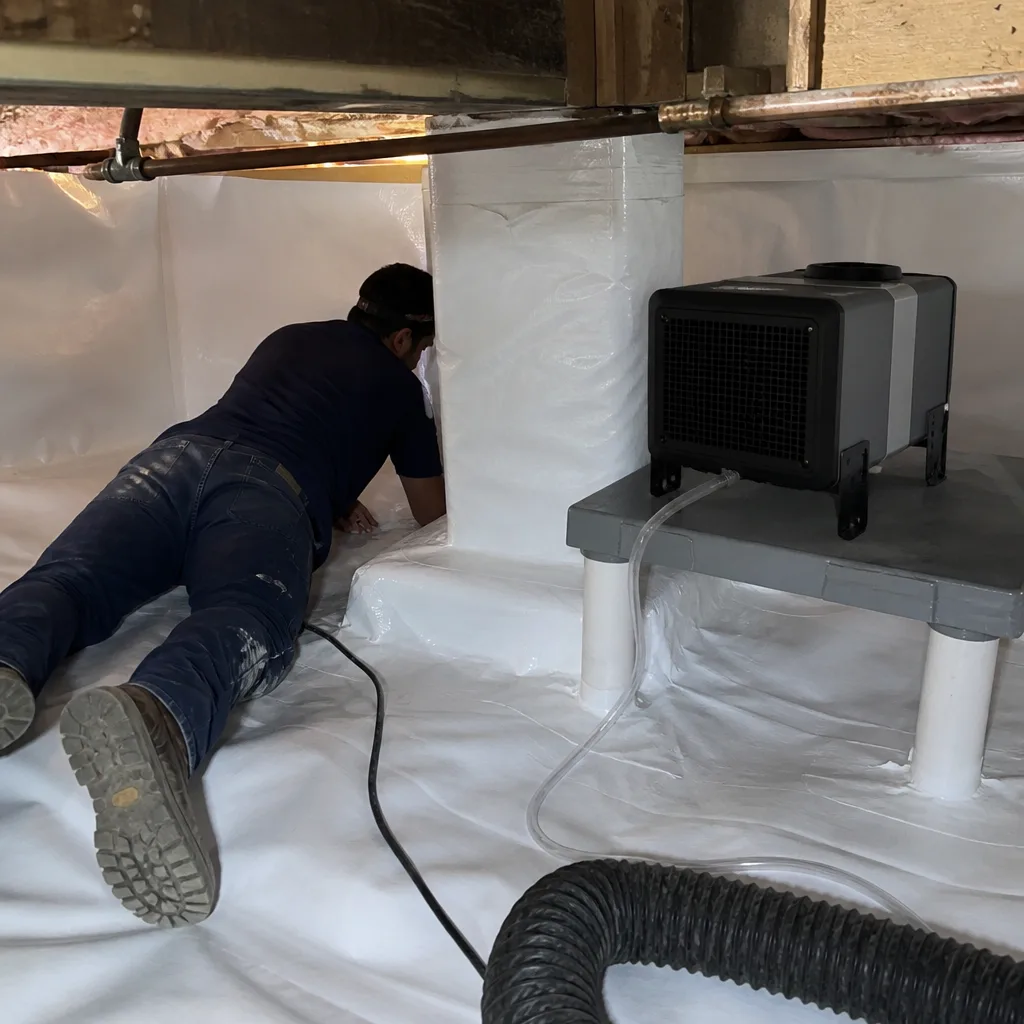
In Sandy Springs’s Riverside and Chattahoochee-adjacent neighborhoods, the damp river bottomland regularly wicks moisture into crawl spaces and rim joists on otherwise immaculate brick homes. This is a hidden failure mode that turns a straightforward attic-blowback quote into a full encapsulation and air-sealing conversation, and it’s a pattern far less common just a few miles east toward Roswell Road. We’ve learned to read these homes differently. Before we quote attic work west of Riverside Drive, we check the crawl space, the rim joists, and the attic ventilation path as one connected system.
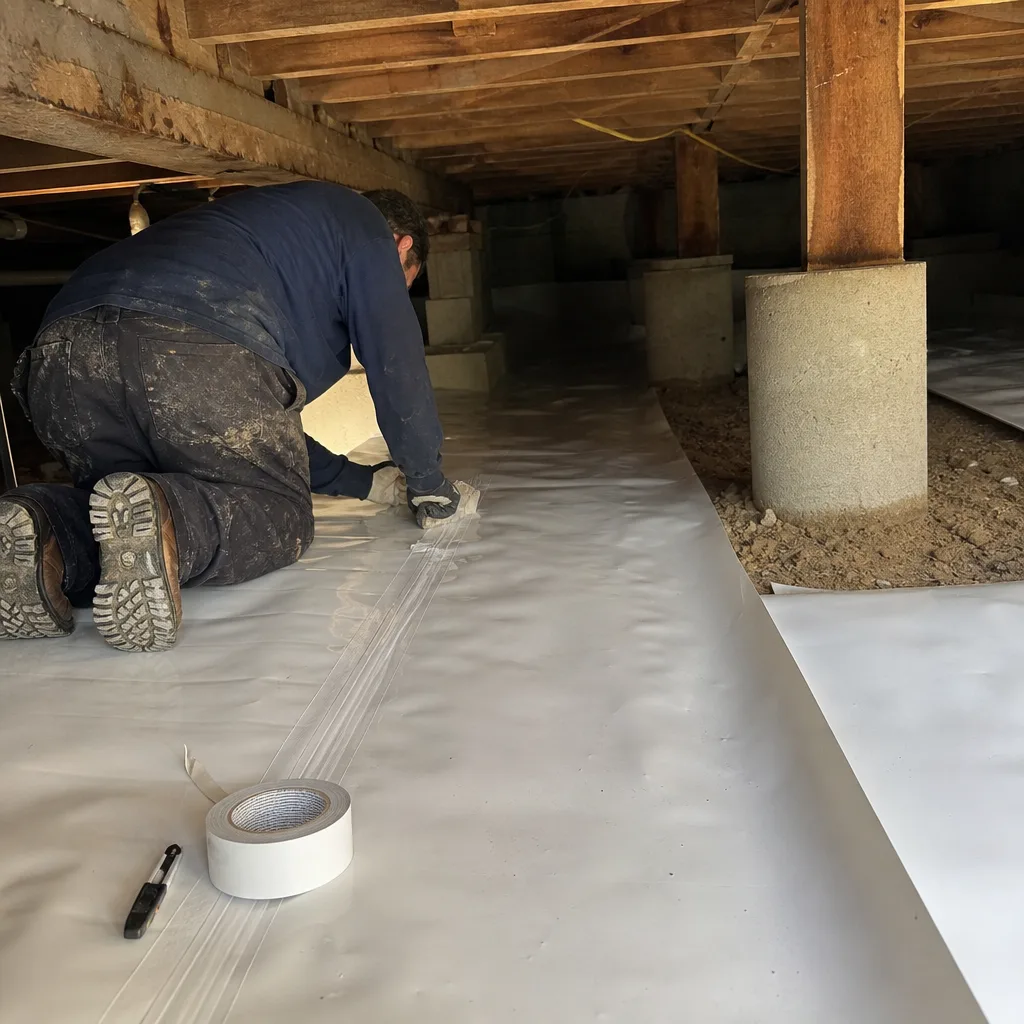
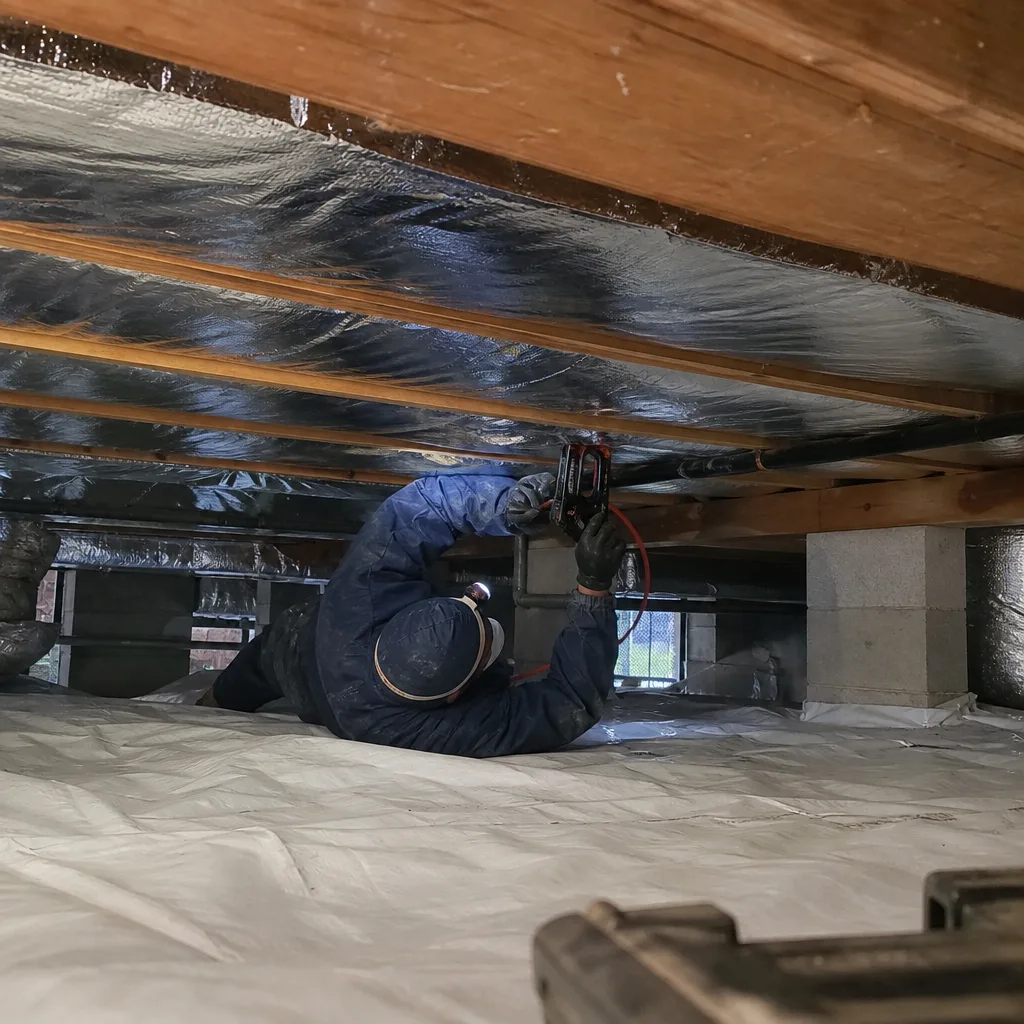
One field example sticks with us. On a 1970s brick ranch near the Chattahoochee River, we found the attic insulation had compressed to less than R-19 while the crawl space rim joists were sweating from river-bottom humidity. Our crew removed the old fiberglass, sealed every top plate and wire penetration with closed-cell spray foam, then blew Owens Corning AttiCat to an even R-60, and finished with a vapor barrier and rim-joist encapsulation. The homeowner now sees a 12-degree attic temperature drop in August. That’s the kind of job where the Attic Insulation scope expands because the house demands it, not because we upsold anything.
Pricing for Attic Insulation in Sandy Springs, GA
A typical attic insulation project in Sandy Springs runs $1,800 to $5,200 for a full removal and replacement on a 2,500 to 4,000 sq ft home. Blow-in top-ups run $950 to $2,400. Attic batt installation in smaller or simpler spaces lands between $800 and $1,800. What moves the number: attic square footage, access difficulty, how much removal is required, whether baffles and ventilation prep are needed, and how much air sealing we uncover during the job. Homes near the river corridor with moisture-damaged material tend to run higher because remediation and encapsulation get added to the scope.
We don’t bury costs or pad the bill with surprises. Upfront pricing, written estimate, free of charge. And every quote includes the standing offers: $50 Off Any Repair Over $250, an $89 Seasonal Tune-Up, and a permanent 5% Senior & Veteran discount. Call (855) 657-3403 for an exact quote on your Sandy Springs home.
We Also Serve Cities Near Sandy Springs
Warmline Insulation Co. is the full-spectrum insulation specialist for Attic Insulation in Sandy Springs and surrounding communities. Our crews work regularly in Atlanta, Marietta, Johns Creek, and Alpharetta. If you’re just outside the city limits, the same crew quality, material standards, and 90-Day Done Right Promise apply.
Serving Sandy Springs, GA - Our Local Coverage Area
We’re based in the Sandy Springs area and know this community well. Use the map below to see our service coverage - if you’re nearby, we can almost certainly help.
FAQs - Attic Insulation in Sandy Springs
Yes, in most cases. Homes built between roughly 1960 and 1990 in Sandy Springs were insulated to codes that are now outdated by a factor of two or more. Most carry R-19 or less in the attic, and almost none have meaningful air sealing at top plates, wire penetrations, or knee walls. Adding insulation without sealing the air leaks first just buries the problem. The sequence matters: remove, seal, ventilate, insulate. For older Sandy Springs brick homes, skipping the air sealing step means you’ll still feel drafts and heat intrusion through the same gaps that were always there.
Homes west of Riverside Drive sit closer to the Chattahoochee River bottomland, where ambient humidity stays elevated year-round. That moisture moves into crawl spaces and rim joists, then migrates upward through wall cavities and into the attic. Standard attic insulation alone doesn’t address the moisture source. These homes often need vapor barrier work, rim-joist encapsulation, and a closer look at attic ventilation before insulation goes in. A dry attic is the prerequisite for insulation that actually performs. If you’re noticing musty smells or visible condensation on the underside of roof decking, call (855) 657-3403 before adding any new insulation.
Yes. Blown-in insulation handles irregular and segmented attic cavities without drywall removal. We map the thermal boundary first, identify every knee wall, scuttle hole, and half-story transition, then blow material precisely into each cavity. The key is knowing where the conditioned space actually ends, because additions often create false ceilings and odd transitions where the living space boundary is unclear. We’ve done enough Sandy Springs additions to anticipate these conditions before we even open the attic hatch.
We install baffles at every eave vent before blowing insulation. Baffles create a protected air channel from the soffit vent into the attic space, so fresh air still moves even when insulation is piled to R-60. In older Sandy Springs homes where decades of roofers have already packed insulation against the sheathing, we clear the eave path first. Without baffles, blown-in fiberglass will absolutely close off your eave vents, trap heat, and accelerate roof decking deterioration. It’s a simple step that a surprising number of contractors skip. We don’t.
R-49 to R-60 is the right target for Sandy Springs. The city’s warm-humid climate means the attic furnace effect is active from May through September, with temperatures routinely exceeding 140°F. Higher R-value directly reduces the heat penetration into your living space and cuts cooling load. R-49 is a solid floor for most homes; R-60 is better for larger ranches, homes with multiple additions, or properties near the river where humidity compounds the heat problem. For an exact recommendation on your home, call (855) 657-3403 for a free estimate and we’ll assess your attic directly.
Get Started with Attic Insulation in Sandy Springs
If your Sandy Springs home is running hot, drafty, or just expensive to cool, the attic is where the answer usually starts. We’ll inspect it, tell you what’s wrong in plain English, and give you a written quote that covers exactly what we’ll do. A live person answers every call at (855) 657-3403, 24/7. Most jobs are completed in a single visit. And every bit of work is covered by the 90-Day Done Right Promise, with material quality you can verify by name. Call today.
Written by Neil Ashford, Owner at Warmline Insulation Co., serving Sandy Springs since 2011.