
Blown-In Insulation Stopped Working
If your home feels harder to heat or cool than it used to, your energy bills are climbing for no obvious reason, or certain rooms just never reach the right temperature anymore, your blown-in insulation has most likely settled, shifted, or been compromised in a way that’s left real gaps in your home’s thermal envelope. This is one of the most common complaints Neil Ashford and the Warmline Insulation Co. team hear from homeowners – and it almost always has a clear, fixable cause.
Blown-in insulation – whether loose-fill fiberglass or cellulose – is installed as a dense, even layer across your attic floor or inside your walls. Over time, that layer changes. It compacts under its own weight, absorbs moisture, gets disrupted by pests or HVAC work, or simply degrades past the point where it’s doing much of anything. The result is a house that leaks conditioned air through the ceiling or walls, forcing your heating and cooling system to work harder to maintain the same temperature. The good news is that a trained technician can usually diagnose the root cause in a single visit and tell you exactly what it will take to fix it.
Why It Happens
1. Settling and Compaction Over Time
Blown-in insulation settles naturally as years pass. Cellulose in particular can compact by a meaningful amount over a decade, which reduces its depth and drops its effective R-value below what your home actually needs. A good visual sign: if you can see your attic joists poking above the insulation surface, or the layer looks noticeably thinner than it did when photos were taken during a past inspection, compaction is almost certainly your issue. This doesn’t mean the product failed – it means it’s due for a top-off or full replacement.
2. Moisture Damage
Water is the fastest way to destroy blown-in insulation’s thermal performance. A slow roof leak, a sweating HVAC duct, or inadequate attic ventilation can saturate the material – and wet insulation loses most of its ability to resist heat transfer. You may notice a musty smell coming from your attic, visible dark staining or clumping in the insulation layer, or higher-than-normal humidity in the rooms directly below. If you suspect moisture, stop there and call a professional before disturbing anything – damp cellulose can harbor mold, and spreading it makes the problem worse.
3. Pest Intrusion and Displacement
Rodents and insects don’t respect insulation. Squirrels, rats, and mice tunnel through blown-in material to build nests, and they can displace or compress large sections in the process. You’ll often know this is the cause if you’ve heard scratching or movement in the attic, if you can see obvious tunneling channels or nesting material when you peer in with a flashlight, or if there’s animal waste mixed into the insulation. Disturbed insulation from pest activity also tends to create uneven coverage, leaving some areas of the attic floor nearly bare while others look normal.
4. Air Leaks at Bypasses and Penetrations
Blown-in insulation sits on top of your attic floor – it doesn’t seal gaps around light fixtures, plumbing chases, top plates, or the dozens of other places where conditioned air escapes. When those air bypasses are open, even a well-installed insulation layer can’t compensate for the pressure-driven air movement underneath it. The tell is usually drafts near recessed lights or ceiling fans, rooms that feel stuffy or uneven floor-to-floor, or an attic that’s much hotter or colder than it should be relative to outside temperatures. This is an air sealing problem masquerading as an insulation failure.
What to Do Right Now
- Do a quick attic visual – safely. If you can access your attic from a pull-down stair or hatch, take a flashlight and look at the insulation surface from the opening. Note whether you can see the tops of joists, any dark staining, tunneling, or clumping. Take photos from where you stand – you don’t need to walk across the attic floor to get useful information for a technician.
- Don’t walk across an unfloured attic. Attic floor joists are spaced for structure, not for foot traffic. One misstep onto drywall between joists can mean a serious fall through the ceiling. If you need to move through the attic for any reason, leave that to a trained technician with the right equipment.
- Check for signs of moisture from below. Walk through the rooms directly under the affected area and look for ceiling stains, paint bubbling, or condensation around HVAC registers. If you find any of these, note the location and photograph them before your appointment.
- Note the age of your current insulation. If you know when it was installed, write it down. If you don’t, check any past home inspection reports or permit records – that context helps a technician assess how much degradation is expected versus how much points to a specific problem.
- Don’t add insulation on top of unknown damage. If you suspect moisture or pest activity, don’t buy bags of loose fill and pour them in. Adding material on top of wet or contaminated insulation traps the problem and can create worse conditions over time. Get a professional assessment first.
How We Fix It
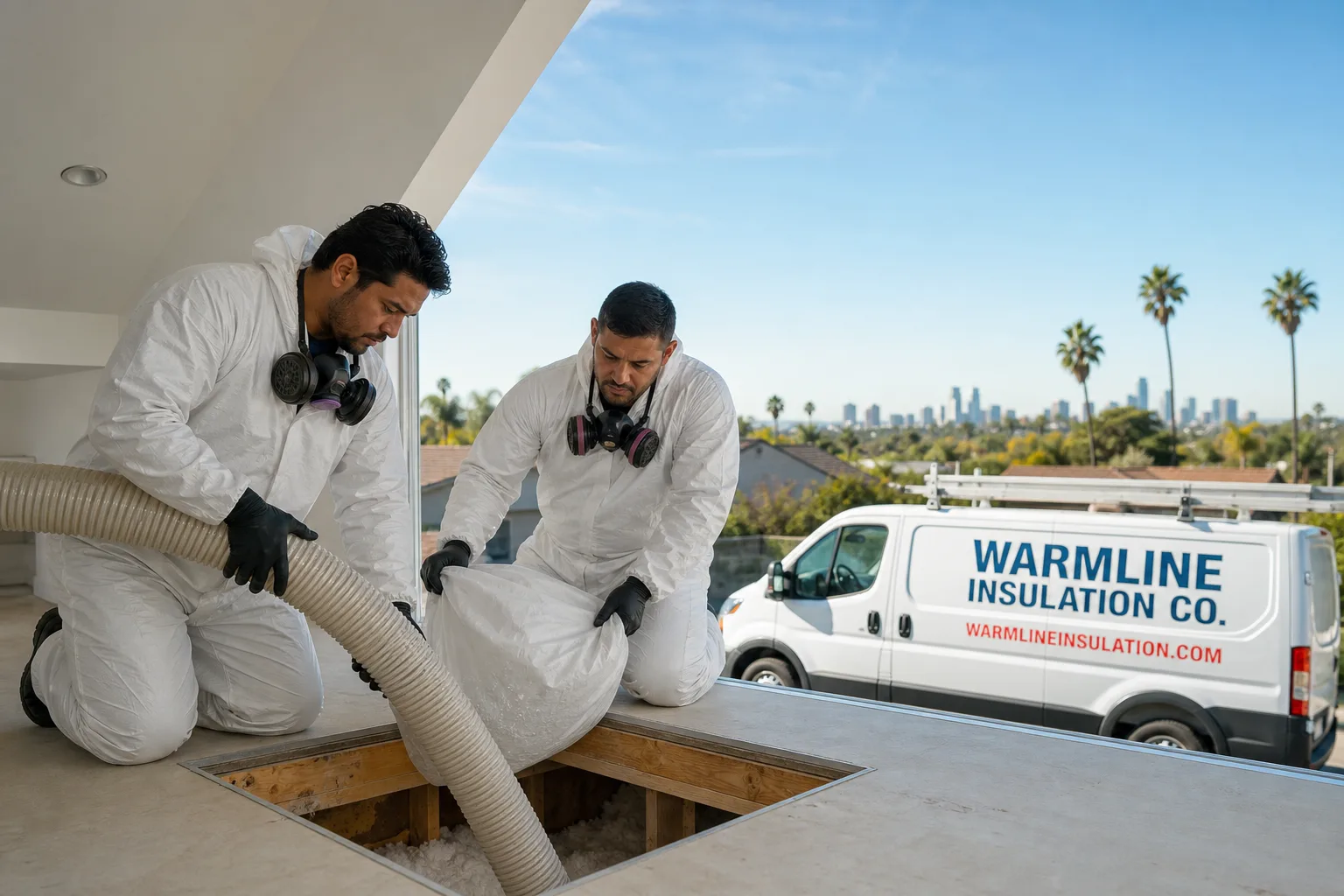
When your local Warmline Insulation Co. team arrives, the first thing a technician does is a thorough attic inspection – depth measurements across the whole floor, a moisture check, and a look for pest evidence or displaced sections. That inspection drives the recommendation, and before any work starts, you get a written estimate with the full scope and price. No surprises.
Depending on what the inspection finds, the fix is usually one of two things, sometimes both: Blown-In Insulation service to restore or upgrade coverage to the right R-value for your climate zone, and Attic Air Sealing to close the bypasses that let conditioned air escape regardless of insulation depth. If there’s rodent evidence, Attic Cleaning and Rodent Proofing comes first to remove contaminated material and seal entry points before any new insulation goes in.
Most jobs are completed in a single visit. All work is backed by Warmline’s 90-Day Done Right Promise: if it’s not done right, we make it right. Technicians are background-checked and uniformed on every job, and pricing is upfront with no hidden additions at the end.
Frequently Asked Questions
Degraded insulation isn’t an immediate safety emergency the way a gas leak or electrical fault would be – but it’s not something to sit on. Moisture-compromised insulation creates conditions for mold growth, and pest-contaminated material can harbor pathogens that circulate through your home’s air. Beyond health concerns, every month of poor insulation is a month of higher energy costs and added strain on your HVAC system. If you noticed any moisture or pest signs during your initial look, call (855) 657-3403 sooner rather than later.
Yes – our phones are answered by a live person 24 hours a day, 7 days a week, so you can reach your local Warmline Insulation Co. team any time and schedule at the earliest available slot. Call (855) 657-3403 and someone will pick up, no voicemail, no answering service.
It depends on what’s underneath. If the existing material is dry, free of contamination, and still structurally intact – just compressed – topping it off with a fresh layer is often all that’s needed. If there’s moisture damage, mold, or rodent contamination, the old material needs to come out before anything new goes in. A technician will tell you which situation you’re in after the inspection, and you’ll have that answer in writing before any work starts.
Warmline doesn’t quote prices before seeing the job – the right answer depends on your attic’s square footage, current insulation depth, the scope of any air sealing needed, and whether removal is part of the picture. What we can tell you is that the written estimate you receive before work begins is the price – no additions at the end. Call (855) 657-3403 to schedule a free estimate.
Get It Fixed
Call (855) 657-3403 any time – a live person answers around the clock. Your local Warmline Insulation Co. team will inspect the attic, diagnose the cause, and hand you a written estimate before a single piece of equipment comes off the truck. Most jobs are done in a single visit, and every one is backed by the 90-Day Done Right Promise.
Written by Neil Ashford, Owner at Warmline Insulation Co., serving local communities since 2011.
What Our Customers Say
"Upstairs was ten degrees hotter than downstairs every summer. They pulled the attic to bare joists, air-sealed every can light and top plate first, then blew it to R-49. First August in this house where the bedrooms and the living room read the same on the thermostat."
- Marcus Hale"Rodents had been in the attic for years before we bought the place. They vacuumed everything out, sanitized, sealed the entry points with mesh and foam, and only then put new insulation down. Photos of every stage before I paid."
- Darnell Whitfield"They did the energy audit first - blower door and thermal camera - and showed me exactly where the house was leaking before selling me anything. The fix ended up being air sealing plus a modest attic top-up, not the full replacement another company pushed."
- Grace Nakamura