
What’s Happening
Drafty rooms in winter almost always mean conditioned air is escaping and cold air is getting in through gaps in your building envelope – most often through an under-insulated attic, failed air sealing, or both working against you at once. This is a building science problem, not a furnace problem, and adding heat won’t solve it.
Your heating system is fighting a losing battle every time cold air sneaks through gaps in the attic floor, wall cavities, around electrical outlets, or along rim joists. The draft you feel near a window may not actually be coming from that window – it can be stack effect, where warm air escapes high in the house and cold air gets pulled in low to replace it. That loop runs all day and all night, and your energy bills reflect it.
Why It Happens
Depleted or Missing Attic Insulation
Attic insulation compresses and degrades over time. Blown-in cellulose or fiberglass that was installed fifteen or twenty years ago may have settled to half its original depth, cutting its thermal resistance significantly. Pull down your attic hatch and look: if you can see the tops of your floor joists clearly, or if the insulation looks flat and matted rather than fluffy, you’ve almost certainly found your draft problem.
Air Leaks Around Penetrations and Bypasses
Every pipe, wire, and duct that passes through your ceiling or walls is a potential bypass – a channel where conditioned air exits and outside air enters. Recessed lights, pull-down attic stairs, plumbing chases, and top plates are the most common offenders. Hold your hand near your attic hatch on a cold day: if you feel a noticeable movement of cool air, bypasses are almost certainly open above you.
Crawl Space or Basement Air Infiltration
Cold air doesn’t only fall from the top – it rises from the bottom too. An unencapsulated crawl space under a wood-framed floor can push cold, damp air up through subfloor gaps into living areas. Floors that feel noticeably colder than the rest of the room, or persistent musty odors in winter, are signals that your crawl space is contributing to the draft problem.
Wall Insulation Gaps or Settling
Older wall cavities – particularly in homes built before the mid-1980s – were often under-insulated or left entirely empty. Dense-pack cellulose or blown-in insulation can settle in wall cavities over decades, leaving the upper section of each cavity bare. A telltale sign: exterior walls in older rooms feel noticeably colder to the touch than interior walls when you press your hand flat against them.
What to Do Right Now
- Check your attic insulation depth. Open the hatch and look at the depth with a ruler if you have one. If you can see exposed joists, make a note and photograph it before anyone arrives.
- Feel around outlet covers and switch plates on exterior walls. On a cold windy day, air movement here is a reliable sign of bypasses in the wall or at the top plate. Don’t open the electrical box itself – just feel the perimeter of the cover plate.
- Close off your attic hatch as tightly as it will go. An unsealed or uninsulated attic hatch is one of the biggest single bypass points in many homes and acts like a chimney flue left open all winter.
- Look at your crawl space vent covers from outside. If the covers are damaged, missing, or wide open in winter, that’s an easy-to-photograph problem to flag for your technician. Do not go into a crawl space yourself if there is any sign of standing water, sewage odor, or structural damage.
- Note which rooms feel worst and at what time of day. Drafts that peak in the morning when outdoor temperatures are lowest point strongly to insulation gaps; drafts that are constant regardless of temperature more often indicate open bypasses. That pattern helps your technician prioritize.
How We Fix It
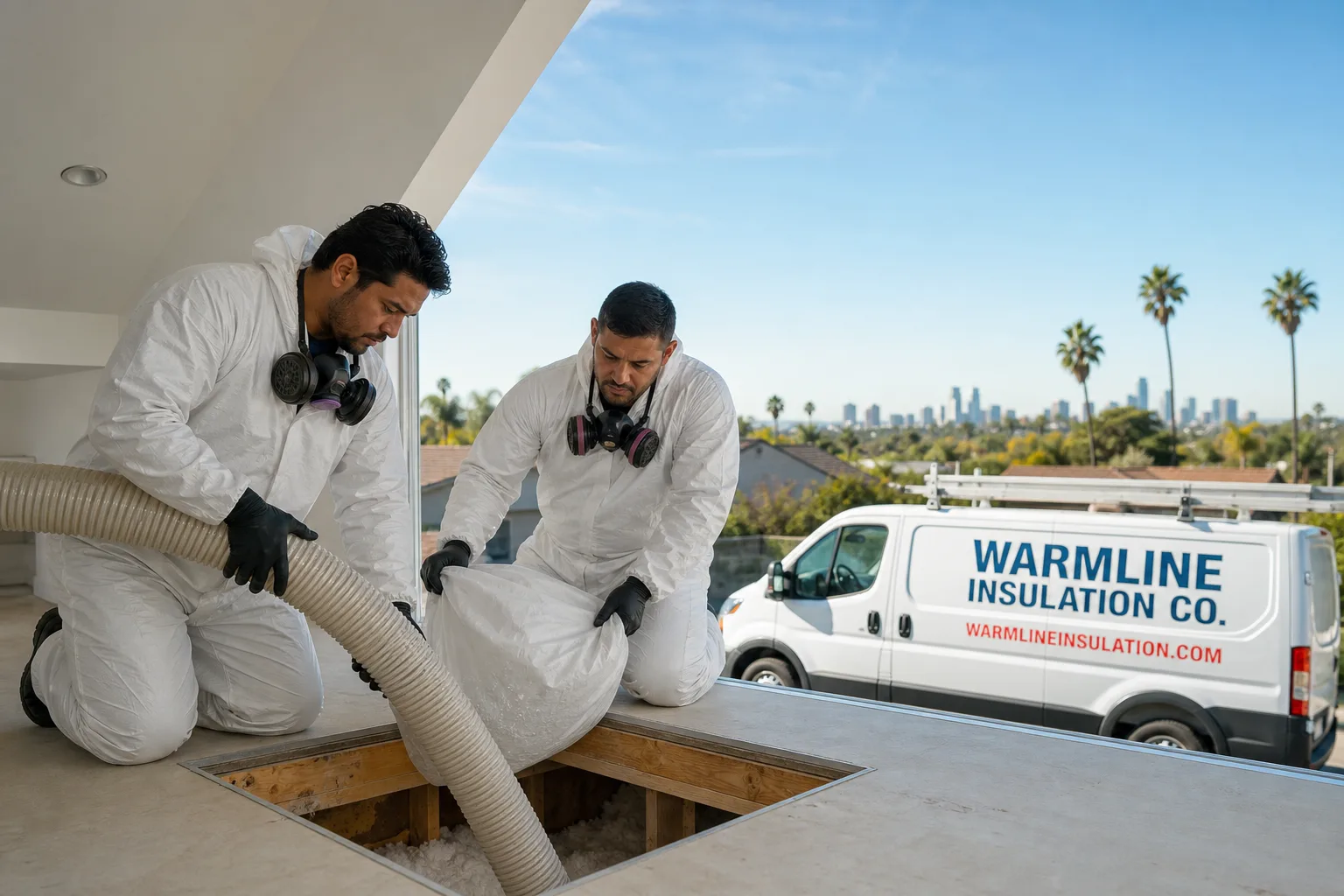
When your local Warmline Insulation Co. team arrives, the first step is a walkthrough assessment – attic hatch open, insulation depth measured, bypasses located with a trained eye. No guessing. From there, the two services that resolve most winter draft complaints are Attic Air Sealing and Attic Insulation, typically done together in a single visit because they work as a system: sealing the bypasses first, then bringing insulation up to the depth your home needs.
If the crawl space is contributing, Crawl Space Encapsulation and Vapor Barrier work may be recommended as a next step. Before any work starts, you’ll receive a free written estimate – the exact scope and price for your specific home, in writing, with no surprises. Most jobs are completed in a single visit. All work is backed by our 90-Day Done Right Promise: if it’s not done right, we make it right.
Frequently Asked Questions
Technically they can, but every week you wait is a week your heating system runs harder than it should. Beyond the energy cost, open bypasses in winter can allow moisture-laden air to condense inside your attic structure, which creates a separate and more expensive problem down the line. If the draft is severe enough that a room is genuinely uncomfortable, that’s a signal worth acting on now. Call (855) 657-3403 and we’ll get an assessment scheduled.
A draft by itself is not an immediate safety hazard. However, if you notice the draft is accompanied by a gas or combustion smell, soot marks near vents, or your carbon monoxide detector is alarming, stop reading and call emergency services first – those symptoms point to combustion appliance problems, not insulation. For a straightforward cold-air draft with no odors or alarms, the issue is comfort and efficiency, not immediate danger. Still worth fixing promptly.
Your local Warmline Insulation Co. team works to get assessments scheduled quickly, and our phones are answered by a live person around the clock – no voicemail, no answering service. Call (855) 657-3403 any time and tell us what you’re dealing with; we’ll find the earliest available slot for your area.
It depends on what’s actually driving the draft. Stack effect – warm air escaping high in the attic pulling cold air in low through window frames and outlets – is frequently mistaken for a window problem. Air sealing combined with proper attic insulation resolves this in most cases, and homeowners are often surprised that windows they planned to replace suddenly feel fine afterward. A proper assessment will tell you exactly what’s happening before you spend money anywhere.
Get It Fixed
Call (855) 657-3403 – a live person picks up every time, any hour. Or book online and your local Warmline Insulation Co. team will reach out to schedule your free written estimate. Most jobs are handled in a single visit, and all work is backed by the 90-Day Done Right Promise.
Written by Neil Ashford, Owner at Warmline Insulation Co., serving local communities across the country since 2011.
What Our Customers Say
"They did the energy audit first - blower door and thermal camera - and showed me exactly where the house was leaking before selling me anything. The fix ended up being air sealing plus a modest attic top-up, not the full replacement another company pushed."
- Grace Nakamura"Solid work on the spray foam in the rim joists and the garage ceiling. Scheduling slipped a day because of rain, which they called about ahead of time. Would use them again."
- Tom Reinholt"Crawl space smelled musty and the floors were cold. Full encapsulation with the thick liner taped at every seam, and a dehumidifier sized for the space. The hygrometer they left reads 48 percent now instead of the 70s."
- Elena Vasquez