
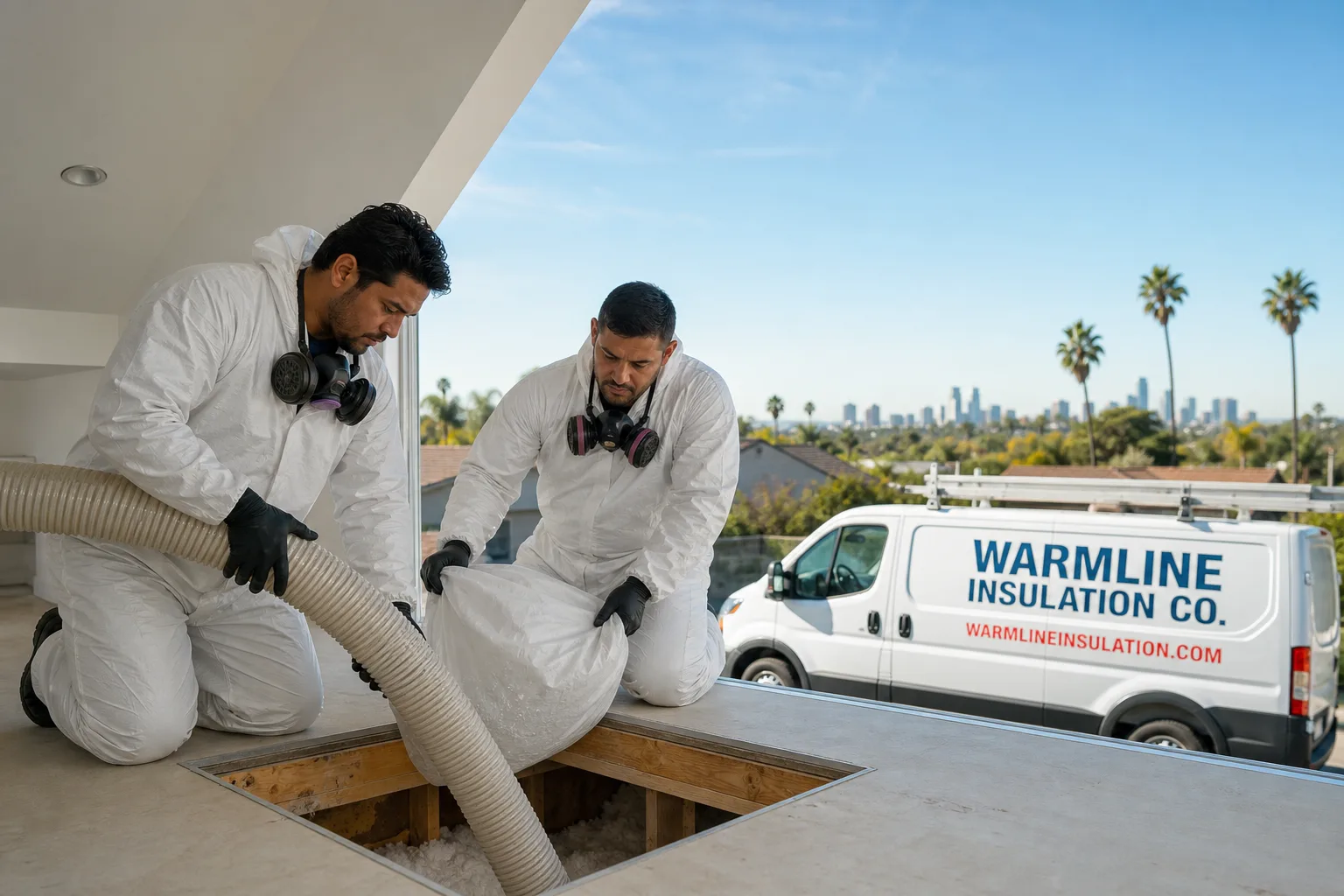
Insulation in Mount Vernon, NY
Most insulation work in Mount Vernon starts in the crawl space or the attic, because the housing stock here runs old, tight, and thermally leaky. Homes built between the 1880s and 1920s make up a huge share of the city’s rowhouses and two-family walkups, and almost none of them were insulated when they went up. Crawl space encapsulation and vapor barrier installation in Mount Vernon usually costs $4,000 to $12,000 depending on square footage and moisture conditions, and it’s the single most effective fix for the damp, musty air that migrates up through these old balloon-framed buildings. Call (855) 657-3403 and a live person will answer, 24/7, to schedule a free estimate.
Why Mount Vernon Homes Are Different
Mount Vernon packs some of the oldest and densest residential fabric in Westchester County, and the building style changes how insulation has to be done. Late-1800s and early-1900s brick rowhouses dominate the streets, many with horsehair plaster on wood lath and balloon framing that runs continuously from the basement sill all the way to the roof ridge. That means an open stud bay in the basement is thermally connected to the attic, which is why so many Mount Vernon homeowners feel a draft in the living room even when the attic looks fine. On the south side near the Bronx border, attached two-families share party walls, and attic spaces that look separate are often connected through gaps in the party-wall framing. Air sealing one unit without checking the neighbor’s side can depressurize the adjacent home, so our crews coordinate carefully on attached structures. The climate is IECC Zone 5A, cold and humid, with real heating loads in winter and enough summer heat-island effect to make uninsulated top floors unbearable in July. Exterior rigid foam retrofits are rarely feasible on these tight lots and attached walls, so almost every job lives or dies on interior cavity work, dense-pack cellulose, or spray foam applied from inside.
Our Main Mount Vernon Services
Two services in Mount Vernon generate more calls than any others, and both trace back to the same root cause: uninsulated cavities in pre-1930 construction. Here’s what each involves.
Attic Insulation in Mount Vernon
Mount Vernon attics are almost always under-insulated, with a few inches of settled old fiberglass at best and empty stud bays at worst. Blown-in cellulose or fiberglass dense-packed into the floor brings these attics up to code and cuts heating bills noticeably in Zone 5A winters. We also address the balloon-framing connection between attic and basement, because insulating the attic floor without sealing the open stud bays leaves the house leaky. Read more on our dedicated page for Attic Insulation in Mount Vernon.
What happens when you call
- 1
A real person answersNo phone trees - you reach a local pro.
- 2
You get an upfront price rangeHonest numbers before anyone is dispatched.
- 3
A background-checked tech heads outLicensed & insured, dispatched right away.
- 4
You approve before work beginsNothing starts until you say go.
Crawl Space Encapsulation & Vapor Barrier in Mount Vernon
Crawl space encapsulation in Mount Vernon targets a problem hiding under most of these older homes: open, damp dirt floors venting moisture into the house year-round. In a cold-humid climate like ours, that moisture feeds mold, warps floors, and makes the first floor feel clammy even when the heat is running. We transform the crawl space from a damp, dirty void into a clean, conditioned, sealed space with a vapor barrier, insulation, and dehumidification where needed. If you’re noticing musty smells, high indoor humidity, or cold floors on the first level, Crawl Space Encapsulation & Vapor Barrier is the service that solves it for good.
Crawl Space Vapor Barrier
Signs you need it
Musty odor in the living space, condensation on ductwork, or visible moisture and mold on the crawl space floor joists are all signs the vapor barrier has failed or was never installed.
What it costs in Mount Vernon
A crawl space vapor barrier in Mount Vernon typically runs $1,800 to $4,000 depending on square footage, access, and the condition of the existing floor.
How we do it
We clear debris, level the floor, lay a thick reinforced polyethylene liner across the entire crawl space, and seal every seam and penetration. The liner gets mechanically fastened to the foundation walls so it won’t shift or tear.
Crawl Space Encapsulation
Signs you need it
High indoor humidity that won’t drop below 60%, visible efflorescence on foundation walls, or wood rot starting on rim joists and floor framing indicate the crawl space needs full encapsulation.
What it costs in Mount Vernon
Full crawl space encapsulation in Mount Vernon generally runs $5,500 to $12,000, including the vapor barrier, wall insulation, rim joist sealing, and a sealed crawl space door.
How we do it
We seal the vents, install the vapor barrier floor-to-wall, insulate the perimeter walls with rigid foam or spray foam, and air-seal every penetration. A crawl space dehumidifier and drainage mat complete the system in wetter locations.
Crawl Space Moisture Control
Signs you need it
Condensation beading on pipes and ductwork, rusting metal, or a musty smell that comes up through the floorboards all point to uncontrolled crawl space moisture.
What it costs in Mount Vernon
Crawl space moisture control in Mount Vernon, including drainage work and a dehumidifier, typically runs $3,500 to $8,000 depending on the size and severity of the problem.
How we do it
We identify the moisture source, install perimeter drainage or a sump pump if needed, then pair the vapor barrier with an appropriately sized dehumidifier. The goal is a crawl space that stays dry and inert year-round.
What Crawl Space Encapsulation & Vapor Barrier Costs in Mount Vernon
| Item | Typical range in Mount Vernon |
|---|---|
| Crawl space vapor barrier | $1,800 - $4,000 |
| Full crawl space encapsulation | $5,500 - $12,000 |
| Crawl space moisture control with dehumidifier | $3,500 - $8,000 |
| Crawl space insulation (walls and rim joists) | $2,000 - $5,500 |
Is crawl space encapsulation worth it in Mount Vernon’s climate?
Yes. In Zone 5A’s cold, humid conditions, an open crawl space adds substantial moisture load to the home, which drives up heating and cooling costs and accelerates rot. Encapsulation typically pays back through lower energy bills and avoided structural repairs within 5 to 8 years. Call (855) 657-3403 for a free assessment.
Can you encapsulate a crawl space in an attached Mount Vernon rowhouse?
Yes. We regularly encapsulate crawl spaces under attached rowhouses and two-families. Access is tighter than a single-family suburban home, but our crews are experienced with Mount Vernon’s narrow side alleys and interior access hatches. Call (855) 657-3403 and we’ll assess your configuration at no cost.
Spray Foam Insulation in Mount Vernon
Spray foam is often the only practical way to insulate Mount Vernon’s balloon-framed walls and tight attic cavities without tearing open finished surfaces. The open stud bays that run from basement to attic are an open invitation for air movement, and spray foam is the one material that air-seals and insulates in a single application. In a city where exterior retrofits are usually off the table, Spray Foam Insulation is the workhorse for real thermal improvement.
Open-Cell Spray Foam
Signs you need it
Drafty rooms, uneven temperatures between floors, or high energy bills in a home with uninsulated framing cavities are signs open-cell foam would make an immediate difference.
What it costs in Mount Vernon
Open-cell spray foam in Mount Vernon typically runs $1.50 to $2.50 per board foot installed, or $3,000 to $6,500 for a typical attic application.
How we do it
We prep the cavities, apply the foam in lifts to the specified depth, and trim any overspray. Open-cell foam expands to fill gaps and cracks, creating an air seal and R-value in one pass.
Closed-Cell Spray Foam
Signs you need it
Moisture drive through foundation walls, rim joists that sweat, or the need for maximum R-value per inch in a shallow cavity all call for closed-cell foam.
What it costs in Mount Vernon
Closed-cell spray foam in Mount Vernon typically runs $2.50 to $4.00 per board foot installed, with a full rim joist and crawl space treatment often landing between $2,500 and $6,000.
How we do it
We apply closed-cell foam directly to the substrate in controlled lifts. It cures to a dense, vapor-impermeable barrier that insulates, air-seals, and resists moisture intrusion in one application.
Rim Joist Spray Foam
Signs you need it
Cold floors along exterior walls, mice getting in at the foundation line, or visible gaps where the floor framing meets the foundation wall all point to rim joist leaks.
What it costs in Mount Vernon
Rim joist spray foam in Mount Vernon typically runs $1,500 to $4,000 for an average home, depending on linear footage and accessibility of the joist bays.
How we do it
We access each rim joist bay from the basement or crawl space, clean the surface, and apply closed-cell foam to create an air seal and thermal break at the perimeter of the house.
What Spray Foam Insulation Costs in Mount Vernon
| Item | Typical range in Mount Vernon |
|---|---|
| Open-cell spray foam (attic) | $3,000 - $6,500 |
| Closed-cell spray foam (rim joists and crawl space) | $2,500 - $6,000 |
| Garage ceiling spray foam | $1,800 - $4,500 |
| Spray foam roof deck | $5,000 - $10,000 |
Can you spray foam the walls of a Mount Vernon rowhouse without gutting it?
Yes. For uninsulated balloon-framed walls, we drill small access holes from the interior or exterior, then inject or spray foam to fill the cavities. It’s less disruptive than a full gut rehab and dramatically tightens the thermal envelope. Call (855) 657-3403 for specifics on your wall assembly.
Is spray foam safe for older Mount Vernon homes with knob-and-tube wiring?
Knob-and-tube wiring must be addressed before we spray foam over it. Foam can trap heat around old wiring, creating a fire hazard. Our technicians assess the wiring first and will advise you on the correct sequence. Call (855) 657-3403 to schedule an inspection.
Blown-In Insulation in Mount Vernon
Blown-in insulation is the most common retrofit for Mount Vernon’s old attics and empty wall cavities because it reaches areas that would be impractical to insulate with batts. Loose-fill cellulose or fiberglass flows into odd-shaped cavities, around old framing, and over settled existing insulation, building depth quickly. For a city where most homes never had insulation to begin with, Blown-In Insulation is the fastest path to code-level coverage.
Blown-In Cellulose
Signs you need it
Thin or missing attic insulation, high heating bills, or rooms that lose heat fast in winter are signs the attic needs a dense blanket of blown-in cellulose.
What it costs in Mount Vernon
Blown-in cellulose in Mount Vernon typically runs $1,500 to $3,500 for a standard attic, depending on target R-value and square footage.
How we do it
We dense-pack or loose-fill the attic floor with cellulose, using hoses to reach every corner and paying special attention to the eaves where heat loss is worst. We also baffle the soffit vents so airflow stays clear.
Dense-Pack Wall Insulation
Signs you need it
Cold exterior walls in winter, rooms that never hold temperature, or old balloon-framed walls with no insulation are prime candidates for dense-pack cellulose.
What it costs in Mount Vernon
Dense-pack wall insulation in Mount Vernon typically runs $2,500 to $6,000, depending on the number of exterior walls and the building’s height.
How we do it
We drill access holes through the plaster or siding, blow cellulose into the stud cavities under pressure, and plug the holes. The pressure ensures the cellulose fills the entire cavity, including the balloon-framed runs from basement to attic.
Blown-In Top-Up
Signs you need it
Existing attic insulation that has settled to a few inches, or an attic that meets older code but not current Zone 5A recommendations, is a top-up candidate.
What it costs in Mount Vernon
A blown-in top-up over existing insulation in Mount Vernon typically runs $900 to $2,200, depending on the depth needed and the attic size.
How we do it
We blow a measured layer of new insulation over the settled existing material, checking that the total depth meets the target R-value for our climate zone. We also confirm the soffit vents aren’t blocked.
What Blown-In Insulation Costs in Mount Vernon
| Item | Typical range in Mount Vernon |
|---|---|
| Blown-in cellulose (attic floor) | $1,500 - $3,500 |
| Dense-pack wall insulation | $2,500 - $6,000 |
| Blown-in fiberglass (attic) | $1,200 - $3,000 |
| Blown-in top-up over existing insulation | $900 - $2,200 |
Does blown-in insulation settle in Mount Vernon’s old houses?
Cellulose settles slightly after installation, but we account for that by installing at the settled-depth target R-value. Fiberglass settles less, but both materials perform well when installed correctly. Call (855) 657-3403 for a free inspection of your current attic depth.
Can you dense-pack the balloon-framed walls of a Mount Vernon two-family?
Yes, and it’s one of the most effective upgrades for these buildings. Dense-pack cellulose fills the entire stud bay from sill to attic, stopping the stack effect that makes these homes so drafty. Call (855) 657-3403 to schedule a wall assessment.
Radiant Barrier Installation in Mount Vernon
Mount Vernon’s dense urban blocks trap summer heat, and top-floor units in these old brick buildings turn into ovens by afternoon. A radiant barrier installed on the attic’s roof deck reflects heat before it ever reaches the living space. For Mount Vernon homes with accessible attics and uninsulated roof decks, Radiant Barrier Installation cuts second-floor cooling costs measurably in July and August.
Attic Radiant Barrier
Signs you need it
Second-floor rooms that won’t cool below 80 degrees in summer, an attic that’s too hot to stand in, or central air that runs continuously through heat waves all indicate radiant heat gain.
What it costs in Mount Vernon
An attic radiant barrier in Mount Vernon typically runs $1,200 to $3,000, depending on attic size and whether the roof deck is accessible.
How we do it
We staple or fasten a reflective foil barrier to the underside of the roof rafters, leaving an air gap for the reflective surface to work. The barrier blocks radiant heat transfer from the hot roof deck.
Radiant Barrier Roof Deck
Signs you need it
Rooms directly under the roof, cathedral ceilings without adequate insulation, or a new roof going on are opportunities to add a roof deck radiant barrier.
What it costs in Mount Vernon
Roof deck radiant barrier installation in Mount Vernon typically runs $1,800 to $4,500 when done as a standalone project, and less when combined with a re-roof.
How we do it
We install the radiant barrier either as a foil facing on roof sheathing during a re-roof or as a sheet product applied to the underside of the deck from inside. Both approaches reduce heat transfer into the attic.
What Radiant Barrier Installation Costs in Mount Vernon
| Item | Typical range in Mount Vernon |
|---|---|
| Attic radiant barrier | $1,200 - $3,000 |
| Radiant barrier roof deck | $1,800 - $4,500 |
| Radiant barrier foil (DIY-grade product, installed) | $900 - $2,400 |
| Radiant barrier with ventilation upgrade | $2,500 - $5,500 |
Does a radiant barrier help in Mount Vernon winters?
Radiant barriers primarily reduce summer cooling loads, not winter heating. In winter, the attic’s role is to stay close to outdoor temperature to prevent ice dams, so radiant barriers don’t work against the heating season. Call (855) 657-3403 for guidance on whether one fits your home.
Will a radiant barrier make my Mount Vernon attic too cold in winter?
No. The attic remains ventilated and the radiant barrier only affects radiant heat transfer from the roof deck, not air temperature. Proper attic ventilation keeps winter attic moisture under control. Call (855) 657-3403 for a recommendation tailored to your roof configuration.
Insulation Removal & Replacement in Mount Vernon
Many Mount Vernon attics still contain insulation that’s too old to do its job, contaminated by rodents, or simply installed before modern standards existed. In homes with knob-and-tube wiring or decades of pest activity, the right move is to remove everything, clean the space, and start fresh. Insulation Removal & Replacement gives these old houses a clean slate for a properly insulated thermal envelope.
Attic Insulation Removal
Signs you need it
Compressed, dirt-filled, or rodent-infested attic insulation, or insulation that’s been wet from a roof leak, all need to come out before new material goes in.
What it costs in Mount Vernon
Attic insulation removal in Mount Vernon typically runs $1,200 to $3,500, depending on attic size, insulation depth, and ease of access.
How we do it
We set up negative-pressure containment, vacuum out the old insulation through a large-bore hose, and bag it for disposal. The space is left clean and ready for air sealing and new insulation.
Contaminated Insulation Removal
Signs you need it
Droppings, nesting material, urine stains, or a persistent musty odor in the attic are signs the insulation is contaminated and needs removal and decontamination.
What it costs in Mount Vernon
Contaminated insulation removal in Mount Vernon typically runs $1,800 to $4,500, including decontamination of the attic surfaces and disposal of the contaminated material.
How we do it
We remove all contaminated insulation under containment, sanitize the attic surfaces with an EPA-registered treatment, and seal entry points before installing new insulation.
Insulation Replacement
Signs you need it
Old settled insulation that no longer meets Zone 5A R-value recommendations, or insulation that’s been water-damaged, is due for replacement.
What it costs in Mount Vernon
Insulation replacement in Mount Vernon, including removal and new blown-in or batt installation, typically runs $2,500 to $6,500 for an average attic.
How we do it
We remove the old material, air-seal the attic floor, and install new insulation to the target R-value. Most Mount Vernon attics can be fully removed and re-insulated in a single day.
What Insulation Removal & Replacement Costs in Mount Vernon
| Item | Typical range in Mount Vernon |
|---|---|
| Attic insulation removal | $1,200 - $3,500 |
| Contaminated insulation removal | $1,800 - $4,500 |
| Insulation replacement (removal + new install) | $2,500 - $6,500 |
| Vermiculite or old insulation removal | $2,000 - $4,800 |
Is it cheaper to remove old insulation or add new insulation on top in Mount Vernon?
Adding on top is cheaper upfront, but if the old insulation is contaminated, wet, or home to rodents, removing it first is the only correct approach. Installing new insulation over contaminated material seals the problem in. Call (855) 657-3403 and we’ll advise honestly on which route fits your attic.
How long does insulation removal take in a Mount Vernon rowhouse?
Most attic insulation removal jobs in Mount Vernon are completed in a single day, including cleanup and bag-out. Larger or heavily contaminated attics may take two days. Call (855) 657-3403 for a time estimate on your specific attic.
Attic Air Sealing in Mount Vernon
Attic air sealing addresses the hidden leaks that make Mount Vernon homes so hard to heat and cool, especially where balloon-framed stud bays act as chimneys from basement to attic. Every plumbing stack, wire penetration, can light, and top plate gap is a pathway for conditioned air to leave the house. In a city where most homes predate modern building science, Attic Air Sealing is the highest-ROI upgrade before insulation goes in.
Attic Floor Air Sealing
Signs you need it
Drafts from the attic hatch, visible dust stains on insulation around penetrations, or a second floor that’s always colder than the first are classic air-sealing flags.
What it costs in Mount Vernon
Attic floor air sealing in Mount Vernon typically runs $800 to $2,500, depending on attic accessibility and the number of penetrations.
How we do it
We locate every penetration through the attic floor, seal them with foam or caulk, and build insulated dams around any recessed lights that aren’t IC-rated. The attic floor becomes a true air barrier.
Top Plate & Penetration Sealing
Signs you need it
Visible gaps where the wall top plates meet the attic floor, plumbing vents that disappear into open stud bays, or air movement around chimneys and flues all point to top plate leaks.
What it costs in Mount Vernon
Top plate and penetration sealing in Mount Vernon typically runs $600 to $2,000, often bundled with the attic floor work.
How we do it
We seal the joint where the top plates meet the drywall and floor, foam around every wiring and plumbing penetration, and use fire-rated sealant around flues and chimneys per code.
What Attic Air Sealing Costs in Mount Vernon
| Item | Typical range in Mount Vernon |
|---|---|
| Attic floor air sealing | $800 - $2,500 |
| Top plate and penetration sealing | $600 - $2,000 |
| Can light and duct boot sealing | $500 - $1,800 |
| Attic hatch sealing (with weatherstripping and insulated lid) | $300 - $900 |
Why is attic air sealing so important in Mount Vernon’s old homes?
In balloon-framed rowhouses with continuous stud bays, attic air leaks pull air up from the basement and through the entire house. Sealing the attic stops that stack effect, making every floor more comfortable. Call (855) 657-3403 for a blower-door-directed sealing plan.
Can you air seal an attic without removing insulation in Mount Vernon?
Sometimes. If the existing insulation is clean and adequate, we can work around it with targeted sealing. If the insulation is sparse or contaminated, removal makes sealing faster and more complete. Call (855) 657-3403 to discuss your attic’s specific condition.
Wall Insulation in Mount Vernon
Most Mount Vernon walls have no insulation at all, just empty stud bays behind plaster and lath. Heating those walls means heating air that leaks straight through the building, and cooling them in summer is a losing battle. For a city full of attached rowhouses and two-families where exterior work is rarely an option, Wall Insulation is the interior solution that changes how the house feels year-round.
Injection Foam Wall Insulation
Signs you need it
Exterior walls that are cold to the touch in winter, rooms that never hold temperature, or drafts coming through outlets on exterior walls all indicate empty stud cavities.
What it costs in Mount Vernon
Injection foam wall insulation in Mount Vernon typically runs $2,500 to $7,000, depending on the number of exterior walls and the home’s height.
How we do it
We drill small holes through the plaster or siding, inject expanding foam into the stud cavities, and patch the holes. The foam fills gaps and air-seals as it cures, without removing the wall finishes.
Drill & Fill Wall Insulation
Signs you need it
Empty wall cavities in an older Mount Vernon home, especially balloon-framed walls that run from basement to attic, are candidates for drill-and-fill cellulose or fiberglass.
What it costs in Mount Vernon
Drill-and-fill wall insulation in Mount Vernon typically runs $2,000 to $6,000, depending on cavity volume and the number of access points.
How we do it
We drill access holes at each stud bay, blow insulation into the cavities to full density, and close the holes. We also seal the top and bottom of the balloon-framed bays so the insulation stays put.
What Wall Insulation Costs in Mount Vernon
| Item | Typical range in Mount Vernon |
|---|---|
| Injection foam wall insulation | $2,500 - $7,000 |
| Drill-and-fill wall insulation | $2,000 - $6,000 |
| Interior wall soundproofing | $1,500 - $4,000 |
| Exterior wall insulation (with siding replacement) | $6,000 - $14,000 |
Can you insulate the walls of an attached Mount Vernon rowhouse without disturbing the neighbors?
Yes. Most of our wall insulation work happens from the interior through small drilled access points, which means no work on the exterior party wall and no disruption to the attached home. Call (855) 657-3403 to schedule a wall assessment.
Will wall insulation help with sound between Mount Vernon two-family units?
It can help somewhat, but sound isolation requires more than adding insulation. Dense-pack cellulose or injection foam reduces airborne sound transmission, but flanking paths through the framing remain. Call (855) 657-3403 and we’ll explain what’s achievable in your specific building.
Attic Cleaning & Rodent Proofing in Mount Vernon
Attics in Mount Vernon’s old rowhouses and two-families are rodent magnets, especially where open eaves, rotted soffits, and unsealed utility penetrations offer easy access. Rodents destroy insulation, contaminate the space, and chew on wiring. Attic Cleaning & Rodent Proofing removes the mess, kills the odor, and seals the entry points so they don’t come back.
Attic Cleanout
Signs you need it
Visible droppings, nesting material, damaged insulation, or unexplained noises in the attic at night all signal it’s time for a cleanout.
What it costs in Mount Vernon
An attic cleanout in Mount Vernon typically runs $600 to $2,000, depending on the size of the space and the volume of debris.
How we do it
We remove all debris, damaged insulation, and nesting material, then vacuum the space clean. The attic is left ready for air sealing and new insulation.
Rodent Proofing & Exclusion
Signs you need it
Recurring rodent activity, droppings reappearing after cleaning, or visible gaps at eaves, gable vents, and utility lines are signs the attic needs exclusion work.
What it costs in Mount Vernon
Rodent proofing and exclusion in Mount Vernon typically runs $800 to $3,000, depending on the number of entry points and the roof configuration.
How we do it
We seal every gap with steel mesh, foam, or metal flashing, screen the vents, and verify the attic is tight. The exclusion work is what stops the cycle for good.
What Attic Cleaning & Rodent Proofing Costs in Mount Vernon
| Item | Typical range in Mount Vernon |
|---|---|
| Attic cleanout | $600 - $2,000 |
| Rodent proofing and exclusion | $800 - $3,000 |
| Attic sanitizing and decontamination | $500 - $1,800 |
| Attic restoration (full cleanout, sanitize, proof, insulate) | $3,000 - $8,000 |
How do rodents get into Mount Vernon attics?
Through the same open cavities and unsealed penetrations that leak air. Gaps at eaves, rotted soffits, open gable vents, and utility line holes are the usual entry points. Sealing them is part of every rodent proofing job. Call (855) 657-3403 for an attic inspection.
Will rodent proofing also make my Mount Vernon attic more energy efficient?
Yes. The same gaps that let rodents in also let conditioned air out. Sealing them reduces drafts and improves the performance of your insulation. It’s a two-for-one fix. Call (855) 657-3403 to schedule your attic assessment.
Serving Mount Vernon, NY - Our Local Coverage Area
We’re based in the Mount Vernon area and know this community well. Use the map below to see our service coverage - if you’re nearby, we can almost certainly help.
Home Energy Audit in Mount Vernon
A home energy audit in Mount Vernon pinpoints exactly where these old houses are leaking air and losing heat, using blower-door testing and thermal imaging rather than guesswork. In a city with this much pre-1930 construction, the audit is the diagnostic starting point that makes every other service smarter and more targeted. Home Energy Audit tells you which fixes will pay back fastest, and which ones aren’t worth doing at all.
Blower Door Test
Signs you need it
High energy bills with no obvious cause, rooms that won’t hold temperature, or a home that feels drafty despite new windows all warrant a blower door test.
What it costs in Mount Vernon
A blower door test as part of a home energy audit in Mount Vernon typically runs $300 to $600, and it’s often bundled into the full audit price.
How we do it
We mount a calibrated fan in an exterior door frame, depressurize the house, and measure the airflow through all the leaks. The number tells us exactly how leaky the building envelope is.
Thermal Imaging Inspection
Signs you need it
Cold spots on walls or ceilings, unexplained temperature differences between rooms, or moisture you can’t trace to a visible source are all perfect for thermal imaging.
What it costs in Mount Vernon
A thermal imaging inspection in Mount Vernon typically runs $200 to $500 as a standalone service, or it’s included in a full home energy audit.
How we do it
We scan the walls, ceilings, and floors with an infrared camera, which shows temperature variations that reveal missing insulation, air leaks, and moisture intrusion behind finishes.
What Home Energy Audit Costs in Mount Vernon
| Item | Typical range in Mount Vernon |
|---|---|
| Full home energy audit (blower door + thermal imaging) | $500 - $1,200 |
| Blower door test only | $300 - $600 |
| Thermal imaging inspection | $200 - $500 |
| Duct leakage test | $250 - $600 |
Pricing for Insulation in Mount Vernon, NY
| Service | Typical range in Mount Vernon |
|---|---|
| Crawl space vapor barrier | $1,800 to $4,000 |
| Full crawl space encapsulation | $5,500 to $12,000 |
| Crawl space moisture control with dehumidifier | $3,500 to $8,000 |
| Closed-cell spray foam (rim joists and crawl space) | $2,500 to $6,000 |
| Blown-in cellulose (attic floor) | $1,500 to $3,500 |
| Attic radiant barrier | $1,200 to $3,000 |
| Attic insulation removal | $1,200 to $3,500 |
| Contaminated insulation removal | $1,800 to $4,500 |
In Mount Vernon, price moves with how easy the attic or crawl space is to access, how deep the new insulation needs to be, whether old material has to come out first, and how large the space is. We write the exact price before work starts, so nothing changes once the crew arrives.
FAQs About Insulation in Mount Vernon, NY
How quickly can you schedule insulation work?
We can usually get an inspector out within a few business days and start work once you approve the estimate. Most attic or wall insulation jobs finish in a single day, and crawl space or full-home projects typically take one or two days depending on access.
Do I need a permit for insulation work?
Most standalone attic, wall, or crawl space insulation work does not require its own permit. If the insulation is part of a larger renovation that already needs a permit, the local energy code may require the new work to meet current insulation standards.
How does your written estimate process work?
We inspect the attic, walls, or crawl space in person, measure the area, and note anything that affects access or cost before writing up a fixed, itemized estimate. You approve the price in writing before the crew is scheduled, and it does not change once work begins.
Which nearby communities do you also serve?
We also work throughout the surrounding communities, so homeowners in nearby towns and neighborhoods can use the same crews, the same pricing, and the same written estimate process without needing to search for a separate local contractor.
What happens to the old insulation you remove?
We remove old insulation completely before installing anything new, bagging it for disposal and treating material that shows signs of rodent activity, mold, or heavy contamination with extra care. Attics with vermiculite or heavily soiled material get additional containment steps before removal begins.
Frequently Asked Questions
What happens when you call
- 1A real person answersNo phone trees - talk to a local insulation pro.
- 2You get an upfront price rangeHonest numbers before anyone is dispatched. No surprises.
- 3A background-checked tech heads outLicensed & insured, typically within 60-minute.
- 4You approve before work beginsNothing starts until you say go.
What Mount Vernon Customers Say
"Solid work on the spray foam in the rim joists and the garage ceiling. Scheduling slipped a day because of rain, which they called about ahead of time. Would use them again."
- Tom Reinholt"Crawl space smelled musty and the floors were cold. Full encapsulation with the thick liner taped at every seam, and a dehumidifier sized for the space. The hygrometer they left reads 48 percent now instead of the 70s."
- Elena Vasquez"The estimate had every line itemized - removal, sealing, baffles, the blown-in by the bag - and the final invoice matched it exactly. Two other companies quoted a single number and could not tell me what R-value they were installing."
- Priya Raman