
What’s Happening
Poor attic insulation almost always means your home is losing conditioned air through the ceiling plane – heating and cooling you’re paying for is escaping before it reaches the rooms where you need it. The fix is either adding insulation, replacing what’s there, or sealing the air gaps that are making even decent insulation perform badly.
Most homeowners notice the symptoms long before they think to look up at the attic. Rooms that won’t stay comfortable, energy bills that keep climbing, hot or cold spots that move around with the seasons – these are the attic talking. Insulation doesn’t fail all at once. It degrades gradually, gets compressed, absorbs moisture, or gets disturbed by pests or previous work. By the time you’re feeling it in your living space, the insulation problem has usually been building for years. The good news is that it’s fixable, often in a single visit, and the results show up on your next utility bill.
Why It Happens
Settled, Compressed, or Aged Insulation
Blown-in insulation – fiberglass or cellulose – settles over time and loses depth. Batt insulation gets compressed by storage, foot traffic from HVAC work, or simply age. When insulation loses its loft, it loses its R-value. If you peek into your attic and the insulation looks thin, matted, or flat against the joists rather than fluffy and deep, settling is almost certainly part of your problem.
Air Leaks Around Penetrations and Fixtures
Insulation slows heat transfer, but it can’t stop moving air. Gaps around recessed light cans, plumbing stacks, wiring penetrations, and attic hatches act like open windows – conditioned air pours out and outdoor air pours in, regardless of how much insulation sits nearby. A telltale sign is insulation that looks dirty or stained in specific spots; that discoloration is years of air carrying dust through a gap and depositing it in the insulation fibers.
Moisture Damage
Insulation that has gotten wet – from a roof leak, condensation, or a plumbing issue – loses most of its effectiveness even after it dries out. Fiberglass batts that have absorbed moisture often look matted, discolored, or smell musty. Wet or previously wet insulation can also harbor mold. If you’ve had any roof work, an ice dam event, or unexplained moisture in the attic, the insulation under that area needs to be inspected before you assume it’s still doing its job.
Pest Activity and Physical Damage
Rodents nest in attic insulation, tunnel through it, and compress it into unusable clumps. They also contaminate it with waste, which creates a health concern on top of a performance problem. If you’ve heard scratching or movement in the attic or ceiling, or if you can see insulation that’s been displaced, burrowed through, or soiled, that’s not a cosmetic issue – it’s insulation that is no longer working and may need full removal and replacement before anything new goes in.
What to Do Right Now
- Do a visual check from the attic hatch – don’t go in yet. You can learn a lot just by looking from the opening with a flashlight. Note the depth of the insulation, whether it looks uniform or patchy, and whether you can see the tops of the floor joists. If you can see the joists clearly, your insulation is almost certainly below the recommended level.
- Photograph what you see. Take photos of any areas that look thin, wet, stained, compressed, or disturbed. These are useful when a technician arrives and help document the condition before any work starts.
- Don’t walk on unfinished attic floors. If there’s no solid decking, your weight rests on drywall between joists – that ceiling can give way. Attic inspections are better left to someone equipped to move safely up there.
- Check your energy bills for a trend. Pull the last 12 months if you can. A steady climb in heating or cooling costs, without a change in habits, is useful diagnostic information that helps narrow down how long the insulation problem has been active.
- Note which rooms feel off. Rooms directly under the roofline that are consistently too hot in summer or too cold in winter tell you where the insulation gap is likely located. Write it down before you call – it speeds up the assessment.
How We Fix It
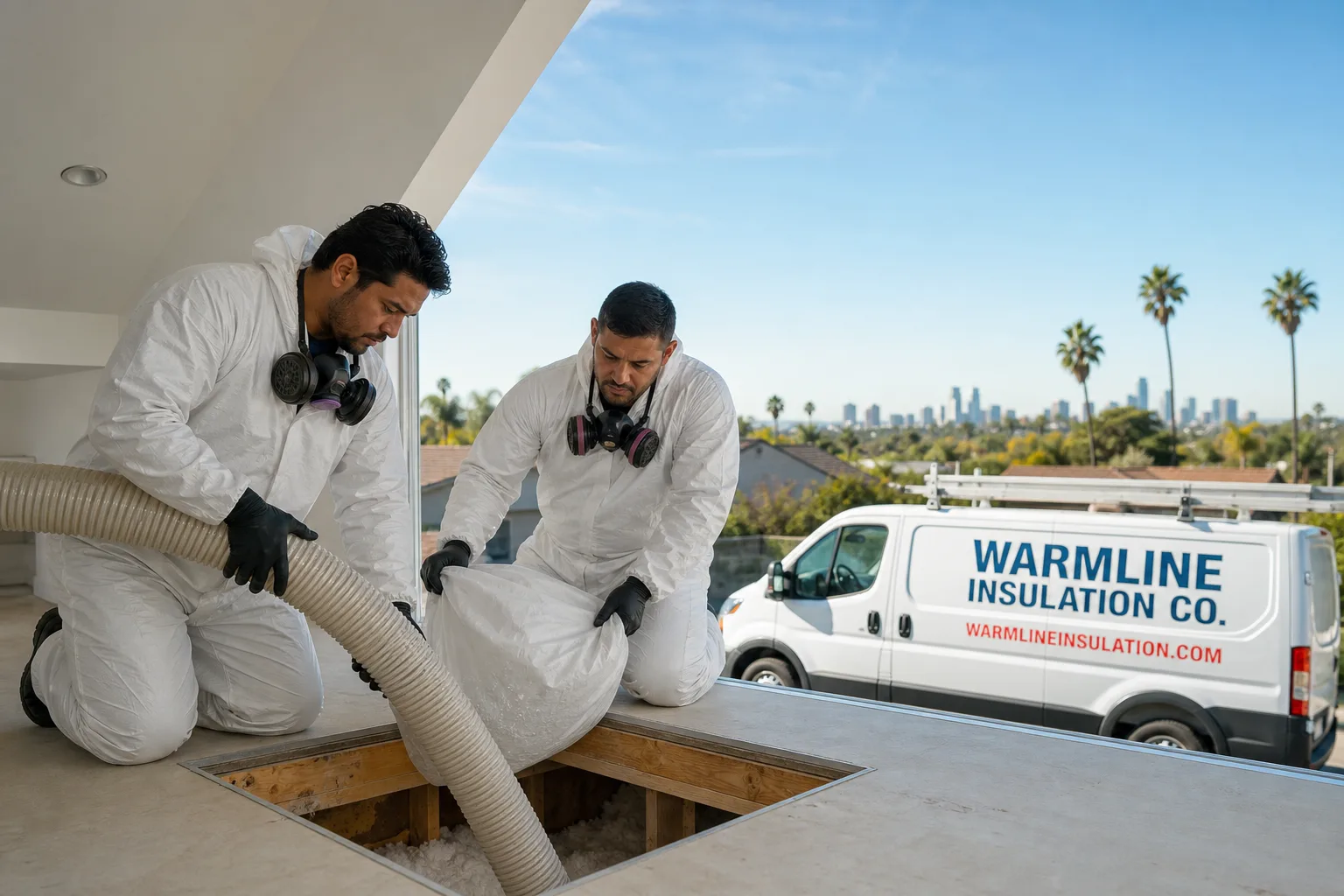
When your local Warmline Insulation Co. team arrives, the first thing they do is a proper attic assessment – measuring existing insulation depth, checking for air leaks, looking for moisture damage or pest activity, and comparing what’s there against what your home actually needs. You get a written estimate before anything starts, with no surprises in the price at the end.
Depending on what the assessment finds, the fix usually involves one or more of our core services: Attic Air Sealing to close the penetrations that are letting conditioned air escape, followed by Blown-In Insulation or Attic Insulation to bring your R-value up to where it needs to be. If the existing material is contaminated or too degraded to insulate over, we handle Insulation Removal and Replacement first. Most jobs are completed in a single visit. All work is backed by our 90-Day Done Right Promise – if it’s not right, we make it right.
Frequently Asked Questions
It can wait in the sense that it won’t cause an immediate emergency, but every month you delay is money leaving through your ceiling. If there’s moisture damage or signs of rodents, though, waiting makes both problems worse – mold spreads and pest contamination deepens. The sooner you get eyes on it, the clearer the picture. Call (855) 657-3403 and a live person will help you figure out how soon you actually need to move.
Yes – calls are answered 24/7 by a live person, never a voicemail. Your local Warmline Insulation Co. team will work to get you scheduled as quickly as possible. Call (855) 657-3403 now and we’ll find the earliest available appointment in your area.
Adding on top is almost always less expensive than full removal and replacement, and it’s the right call when the existing insulation is dry, pest-free, and still reasonably intact. If it’s contaminated, saturated, or so degraded it would compromise the new layer, removal is the better investment – putting new insulation over a bad base doesn’t fix the base. Your written estimate will spell out which approach your attic actually needs and why.
A rough field test: if you can clearly see the tops of your attic floor joists, you’re almost certainly under-insulated. The insulation should sit well above the joists, not level with them or below them. An on-site assessment gives you the exact R-value measurement and a direct comparison against the recommended level for your home’s construction and climate zone. That assessment comes before any estimate, and the estimate comes before any work.
Get It Fixed
Call (855) 657-3403 – a live person answers 24/7, never a voicemail. Or book online and your local Warmline Insulation Co. team will reach out to schedule your free written estimate. Background-checked, uniformed technicians handle it from assessment to completion, most jobs in a single visit.
Written by Neil Ashford, Owner at Warmline Insulation Co., serving local communities since 2011.
What Our Customers Say
"Rodents had been in the attic for years before we bought the place. They vacuumed everything out, sanitized, sealed the entry points with mesh and foam, and only then put new insulation down. Photos of every stage before I paid."
- Darnell Whitfield"They did the energy audit first - blower door and thermal camera - and showed me exactly where the house was leaking before selling me anything. The fix ended up being air sealing plus a modest attic top-up, not the full replacement another company pushed."
- Grace Nakamura"Solid work on the spray foam in the rim joists and the garage ceiling. Scheduling slipped a day because of rain, which they called about ahead of time. Would use them again."
- Tom Reinholt