
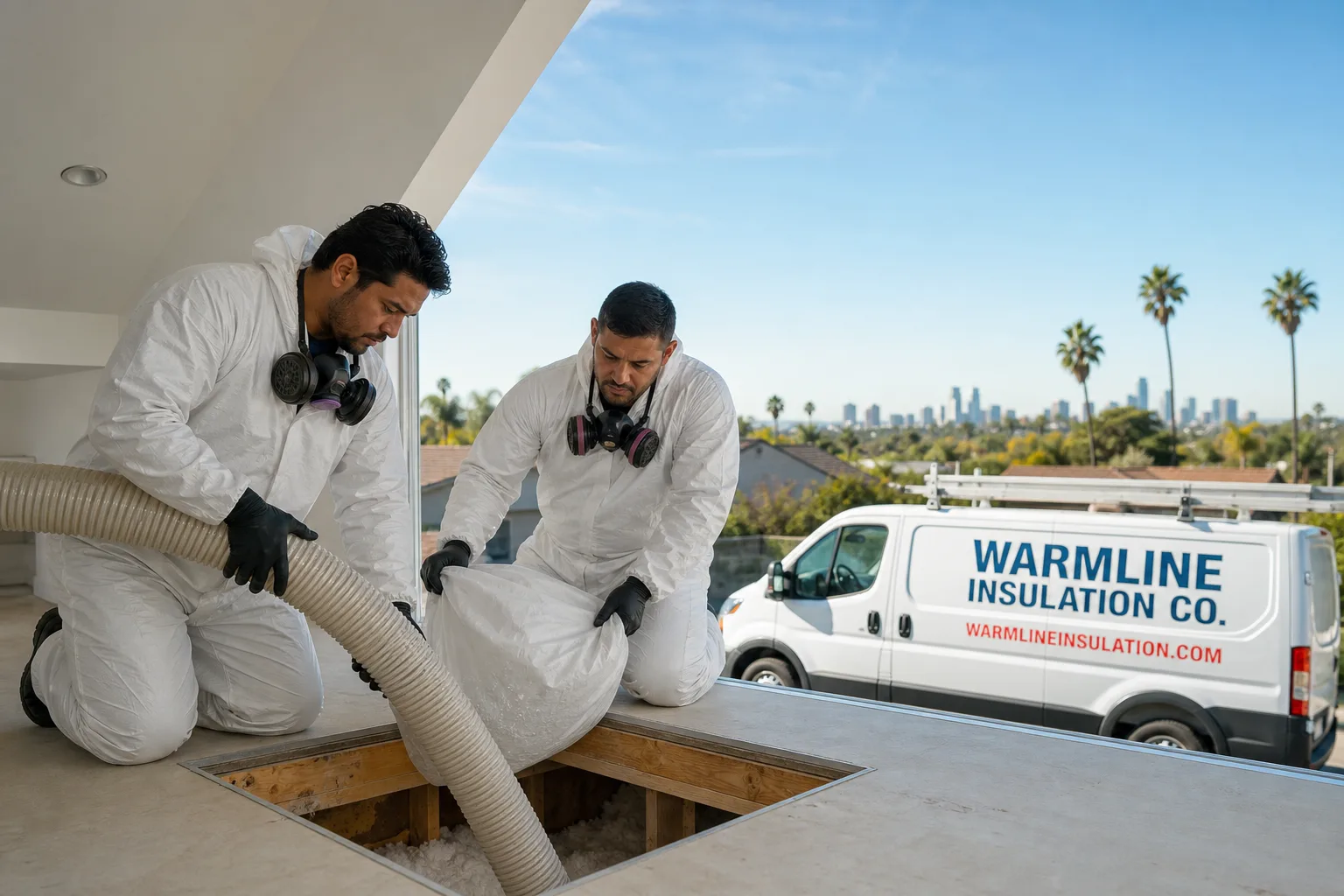
Insulation in Grand Prairie, TX
Most Grand Prairie homes carry between R-7 and R-11 attic insulation, a level that was barely adequate when these ranch houses were built and is nowhere near today’s R-38 to R-60 standard for North Texas. That single fact explains most of the high summer cooling bills and uneven room temperatures we see across this city. Our most common call from Grand Prairie homeowners starts with a crawl space or an east-side attic that’s been losing conditioned air for decades. If your utility bill climbs every July and your upstairs never cools, call (855) 657-3403 and we’ll trace the problem to its source.
Why Grand Prairie Homes Are Different
The neighborhoods east of Highway 360 tell the real story of Grand Prairie. Built largely from the 1950s through the 1970s for workers at Vought Aircraft and LTV Aerospace, these blocks of ranch-style homes were framed with one goal: speed. Original blown-in insulation in these attics has often settled and compressed to just 2 to 3 inches in the floor cavity, which works out to under R-10. Pull a single attic hatch on one of these streets and you’re almost certain to find the same thing on every house nearby, because the same materials and shortcuts went in tract-wide.
Grand Prairie’s inland location makes this worse. Unconditioned attics here routinely hit 150 to 160 degrees in July and August. Summer heat radiates through the ceiling plane and overwhelms whatever thin, degraded insulation remains. Winter Storm Uri in February 2021 exposed how poorly these mid-century homes held heat, and the retrofit demand it sparked has not slowed down. The newer subdivisions west along the SH-161 corridor were built better, but many of those 1990s and 2000s brick veneer homes still run ductwork through hot attics, so they leak conditioned air through a different set of failures.
Our Main Grand Prairie Services
Two services dominate our work in Grand Prairie: attic insulation retrofits for those older east-side ranch homes, and crawl space encapsulation for homes with persistent moisture or musty smells. Here’s what each looks like in this city.
Attic Insulation in Grand Prairie
Attic insulation upgrades in Grand Prairie almost always follow the same pattern: an east-side home from the 1960s or 1970s, original fiberglass batts or settled blown-in fill that’s nowhere near code, and cooling bills that climb every summer. We remove what’s failed, air seal the attic floor, and blow in fresh insulation to R-38 or higher. The difference shows up within the first full billing cycle. For the full breakdown of what this job costs in Grand Prairie and how we approach different housing eras, see our dedicated page: Attic Insulation in Grand Prairie.
What happens when you call
- 1
A real person answersNo phone trees - you reach a local pro.
- 2
You get an upfront price rangeHonest numbers before anyone is dispatched.
- 3
A background-checked tech heads outLicensed & insured, dispatched right away.
- 4
You approve before work beginsNothing starts until you say go.
Crawl Space Encapsulation & Vapor Barrier in Grand Prairie
Grand Prairie’s east-side ranch homes sit on slab foundations, but many of the larger lots and custom builds in older subdivisions have vented crawl spaces that pull in humid North Texas air all summer long. That moisture condenses on ducts and floor joists, feeds mold, and gets drawn into the living space every time the HVAC cycles. Encapsulating the crawl space stops that cycle at the source. Our crews handle full Crawl Space Encapsulation & Vapor Barrier work, from cleanout through final liner installation, with most jobs finished in a single visit.
Crawl Space Vapor Barrier
Signs you need it
Damp floor joists, visible condensation on ductwork, a musty smell that rises into the house, or higher-than-normal indoor humidity readings during Grand Prairie’s muggy stretches.
What it costs in Grand Prairie
Vapor barrier installation typically runs $1,200 to $3,000 in Grand Prairie depending on crawl space size and access.
How we do it
We clean and level the ground, lay a heavy polyethylene liner across the floor, and seal it up foundation walls and around piers. All seams are taped and sealed so ground moisture cannot pass through.
Crawl Space Encapsulation
Signs you need it
Standing water after heavy rains, mold on joists or subfloor, rusted duct strapping, or air that smells earthy every time the system runs.
What it costs in Grand Prairie
Full encapsulation with liner, sealed vents, and dehumidifier hookup generally falls between $5,000 and $12,000 in Grand Prairie.
How we do it
We seal the vents, install a full vapor barrier on floor and walls, insulate the rim joist, and add a crawl space dehumidifier sized for the space. The result is a dry, controlled space that stops feeding moisture into the house above.
Crawl Space Insulation
Signs you need it
Cold floors in winter, frozen pipes in extreme cold snaps, or high cooling costs from ductwork running through unconditioned space.
What it costs in Grand Prairie
Rim joist insulation and crawl space wall insulation usually run $800 to $2,500 in Grand Prairie depending on linear footage.
How we do it
We insulate the rim joist bays with foam board or spray foam, then insulate crawl space walls with foam board or batts, creating a thermal boundary that keeps the space temperate year-round.
What Crawl Space Encapsulation & Vapor Barrier Costs in Grand Prairie
| Item | Typical range in Grand Prairie |
|---|---|
| Vapor barrier only | $1,200 - $3,000 |
| Full encapsulation | $5,000 - $12,000 |
| Rim joist & wall insulation | $800 - $2,500 |
| Crawl space cleanout & prep | $400 - $1,200 |
Can you encapsulate a crawl space in a flood-prone part of Grand Prairie?
Yes, with proper drainage first. Homes in lower-lying areas near Fish Creek or the Trinity River basin often need a sump pump or exterior grading correction before we lay the liner. We assess drainage as part of every encapsulation estimate because sealing a wet crawl space without addressing water entry just traps the problem.
How long does crawl space encapsulation take in Grand Prairie?
Most single-family crawl spaces take one to two days from cleanout through final liner install. Larger homes or spaces with heavy rodent damage or standing water may run into a third day. Call (855) 657-3403 and we’ll give you a clear timeline before work starts.
Spray Foam Insulation in Grand Prairie
Grand Prairie attics that bake at 150 degrees in August push heat straight through traditional batt insulation. Spray foam changes the physics, because it seals the air leaks that batts never touch while adding insulation value in the same pass. For homes in the older east-side neighborhoods, that combination often cuts summer air leakage by half or more. We install open-cell and closed-cell systems using Icynene and Demilec products, and our Spray Foam Insulation work carries the same 90-Day Done Right Promise as everything else we do.
Open-Cell Spray Foam
Signs you need it
Drafty rooms, high summer bills, or attic insulation that never quite keeps the second floor comfortable even after a top-up.
What it costs in Grand Prairie
Open-cell spray foam generally runs $1.50 to $3.00 per board foot installed in Grand Prairie depending on depth.
How we do it
We spray the foam directly onto the attic floor or roofline to the specified depth, filling gaps and cracks as it expands. The material hardens into a continuous air barrier and insulation layer in one step.
Closed-Cell Spray Foam
Signs you need it
Crawl space moisture, roofline condensation, or a need for structural reinforcement on older framing plus maximum R-value per inch.
What it costs in Grand Prairie
Closed-cell foam typically costs $2.50 to $5.00 per board foot in Grand Prairie depending on thickness and access.
How we do it
We apply the foam in passes to reach the specified depth, typically 2 to 3 inches for air sealing and insulation. Closed-cell adds rigidity and a vapor barrier, which is why it’s the common choice for crawl spaces and roof decks.
What Spray Foam Insulation Costs in Grand Prairie
| Item | Typical range in Grand Prairie |
|---|---|
| Open-cell attic installation | $1.50 - $3.00 per board foot |
| Closed-cell attic or crawl space | $2.50 - $5.00 per board foot |
| Rim joist spray foam | $800 - $2,000 |
| Garage ceiling spray foam | $1,200 - $3,500 |
Is spray foam worth the cost in a 1960s Grand Prairie ranch?
For many east-side homes, yes, especially if the attic will be converted to living space or if the HVAC equipment sits in the attic. The air sealing alone eliminates the stack effect that pulls hot attic air down through wall cavities. For a straight attic floor retrofit, blown-in with air sealing may be more cost-effective, and we’ll give you both options at estimate.
Can you spray foam an attic in Grand Prairie during the summer?
Yes, and we do it regularly through July and August. High heat changes how foam cures, so our crews adjust foam temperature and pass depth accordingly. A hot attic doesn’t stop the work; it just changes the setup, which is why we send trained technicians rather than general laborers.
Blown-In Insulation in Grand Prairie
The single most common retrofit in Grand Prairie is blowing fresh insulation over a compressed, settled layer in a 1960s ranch attic. These attics often hold original material that’s sunk to 2 or 3 inches, and topping it off with fresh blown-in fiberglass or cellulose gets the assembly back to R-38 or better without a full tear-out. The payback is fast because the summer heat load in Grand Prairie is relentless. Our Blown-In Insulation crews run this process weekly across the older east-side neighborhoods, and most homes are done by early afternoon.
Blown-In Cellulose
Signs you need it
Rooms that overheat in the afternoon, attic insulation that looks settled or patchy, or energy bills that spike from June through September.
What it costs in Grand Prairie
Blown-in cellulose typically runs $1.00 to $2.00 per square foot installed in Grand Prairie depending on depth.
How we do it
We use CertainTeed or GreenFiber cellulose, blown to the specified depth with calibrated equipment. The material fills around ducts, wires, and framing, creating a dense continuous layer that reduces airflow through the ceiling plane.
Blown-In Fiberglass
Signs you need it
An attic that needs a full top-up, or a homeowner who wants a material that will never settle below its rated depth.
What it costs in Grand Prairie
Blown-in fiberglass generally runs $0.90 to $1.80 per square foot installed in Grand Prairie.
How we do it
We blow Johns Manville or Knauf fiberglass to the rated depth, usually R-38 to R-60, over the existing layer after air sealing. Fiberglass holds its loft over time, which makes it a strong choice for Grand Prairie attics where settled insulation is the original problem.
Blown-In Top-Up
Signs you need it
An attic that already has some insulation but measures under R-30, especially on the east side where original blown-in material has compressed.
What it costs in Grand Prairie
A top-up over existing insulation usually runs $0.60 to $1.20 per square foot in Grand Prairie.
How we do it
We inspect and air seal first, then blow fresh material over the existing layer to reach R-38 or R-60. This is the fastest, most cost-effective route for many Grand Prairie ranches, and it’s often completed in half a day.
What Blown-In Insulation Costs in Grand Prairie
| Item | Typical range in Grand Prairie |
|---|---|
| Blown-in cellulose | $1.00 - $2.00 per sq ft |
| Blown-in fiberglass | $0.90 - $1.80 per sq ft |
| Top-up over existing | $0.60 - $1.20 per sq ft |
| Dense-pack wall insulation | $2.00 - $4.00 per sq ft |
How deep should attic insulation be in Grand Prairie?
For North Texas, the recommended level is R-38 to R-60. That works out to roughly 13 to 20 inches of blown-in fiberglass or 11 to 17 inches of cellulose. Most 1960s Grand Prairie homes we inspect sit well under half that depth.
Can you blow insulation over old insulation in Grand Prairie?
Usually, yes. If the existing material is dry, free of rodent contamination, and not moldy, we can blow fresh insulation right over it after air sealing. If the old layer is compromised, we’ll recommend removal first. Call (855) 657-3403 for an inspection and exact pricing.
Radiant Barrier Installation in Grand Prairie
Grand Prairie attics hit 150 to 160 degrees in summer, and that radiant heat moves down through the ceiling even when insulation is adequate. A radiant barrier installed under the roofline reflects that heat back out, cutting attic temperatures by 20 to 30 degrees and reducing the load on both your insulation and your air conditioner. This is one of the highest-return upgrades we do in Grand Prairie, especially for older ranches with dark shingle roofs and full sun exposure. Our Radiant Barrier Installation crews staple the foil to the rafter bottoms, keeping the barrier effective without trapping moisture.
Attic Radiant Barrier
Signs you need it
Attic temperatures over 130 degrees on summer afternoons, a second floor that never cools, or an HVAC system that runs constantly from 3 p.m. to 7 p.m.
What it costs in Grand Prairie
Attic radiant barrier installation typically runs $1.50 to $3.00 per square foot in Grand Prairie depending on roof pitch and access.
How we do it
We staple a perforated foil barrier to the underside of the roof rafters, leaving proper gaps for ventilation. The foil reflects radiant heat before it can reach the attic floor insulation.
Radiant Barrier & Ventilation
Signs you need it
High attic humidity alongside high heat, rusted nail heads on the roof deck, or an attic that feels like a sauna even with insulation in place.
What it costs in Grand Prairie
Radiant barrier with ventilation improvements generally runs $2.00 to $4.00 per square foot in Grand Prairie.
How we do it
We combine the foil barrier with soffit and ridge vent improvements or a solar attic fan. The barrier blocks radiant heat while the ventilation removes the hot, humid air that would otherwise build up against the roof deck.
What Radiant Barrier Installation Costs in Grand Prairie
| Item | Typical range in Grand Prairie |
|---|---|
| Attic radiant barrier | $1.50 - $3.00 per sq ft |
| Radiant barrier & ventilation | $2.00 - $4.00 per sq ft |
| Roof deck radiant barrier | $1.75 - $3.50 per sq ft |
| Garage ceiling radiant barrier | $800 - $1,800 |
Does a radiant barrier help in a Grand Prairie winter?
Somewhat, but the big payoff is summer. Radiant barriers reflect heat back out in both directions, so they help hold heat in during winter too, but the effect is smaller because winter heat loss is driven more by convection and air leakage than radiant transfer. The summer savings on a Grand Prairie roof are the main event.
Can you install a radiant barrier in an attic with blown-in insulation?
Yes. The barrier goes on the roofline, not the attic floor, so it works alongside blown-in insulation without interfering. The two systems address different heat paths: the barrier handles radiant heat, the insulation handles conductive heat.
Insulation Removal & Replacement in Grand Prairie
Grand Prairie’s east-side ranch homes often need insulation removed before anything new goes in, because the original material has been beaten down by 50 or 60 years of heat, humidity, and rodent traffic. In many of those attics, the old blown-in fill has compressed to a thin, dirty layer that’s no longer doing anything useful. We remove it, sanitize the attic, air seal, and blow in fresh material to current code. Our Insulation Removal & Replacement crew handles the whole sequence, and most Grand Prairie jobs wrap up in one day.
Attic Insulation Removal
Signs you need it
Insulation that’s compressed to under R-10, stained by roof leaks, or full of dust and debris from decades of attic airflow.
What it costs in Grand Prairie
Attic insulation removal typically runs $1.00 to $2.50 per square foot in Grand Prairie depending on depth and access.
How we do it
We vacuum out the old insulation with commercial equipment, bag it, and dispose of it properly. Then we clean the attic floor so air sealing and new insulation go in over a clean surface.
Contaminated Insulation Removal
Signs you need it
Rodent droppings in the insulation, a strong animal smell, or visible mold growth on batts or blown-in material.
What it costs in Grand Prairie
Contaminated insulation removal generally runs $2.00 to $4.00 per square foot in Grand Prairie due to the extra handling and sanitation steps.
How we do it
We remove the contaminated material under controlled conditions, sanitize the attic with an antimicrobial treatment, and prepare the space for new insulation. This is not a job for a general handyman; contaminated dust spreads quickly through the house when disturbed.
Insulation Replacement
Signs you need it
Insulation that’s wet from a roof leak, burned or singed near can lights, or simply too thin and degraded to justify a top-up.
What it costs in Grand Prairie
Full removal and replacement typically runs $2.50 to $5.00 per square foot in Grand Prairie all in.
How we do it
We remove the old material, air seal the attic floor, and install new blown-in insulation to R-38 or R-60. The result is a clean, properly insulated attic ready for decades of Grand Prairie summers.
What Insulation Removal & Replacement Costs in Grand Prairie
| Item | Typical range in Grand Prairie |
|---|---|
| Attic insulation removal | $1.00 - $2.50 per sq ft |
| Contaminated removal | $2.00 - $4.00 per sq ft |
| Full removal & replacement | $2.50 - $5.00 per sq ft |
| Vermiculite removal | $3.00 - $6.00 per sq ft |
How do I know if my Grand Prairie attic insulation needs removal instead of a top-up?
If the existing insulation is wet, moldy, rodent-contaminated, or compressed to under R-10, we usually recommend removal. A top-up over bad material just buries the problem. We’ll inspect the attic and tell you which route makes sense before quoting anything.
Can you remove old insulation from a 1960s Grand Prairie ranch in one day?
Most standard attics under 1,500 square feet, yes. The removal itself is usually a morning job; the full replacement with air sealing and new blown-in insulation often finishes the same afternoon. Larger or heavily contaminated spaces may run into a second day. Call (855) 657-3403 for a realistic timeline.
Attic Air Sealing in Grand Prairie
Before we add insulation in any Grand Prairie home, we seal the air leaks that let conditioned air escape and hot attic air pour down. In the east-side ranches, those leaks are everywhere: around the attic hatch, through top plates, around can lights, and along every penetration the original 1960s builder never sealed. Sealing first is the difference between an insulation job that works and one that underperforms, because insulation slows heat transfer but does nothing to stop airflow. Our Attic Air Sealing work attacks those leaks systematically, and it’s included in the prep for nearly every insulation job we do in Grand Prairie.
Top Plate & Penetration Sealing
Signs you need it
Dusty wall cavities, cold drafts in winter, or a thermal camera showing heat loss along the junction where interior walls meet the ceiling.
What it costs in Grand Prairie
Top plate and penetration sealing typically runs $0.50 to $1.50 per square foot of attic floor in Grand Prairie.
How we do it
We seal every top plate, wire penetration, and pipe chase with foam or caulk from the attic side. This closes the direct pathways that let attic air pour into wall cavities and down through the house.
Can Light & Duct Boot Sealing
Signs you need it
Recessed lights that feel hot to the touch, dust streaks on the ceiling around can lights, or high cooling bills despite newer insulation.
What it costs in Grand Prairie
Can light and duct boot sealing usually runs $15 to $35 per fixture or boot in Grand Prairie.
How we do it
We install airtight covers over recessed lights from the attic side and seal every duct boot where it penetrates the ceiling. This stops two of the largest, most common leakage points in Grand Prairie homes.
Attic Hatch Sealing
Signs you need it
The attic hatch feels warm in summer, cold in winter, or you can see daylight around the edges when the hatch is closed.
What it costs in Grand Prairie
Attic hatch sealing typically runs $75 to $200 for the full seal and weatherstrip treatment in Grand Prairie.
How we do it
We weatherstrip the hatch frame, add a rigid insulated cover, and seal the surrounding gap. The attic hatch is a surprisingly large hole in the ceiling plane, and sealing it is one of the fastest paybacks in any Grand Prairie retrofit.
What Attic Air Sealing Costs in Grand Prairie
| Item | Typical range in Grand Prairie |
|---|---|
| Top plate & penetration sealing | $0.50 - $1.50 per sq ft |
| Can light & duct boot sealing | $15 - $35 per fixture |
| Attic hatch sealing | $75 - $200 |
| Full attic air sealing | $400 - $1,200 |
Is attic air sealing required before adding insulation in Grand Prairie?
Not by code, but it should be. Insulation without air sealing is like wearing a thick coat over a hole in your shirt; the heat still moves. Every insulation job we quote in Grand Prairie includes air sealing because skipping it guarantees the new insulation underperforms.
How much difference does air sealing actually make in a Grand Prairie summer?
In the older east-side ranches, air sealing alone often cuts air leakage by 30 to 50 percent. That means the air conditioner stops fighting an open stack effect and runs shorter cycles. Paired with new insulation, the combined savings typically show up on the very next bill.
Wall Insulation in Grand Prairie
Many 1950s and 1960s Grand Prairie ranch homes have empty wall cavities or a thin layer of original batt that’s fallen away from the drywall over time. That’s why rooms on the west side of the house bake in the afternoon and north-facing rooms stay cold all winter. We can fill those cavities without tearing out drywall, using injection foam or dense-pack cellulose that moves through small drilled holes and seals the cavity from the inside out. Our Wall Insulation crew handles the full scope, and the difference is noticeable within a day of completion.
Injection Foam Wall Insulation
Signs you need it
Exterior walls that feel warm to the touch in summer, cold in winter, or rooms that never hold temperature despite a new HVAC system.
What it costs in Grand Prairie
Injection foam wall insulation typically runs $2.50 to $5.00 per square foot of wall area in Grand Prairie.
How we do it
We drill small access holes through the exterior or interior wall at each stud bay, inject foam that expands to fill the cavity, then patch the holes. The foam seals and insulates in one step, filling gaps that batts always miss.
Drill & Fill Wall Insulation
Signs you need it
Stud bays that feel empty when tapped, high exterior wall temperatures on hot afternoons, or rooms that never quite match the thermostat.
What it costs in Grand Prairie
Drill and fill with dense-pack cellulose usually runs $2.00 to $4.00 per square foot of wall area in Grand Prairie.
How we do it
We drill through each stud bay and blow dense-pack cellulose to fill the cavity completely. The material packs tightly enough to reduce air movement, which is what makes it perform better than the original batts in these Grand Prairie ranches.
What Wall Insulation Costs in Grand Prairie
| Item | Typical range in Grand Prairie |
|---|---|
| Injection foam walls | $2.50 - $5.00 per sq ft |
| Drill & fill cellulose | $2.00 - $4.00 per sq ft |
| Interior wall soundproofing | $1.50 - $3.00 per sq ft |
| Exterior wall insulation (new construction) | $1.00 - $2.50 per sq ft |
Can you insulate the walls of a 1960s Grand Prairie ranch without tearing out drywall?
Yes, and that’s how we do it in nearly every case. Injection foam and drill-and-fill both go in through small holes that we patch afterward, so the drywall stays intact. For more details, our Wall Insulation page covers the full process.
Why are some rooms in my Grand Prairie house so much hotter than others?
Empty or underfilled wall cavities are usually the culprit, especially on west-facing walls that catch the full afternoon sun. Add in the air leaks through top plates and you get rooms that can’t keep up with the thermostat. Wall insulation and air sealing together fix the imbalance.
Attic Cleaning & Rodent Proofing in Grand Prairie
Older Grand Prairie homes, especially the east-side ranches with attic vents and plenty of roof penetrations, tend to attract rodents faster than newer construction. Squirrels and rats find their way in through soffit gaps and around HVAC penetrations, then nest in the old insulation and contaminate the air your home breathes through the HVAC system. We clean the attic, remove the waste, sanitize the space, and seal every entry point so the problem doesn’t come back. Our Attic Cleaning & Rodent Proofing service handles the full remediation, and it pairs naturally with insulation replacement for a clean, pest-free attic.
Attic Cleanout
Signs you need it
Droppings in the insulation, nesting material, chewed wires, or simply decades of dust and debris built up in an attic that’s never been cleaned.
What it costs in Grand Prairie
Attic cleanout typically runs $500 to $1,500 in Grand Prairie depending on attic size and the amount of debris.
How we do it
We remove all debris, old nesting material, and contaminated insulation, then vacuum the attic floor thoroughly. The result is a clean surface ready for air sealing and new insulation.
Rodent Proofing & Exclusion
Signs you need it
Scratching sounds at night, fresh droppings after cleaning, or daylight visible through gaps around the roofline or vents.
What it costs in Grand Prairie
Rodent proofing and exclusion generally runs $300 to $1,000 in Grand Prairie depending on the number of entry points.
How we do it
We inspect the full perimeter and roof, seal every gap larger than a dime with metal mesh and sealant, and reinforce vulnerable vents. Exclusion is the only long-term solution; poison bait in the attic just leaves dead animals in your insulation.
What Attic Cleaning & Rodent Proofing Costs in Grand Prairie
| Item | Typical range in Grand Prairie |
|---|---|
| Attic cleanout | $500 - $1,500 |
| Sanitizing & decontamination | $300 - $800 |
| Rodent proofing & exclusion | $300 - $1,000 |
| Attic restoration (full) | $1,500 - $4,000 |
Do I need to remove my attic insulation if rodents have been living in it?
If the level of contamination is significant, yes. Rodent urine and droppings in insulation are a health concern, and no amount of air sealing will fix an attic that’s been used as a nest. We’ll tell you honestly whether a cleanout is needed or whether spot removal will do the job.
How do rodents get into Grand Prairie attics?
Mostly through roofline gaps, soffit vents, and openings around HVAC penetrations and chimney chases. The older construction methods used in Grand Prairie’s east-side ranches just left more of these gaps open, which is why rodent proofing is so tightly linked to insulation work in this city.
Serving Grand Prairie, TX - Our Local Coverage Area
We’re based in the Grand Prairie area and know this community well. Use the map below to see our service coverage - if you’re nearby, we can almost certainly help.
Home Energy Audit in Grand Prairie
Every Grand Prairie retrofit should start with a home energy audit, because guessing at where the house is leaking wastes money and leaves problems unsolved. Our audit uses blower-door testing, thermal imaging, and duct leakage measurement to pinpoint exactly where your home is losing conditioned air and where insulation is failing. That data turns a fuzzy problem into a clear work order. Our Home Energy Audit is the diagnostic backbone of everything we do, and for most Grand Prairie homes it’s the fastest way to find out which fix will actually move the needle.
Blower Door Test
Signs you need it
High energy bills with no obvious cause, drafty rooms, or a general sense that the house never holds temperature.
What it costs in Grand Prairie
A blower door test typically runs $150 to $350 in Grand Prairie as part of a full audit.
How we do it
We mount a calibrated fan in an exterior door frame and depressurize the house, then measure how much air leaks back in. The number gives us a baseline air-leakage rate we can compare against after sealing work is done.
Thermal Imaging Inspection
Signs you need it
Visible temperature differences between rooms, cold spots in winter, or a house that’s had piecemeal insulation work without clear results.
What it costs in Grand Prairie
Thermal imaging as part of an audit typically runs $100 to $250 in Grand Prairie.
How we do it
We scan walls, ceilings, and floors with an infrared camera while the house is under pressure, revealing missing insulation, air leaks, and thermal bridging that’s invisible to the naked eye. The images give us a room-by-room map of where work is needed.
Duct Leakage Test
Signs you need it
Rooms that never match the thermostat, high cooling bills despite a newer AC unit, or dusty air blowing from registers.
What it costs in Grand Prairie
A duct leakage test generally runs $150 to $300 in Grand Prairie as part of an energy audit.
How we do it
We pressurize
Pricing for Insulation in Grand Prairie, TX
| Service | Typical range in Grand Prairie |
|---|---|
| Vapor barrier only | $1,200 – $3,000 |
| Full encapsulation | $5,000 – $12,000 |
| Open-cell attic installation | $1.50 – $3.00 per board foot |
| Closed-cell attic or crawl space | $2.50 – $5.00 per board foot |
| Blown-in cellulose | $1.00 – $2.00 per sq ft |
| Blown-in fiberglass | $0.90 – $1.80 per sq ft |
| Attic radiant barrier | $1.50 – $3.00 per sq ft |
| Attic insulation removal | $1.00 – $2.50 per sq ft |
| Full attic air sealing | $400 – $1,200 |
In Grand Prairie, the biggest cost drivers are attic access, how much depth is needed to reach current code, whether old insulation has to be removed first, and the size of the crawl space. We walk the home, measure what’s actually there, and write the price before any work starts.
FAQs About Insulation in Grand Prairie, TX
How quickly can you get to a job in Grand Prairie?
We schedule Grand Prairie visits within a few days in most cases, and sooner if there is an active leak or moisture issue in a crawl space. Call to check current openings, and we will give you a specific appointment window rather than a vague estimate.
Do I need a permit for insulation work in Grand Prairie?
Most standard attic and crawl space insulation work does not require a separate permit in Grand Prairie, but larger jobs involving structural changes or new mechanical equipment sometimes do. We handle any required paperwork as part of the project so you do not have to track it down yourself.
How does the written estimate process work?
We inspect the attic, crawl space, or walls in person, measure existing insulation depth and condition, and then put a specific price in writing before any work begins. You will know the exact scope and cost ahead of time, with no surprise charges added once the crew arrives.
Which areas near Grand Prairie do you cover?
Along with Grand Prairie, we regularly work in Houston, Spring, The Woodlands, Katy, Pearland, and Humble. If your home falls between these service areas, reach out and we will confirm coverage for your specific address.
What happens to the old insulation you remove?
Old insulation is bagged on-site and hauled away as part of the job, so you are not left with debris in the attic or yard. If the material is contaminated or shows signs of pests, we follow separate handling steps to keep the rest of the home clean during removal.
Frequently Asked Questions
What happens when you call
- 1A real person answersNo phone trees - talk to a local insulation pro.
- 2You get an upfront price rangeHonest numbers before anyone is dispatched. No surprises.
- 3A background-checked tech heads outLicensed & insured, typically within 60-minute.
- 4You approve before work beginsNothing starts until you say go.
What Grand Prairie Customers Say
"Radiant barrier stapled to the rafters plus new baffles at the soffits. Attic temperature dropped enough that the AC runs noticeably less in the afternoon. Crew was in and out in a day and left the garage cleaner than they found it."
- Sam Kessler"Injection foam in the walls of our 1950s house - no drywall demolition, just small holes patched and painted the same day. The street noise in the front bedroom is half what it was."
- Yasmin Farah"Upstairs was ten degrees hotter than downstairs every summer. They pulled the attic to bare joists, air-sealed every can light and top plate first, then blew it to R-49. First August in this house where the bedrooms and the living room read the same on the thermostat."
- Marcus Hale