
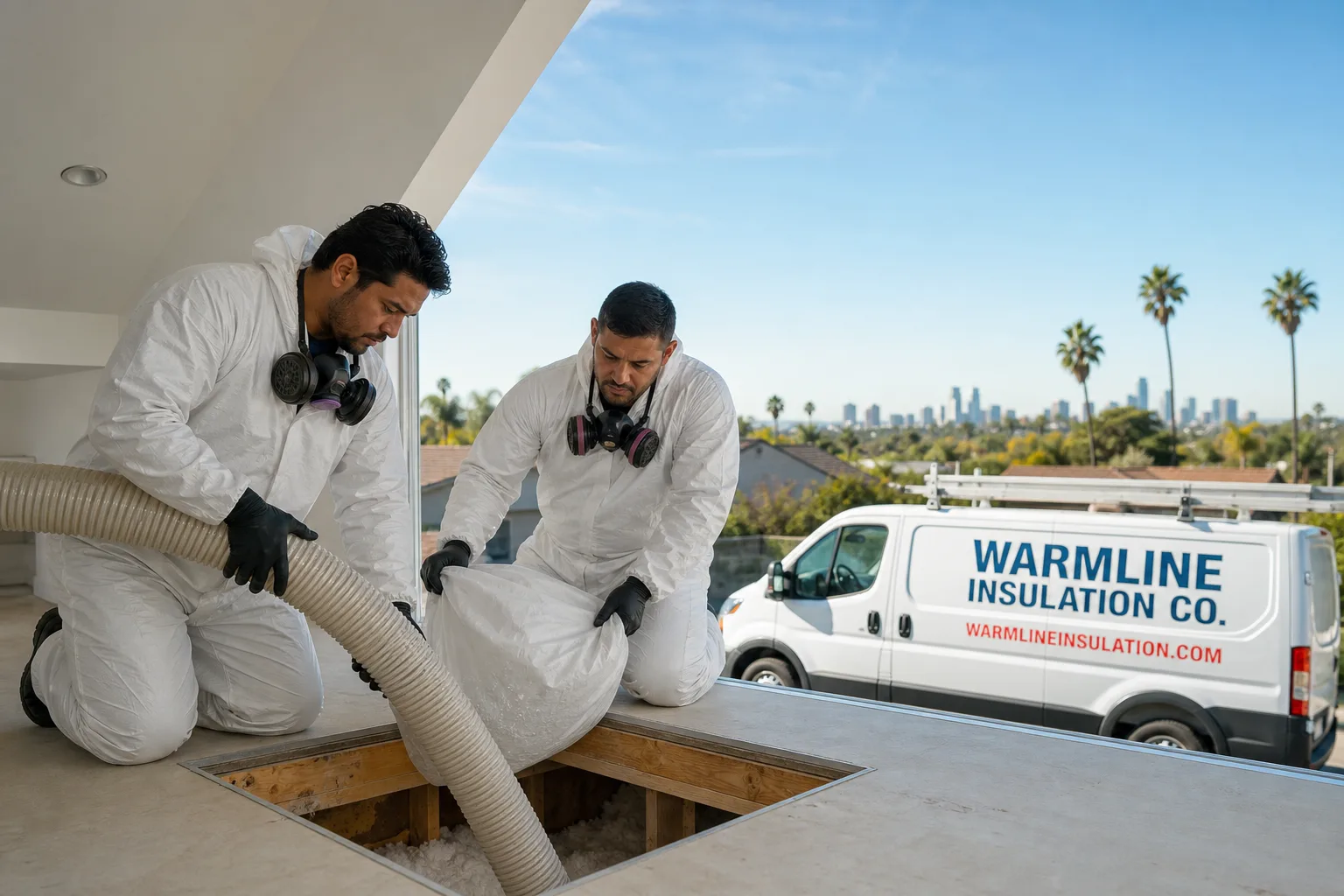
Fast, Reliable Attic Insulation Across Orland Park
If your Orland Park home was built between 1978 and 1998, there’s a strong chance your attic insulation is doing far less than you think. Most of the two-story colonials and brick-front homes across Orland Park shipped with fiberglass batts that have since settled, compressed, or shifted, leaving attics that were rated R-38 performing closer to R-19. That gap shows up every winter as cold bedrooms, high gas bills, and ice dams along the roofline. Our crews know exactly which subdivisions to check, because we’ve been inside hundreds of them. Need it diagnosed? Call (855) 657-3403 and a live person answers, day or night.
Why Warmline Insulation Co. Is Orland Park’s Preferred Attic Insulation Company
Warmline Insulation Co. has been in business since 2011, and we’ve spent more than a decade walking through attics in Orland Park subdivisions where the same builder used the same truss package on every lot. That kind of local repetition doesn’t happen by accident. It means when a homeowner on one side of 143rd Street shows us a cold, drafty upstairs, we already have a strong idea of what we’ll find before we climb the ladder. The original batts are likely settled below code. The eave baffles are probably missing. And the rim joists, where the foundation meets the framing, were rarely air-sealed when these homes went up.
Our technicians are background-checked and uniformed, and every job is backed by a written 90-Day Done Right Promise. If it isn’t right, we make it right. That’s the standard we’ve held across Orland Park since day one. Homeowners in neighborhoods from Crystal Tree to the older ranch pockets near the village core know they’re getting a specialist who treats insulation as the foundation of a healthy home, not an afterthought. One live call, one clean visit, most jobs completed the same day we start.
Our Attic Insulation Services in Orland Park
Every attic in Orland Park has a history, and the right fix depends on what that history left behind. We handle the full range of Attic Insulation work, but in this village, three services come up more often than anywhere else we work: blown-in upgrades, replacement of failed 1980s batts, and baffle and ventilation prep to stop the ice damming that plagues vaulted and cathedral ceilings.
Blown-In Attic Insulation
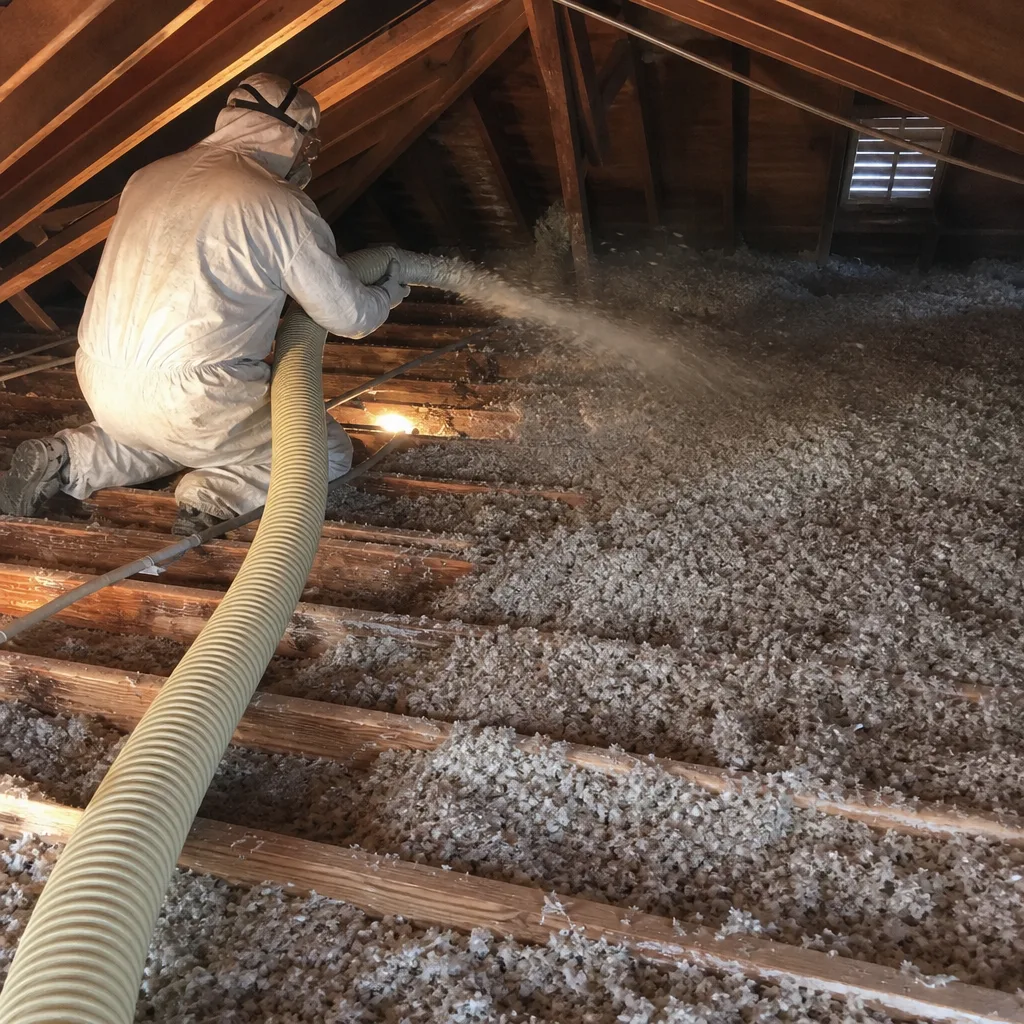
Blown-in fiberglass and cellulose are the workhorses for Orland Park attics, especially in the late-1980s colonials south and west of Orland Square. Loose-fill insulation settles into irregular cavities, covers top plates, and reaches depths that batts simply can’t match in tight eave areas. We install Owens Corning and GreenFiber blown-in products to R-60 where the attic framing allows, which brings pre-1990 homes up to current Illinois energy code expectations. The difference in upstairs comfort is usually noticeable within the same heating season.
Attic Batt Insulation
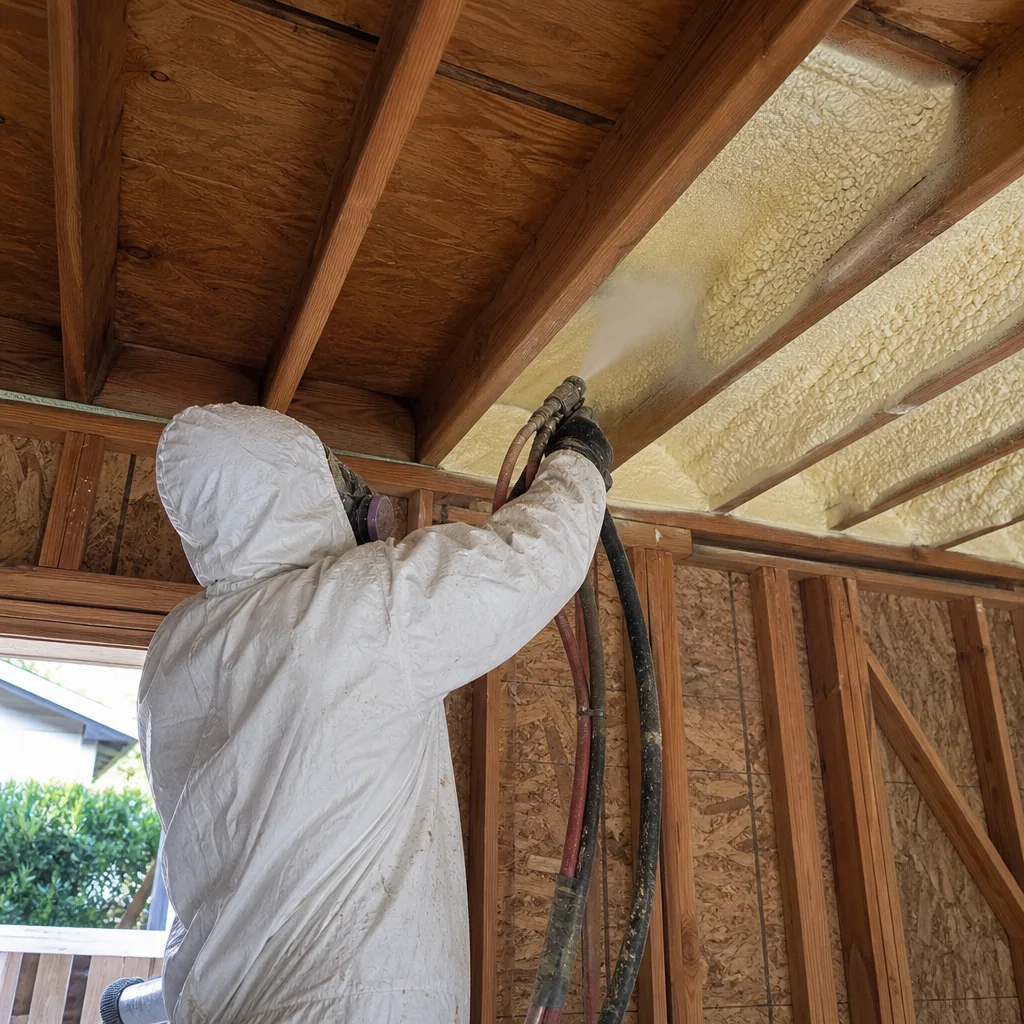
Batt insulation still has its place in Orland Park, particularly in cathedral ceiling cavities and knee wall spaces where loose-fill would slump or block airflow. We use Johns Manville and Knauf fiberglass batts with a clean kraft facing that installs tightly against framing. For homeowners adding a finished space or repairing a section where old batts were disturbed during HVAC work, batt insulation gives us precise control over fit and R-value in a way blowing loose-fill into a sloped cavity never will.
Attic Insulation Top-Up
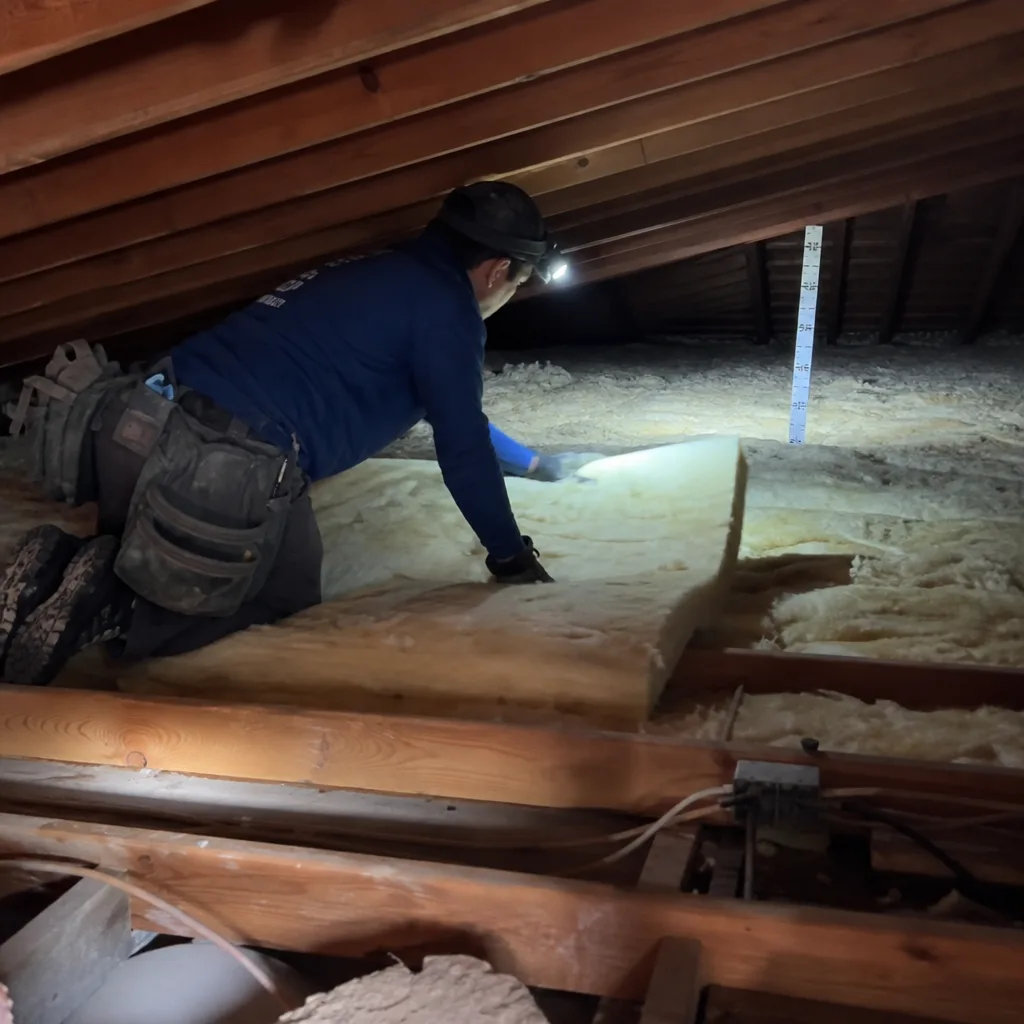
A top-up is the right call for Orland Park attics where the original batts are still reasonably intact but simply not deep enough. Many 1980s homes left the builder with R-30 or R-38, and today’s Zone 5A climate demands more. We blow an additional 8 to 12 inches of fiberglass over the existing layer, after confirming the old material is dry and mold-free. The $89 Seasonal Tune-Up is a good first step if you’re not sure whether a top-up or full replacement makes sense. Frankly, a visual inspection tells us in about fifteen minutes.
Attic Insulation Replacement
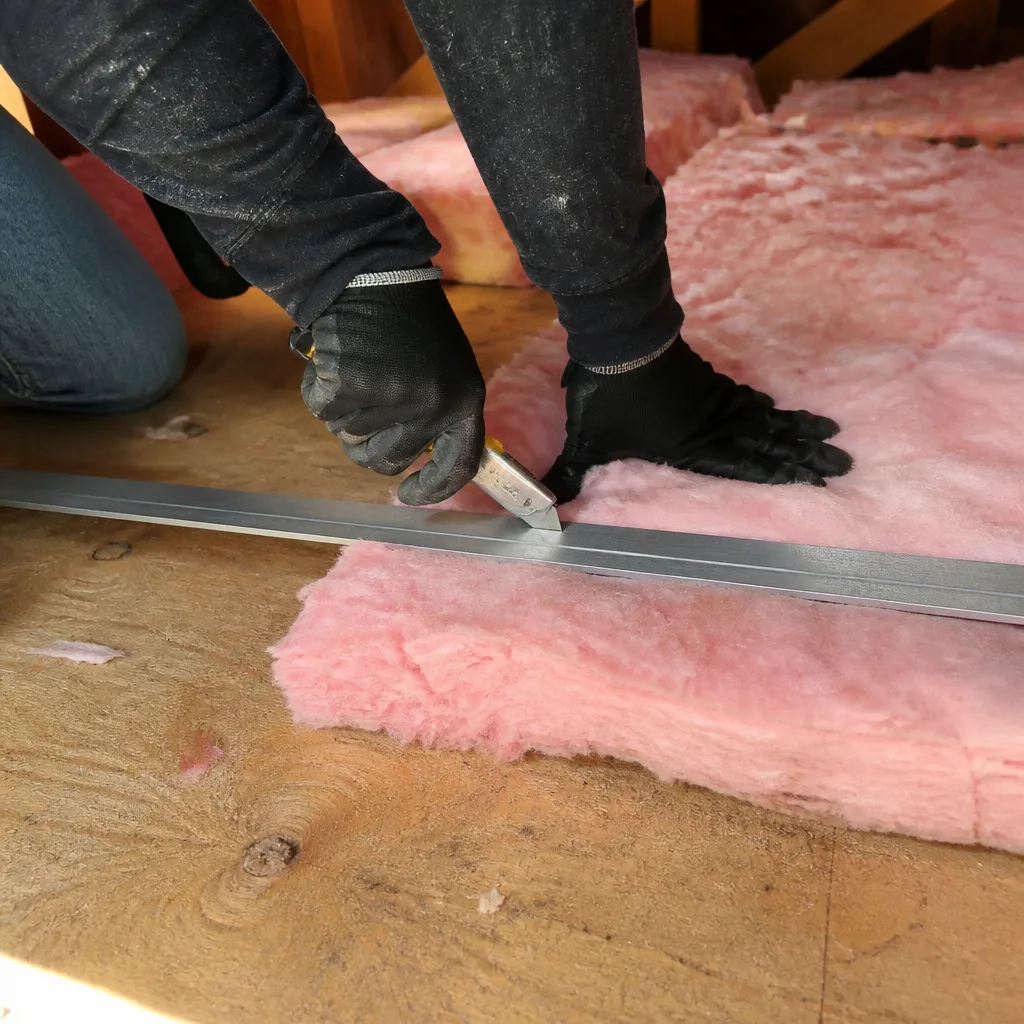
When original fiberglass batts have compressed to half their intended depth, been soaked by roof leaks, or become a rodent highway, replacement is the only honest fix. We remove the failed material, sanitize the attic floor where needed, air-seal the ceiling plane and rim joists, and install fresh insulation to R-60. In Orland Park, full replacement jobs are common in the two-story colonials with vaulted great-room ceilings, because those designs trap warm air at the roof deck and accelerate batt failure. We finish with proper eave baffles so the new insulation actually does its job for decades.
Attic Baffles & Ventilation Prep
This is the service that prevents the ice damming so many Orland Park homeowners think is just a fact of life in a Chicago winter. It isn’t. When vaulted ceilings were built in the 1980s and 1990s, builders often skipped soffit baffles entirely, which meant warm attic air hit the cold roof deck, melted snow at the peak, and sent water under the shingles. We install baffles at every eave bay, verify soffit and ridge ventilation, and create a continuous air channel from intake to exhaust. The Crystal Tree subdivision off 143rd Street is a good example: we opened a 1989 two-story colonial with a vaulted great-room ceiling and found the original fiberglass batts had settled to R-19 in spots, with no baffles at the eaves. We removed the old batts from the problematic cathedral cavities, installed Owens Corning blown-in fiberglass to an R-60 depth in the attic floor, added proper baffles to maintain ventilation, and air-sealed the rim joists in the basement. The icy drafts disappeared, and the ice damming along the front roofline stopped showing up every January.
What happens when you call
- 1
A real person answersNo phone trees - you reach a local pro.
- 2
You get an upfront price rangeHonest numbers before anyone is dispatched.
- 3
A background-checked tech heads outLicensed & insured, dispatched right away.
- 4
You approve before work beginsNothing starts until you say go.
Trusted Brands We Service in Orland Park
We don’t experiment with off-brand materials, because your attic is the one place in the house where a material failure stays hidden until it costs you real money. Warmline installs Owens Corning, Johns Manville, and Knauf insulation products, and we stock the materials we use most often for Orland Park’s housing stock right on our trucks. That means when we diagnose a settled 1992 colonial near Orland Square, we can often start the fix the same day without waiting on a supplier run.
Common Attic Insulation Problems We See in Orland Park Homes
- Settled fiberglass batts in 1980s and 1990s colonials. Original batts that started at 12 inches are routinely down to 5 or 6 inches in Orland Park attics. An R-38 ceiling becomes an R-19 ceiling, and the upstairs never holds heat the way it used to. The fix is a top-up or full replacement, depending on the batt condition.
- Missing eave baffles and winter ice damming. Vaulted ceilings without baffles trap warm air at the roof deck, which melts snow at the ridge and sends water under shingles. Homes in the tract subdivisions south and west of Orland Square show this defect street after street, because the same truss package went into every house. New shingles won’t fix it; proper baffles and air sealing will.
- Uninsulated rim joists and basement band boards. Most Orland Park homes from the boom decades were built with empty rim joist cavities. Warm air leaks out at the foundation line, and cold air seeps in. Air-sealing and insulating the rim joists is one of the highest-return fixes we perform in this village, and we do it on nearly every attic job.
- Rodent-disturbed and matted insulation. Attics that went unsealed for thirty years are invitation enough for squirrels and mice. We regularly find chewed batts, matted-down areas, and droppings in Orland Park attics, especially in older ranches along 143rd Street where attic access panels don’t seal well. Removal, sanitizing, and fresh insulation is the only way to reclaim those spaces.
How Much Does Attic Insulation Cost in Orland Park?
Attic insulation pricing in Orland Park reflects the size of the home and the condition of what’s already up there. A blown-in top-up over existing insulation in a standard 1,800 to 2,400 square foot colonial typically runs $1,100 to $2,300. Full replacement, including removal of old batts, air sealing, and new blown-in fiberglass to R-60, usually falls between $2,800 and $5,600 depending on attic accessibility, cathedral ceiling work, and rim joist scope. Baffle installation and ventilation prep on a typical two-story home adds $600 to $1,400 when done alongside insulation. These are honest ranges for the Orland Park market; we price upfront and we don’t change the number after the job starts. Estimates are free, and the 5% Senior & Veteran discount applies to every quote we write.
If your repair scope is smaller, remember we offer $50 Off Any Repair Over $250. Call (855) 657-3403 for an exact number on your attic. A live person answers, 24/7.
We Also Serve Cities Near Orland Park
Warmline crews cover the full southwest metro, including Orland Park, Markham, Oak Lawn, Downers Grove, and Naperville. If you live just outside the village line, call us. We dispatch from our Chicago office and keep trucks rolling through Cook and DuPage counties every day, so response times stay tight across the whole service area.
Serving Orland Park, IL - Our Local Coverage Area
We’re based in the Orland Park area and know this community well. Use the map below to see our service coverage - if you’re nearby, we can almost certainly help.
FAQs - Attic Insulation in Orland Park
Because the ice damming isn’t caused by the shingles. It’s caused by warm attic air hitting a cold roof deck, and in Orland Park’s 1980s-90s colonials, that warm air escapes through missing eave baffles and settled insulation. When builders framed those homes, vaulted ceilings were fashionable, and proper baffle installation at the eaves was often skipped entirely. New shingles mask the symptom but don’t stop the melt-and-refreeze cycle. The fix is baffle installation, air sealing, and insulation brought up to current R-value. Call (855) 657-3403 and we’ll inspect your roofline before another winter does.
Look for three signs in this order: upstairs rooms that run five to eight degrees colder than downstairs in January, gas bills that climb even when you haven’t changed the thermostat, and visible frost or ice at the roof edges after a snow. If you can safely access your attic, measure the batt depth at a few points. If it’s 6 inches or less where it should be 12, the batts have settled and lost most of their R-value. We’ll confirm that with a free inspection and tell you whether a top-up or full replacement makes more sense.
Yes, in most cases. The method depends on the cavity depth and whether baffles can be retrofitted from above or below. In shallower cathedral cavities we often use dense-pack blown-in fiberglass, which lets us fill the rafter bays without opening the ceiling. If there’s enough depth, we can install batts from the attic side using access points. Full drywall removal is almost never necessary, and we’ll tell you honestly if the framing in your home is one of the rare exceptions.
We do. In the large tract subdivisions platted south and west of Orland Square during the late 1980s, identical roof-truss packages were used across hundreds of homes. That means the same missing-baffle and compressed-batt defect we find in one attic is almost always present in the neighbor’s attic two doors down. We’ve worked extensively in Crystal Tree, along 143rd Street, and throughout the colonial subdivisions nearby, and we know what to expect before we even open the attic hatch.
For Orland Park’s Climate Zone 5A conditions, we recommend bringing attic insulation to R-60 in homes built before 1990. That’s a meaningful upgrade from the R-30 to R-38 those homes had when they were built, and it directly addresses the heating-degree-day load this area sees every winter. For homes with vaulted or cathedral ceilings where R-60 isn’t physically possible in every cavity, we target the maximum the framing allows and compensate with air sealing and baffle improvements. Call (855) 657-3403 and we’ll give you a number for your home’s actual R-value, free.
Written by Neil Ashford, Owner at Warmline Insulation Co., serving Orland Park and the southwest Chicago suburbs since 2011.